
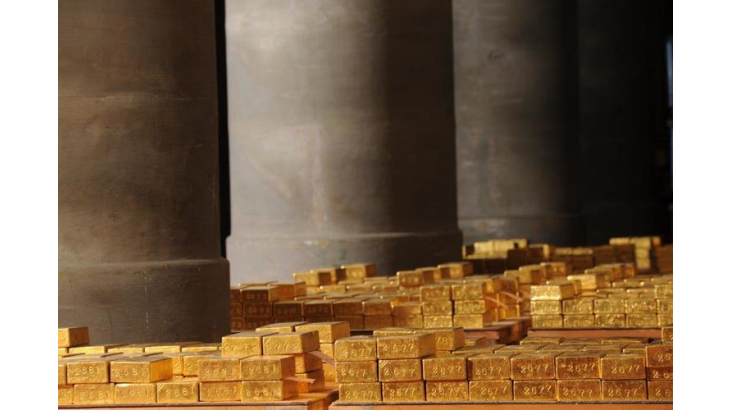
Gold Loses Its Luster: Analyzing an Unexpected Market Reversal
The yellow metal, the ultimate symbol of luxury and financial security, is experiencing unprecedented turbulence. After a meteoric four-year rise, peaking last January at an all-time high of nearly $5,000 per ounce (about 4,330 euros), gold has abruptly changed course. Today, the market has officially entered a “bear market,” recording a correction of more than 20% from its recent peak. In recent trading sessions, prices have slipped below the $4,120 mark, erasing months of spectacular gains.
The Paradox of the Safe Haven in Times of War
What is baffling analysts and seasoned investors is the departure from historical patterns. Typically, a military escalation—particularly in the Middle East—acts as a catalyst for precious metals. Yet the current crisis seems to have reversed the trend. Instead of behaving like a protective safe haven, gold has reacted procyclically: its price falls during peaks of tension and attempts to stabilize only when diplomatic prospects emerge.
This anomaly can be explained by a paradigm shift. In the current context of extreme stress, gold serves as a liquid “insurance policy.” Major portfolio managers no longer buy it solely for protection, but are selling it off en masse to generate immediate liquidity as the crisis unfolds. This need for cash outweighs the desire to hold onto it, transforming the precious metal into a capital reserve that is sacrificed to offset losses elsewhere.
The Rise of the Dollar and Interest Rates
Beyond geopolitics, gold is bearing the brunt of an unfavorable macroeconomic environment. Persistent inflation, which reached 4.2% in the United States in May, has not played its usual role as a driver for gold. The reason? The U.S. Federal Reserve’s (Fed) response. By keeping interest rates high to combat rising prices, the Fed is boosting the appeal of U.S. Treasury bonds.

This trade-off is harsh for investors: gold, an asset that yields no return (dividends or interest), becomes expensive to hold compared to government bonds with rising yields. This phenomenon is exacerbated by the strength of the dollar. Since gold is denominated in U.S. dollars, every appreciation of the U.S. currency automatically increases the cost of acquisition for foreign investors, thereby weighing on global demand.
Outlook and Psychological Thresholds
From a technical perspective, the situation has deteriorated with the break below the 200-day moving average—a key indicator for long-term investors that had been hovering around $4,412. This downward breach triggered a wave of stop-loss orders. Attention is now turning to the $4,100 support level, the last line of defense before the major psychological threshold of $4,000.
Experts’ forecasts differ depending on how energy tensions evolve. While Citi analysts do not rule out a temporary drop toward $3,500 in the event of a prolonged blockade of strategic sea lanes such as the Strait of Hormuz, they nevertheless maintain a target of $5,000 within six to twelve months, once the crisis has subsided. As Ole Hansen of Saxo Bank points out, gold traditionally shines during crises of financial confidence or economic slowdowns. The current crisis, centered on energy and inflation, is forcing the precious metal to take a step back as it awaits calmer days for the financial markets.