

Make Texture a preferred source on Google to support us
Add Texture to GoogleForget the flashing neon lights, the constant overstimulation, and the monumental facades built to capture the crowds’ attention. For decades, Las Vegas has been built on a culture of immediacy and outward display, often leaving the domestic interior in the shadow of its gigantic entertainment machine. Yet the tectonics of taste are shifting in Nevada. Far from the hustle and bustle of the Strip, a more intimate and settled form of ostentation is taking root, replacing frenzy with the demand for a well-structured living environment. The recent arrival of the Dutch firm Eichholtz in Tivoli Village crystallizes this shift. The design language here is no longer that of fleeting spectacle, but rather one of spatial coherence, visual comfort, and a classicism imported from Europe. As Ike Dweck, owner of this new venue, points out, the city needed a hub capable of bringing together a clientele in search of refinement. Sin City, it seems, is finally aspiring to furnish itself with the gravitas of a cultural capital.
The illusion of a Roman stroll in the arid landscape of Nevada
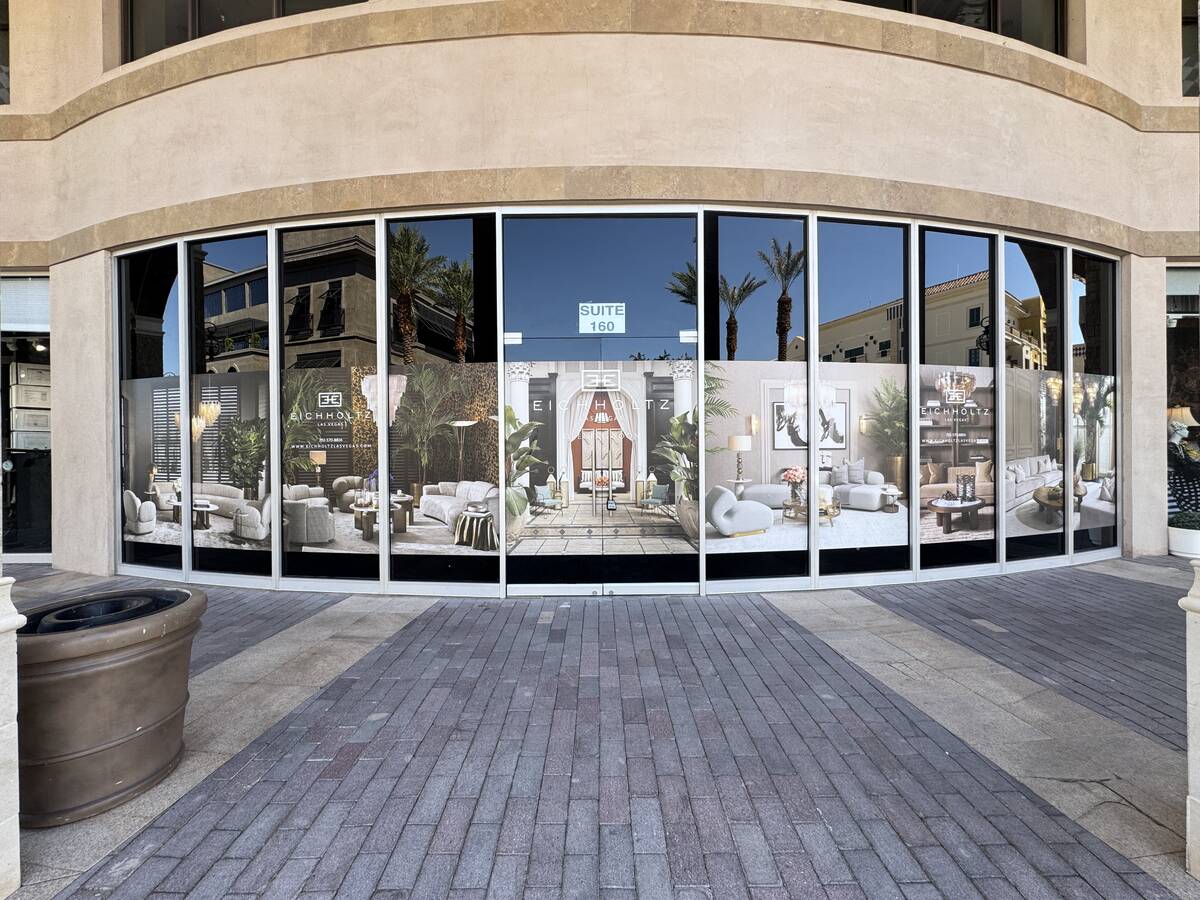
The setting chosen for this development is far from a mere commercial decision. Located at 350 S. Rampart Blvd., Tivoli Village was conceived as a deliberate anomaly in the local urban landscape. With its cobblestone streets, airy plazas, and lines openly inspired by Italian architecture, this open-air village offers a pedestrian retreat that is extremely rare in the region. It is within this unapologetic trompe-l’œil—which borders on theatrical drama—that Eichholtz has chosen to establish its showroom. The space rejects the conventions of a shopping mall store in favor of the atmosphere of a collector’s salon, thereby extending the European aesthetic of its immediate surroundings.
This location reflects a desire to become an integral part of a highly specialized ecosystem. The neighborhood already boasts a veritable constellation of brands dedicated to premium home furnishings, including Hub Modern, 7th Avenue, Saatva, and Design Within Reach. This concentration of high-end players goes beyond mere competition; it shapes a shared language. People no longer come to this area to buy a single item, but to immerse themselves in a holistic vision of design, transforming a retail space into a true style destination.
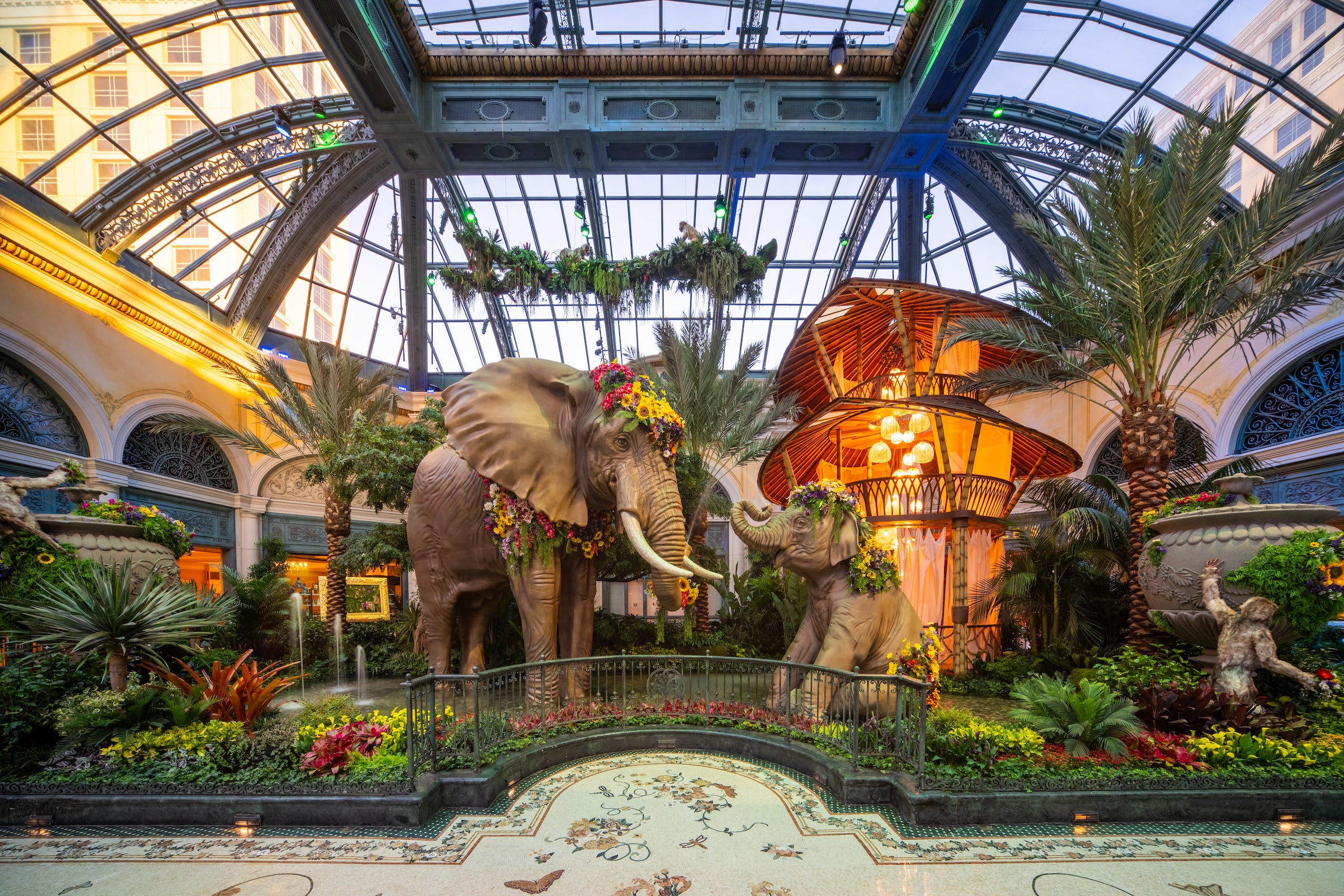
The Power of Scenography: From Object to Atmosphere
The arrival of this Dutch brand confirms a radical shift in the conventions of furniture retail: a single piece, no matter how well-designed, is no longer enough to win over customers. The focus is now on total immersion. Just a few steps away, the RH brand exemplifies this trend by displaying its collections across four floors and nearly 7,000 square meters, transforming the customer journey into a labyrinthine gallery. The object loses its status as a mere commodity to become a component of an overarching artistic installation.
Eichholtz plays the same atmospheric tune. The brand claims an identity that Dweck defines as classic, punctuated by opulent accents and uniquely glamorous touches. Mirrors, sculptural light fixtures, seating, and accessories aren’t simply lined up on display stands: they’re arranged to create tension within staged settings. While this staging offers clear points of reference to a clientele that might otherwise be overwhelmed by the diversity of materials and finishes, it walks a fine line. By over-dramatizing the space, the material risks being overshadowed by the image. The great challenge of this new interior luxury lies precisely in this delicate balance, where the art of perception must never overshadow the authenticity of craftsmanship.

Architects and Concierge Services: The New Economy of Consulting
Behind the doors of this showroom—open to the general public without any appointment necessary—lies an extremely targeted business strategy. The business model of high-end furnishings is twofold: to captivate private clients while securing the loyalty of professionals. Eichholtz has perfectly incorporated this by developing a specific program tailored to architects and interior designers. The offering combines preferential rates, customized support, and the guarantee of reliable nationwide delivery.
This convergence between a consumer-focused approach and B2B expertise is redefining industry standards. Design Within Reach, another retailer located in the village, takes this service philosophy to the extreme by offering concierge services. From generating 3D renderings and creating mood boards to in-home measurements: furniture purchases are now systematically accompanied by a comprehensive support service. Rather than simply purchasing an object, the customer is acquiring an artistic vision, seeking assurance from these consultants that they will avoid a lapse in taste. In this advisory-driven economy, the experience provided before the purchase carries as much weight as the final design.
The coming of age of a metropolis in search of depth
Underlying this is the fact that the consolidation of this hub dedicated to the art of living reflects a major sociological shift for Las Vegas. The city is seeking to break free from its own myths. Long relegated to the status of an artificial backdrop crammed with clichés of excess, it now asserts a more nuanced identity, eager to make its mark on the residential design scene.
For Dweck, this urban maturation is evident. By designing interiors meant to stand the test of time, local clients are turning their backs on the flashy excess that made the city famous. The goal is to establish a visual rigor—an aesthetic that does not exclude prestige but imposes a true discipline upon it. Sophistication—a term so highly sought after in the alleys of Tivoli Village—demands flawless execution. Interior design thus emerges as the new hallmark of a city that is finding peace and discovering that the most refined luxury no longer lies in public fanfare, but rather in the discreet sophistication of a masterfully crafted interior.