
Make Texture a preferred source on Google to support us
Add Texture to GoogleThe Rhine divides Basel’s landscape with calculated slowness, marking a fluid boundary in a city where Protestant rigor coexists quite comfortably with the opulence of private collections. Situated at the exact crossroads of Switzerland, France, and Germany, the city seeks neither the worldly flamboyance of Geneva nor the financial coldness of Zurich. It has built an empire on a different foundation: that of the gaze. With nearly forty museums for fewer than two hundred thousand residents, this German-speaking enclave defies typical European proportions. This accumulation of public institutions, private foundations, and galleries is not the result of any recent tourism strategy. It stems from a long-standing tradition of humanist patronage, upheld with an iron fist by the leading families of the pharmaceutical industry and the local bourgeoisie.
The Legacy of Civic Philanthropy
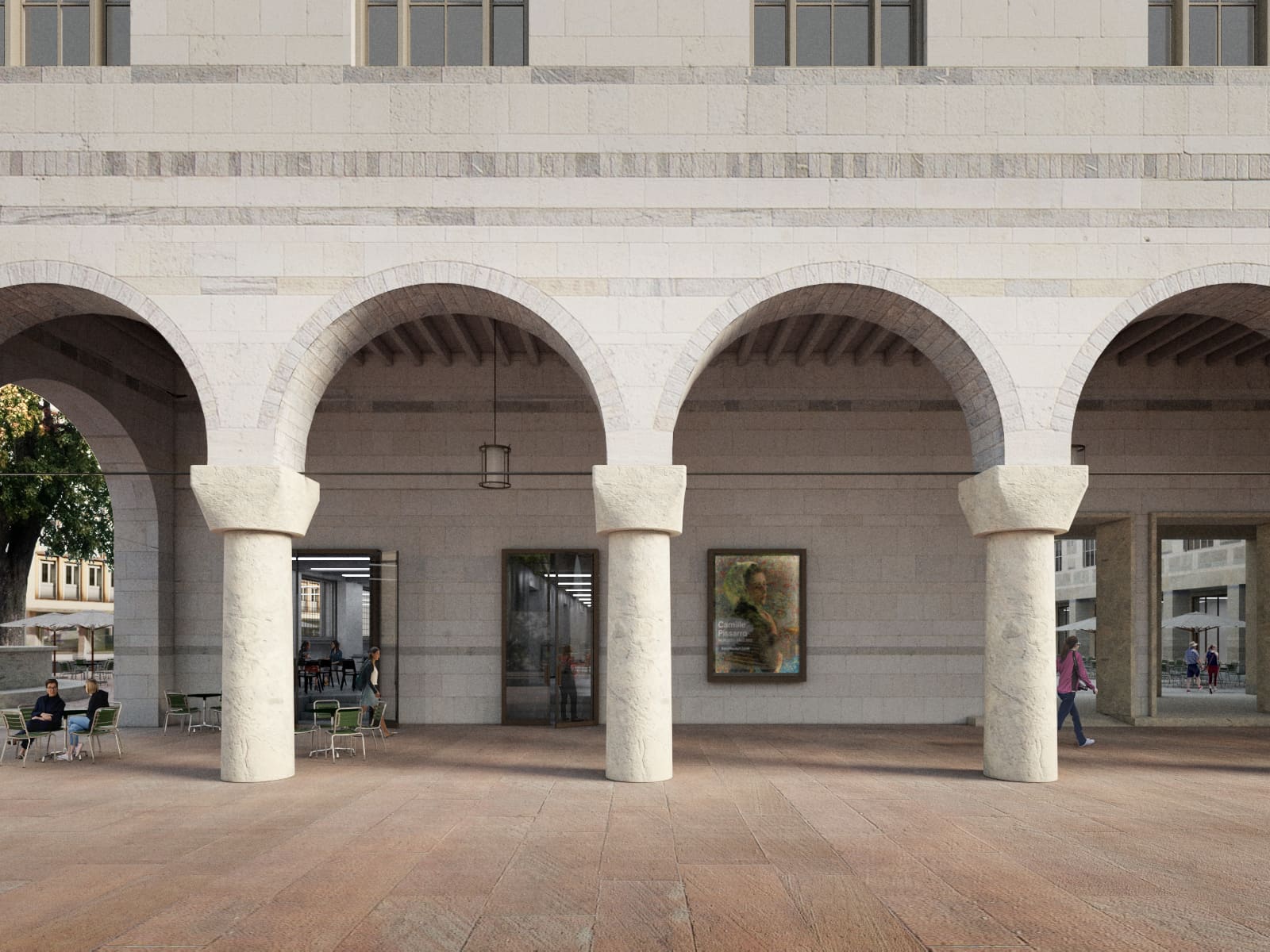
Here, the act of collecting is part of the social contract. Upon crossing the threshold of the Kunstmuseum Basel, one physically enters the world’s oldest public art collection. The acquisition of the Amerbach Collection by the municipality and the university in 1661 cemented a deep-seated connection between the citizens and their paintings. Behind the massive façade of the main building, a dizzying array of paintings by Holbein and Cranach faces a modern wing where Cubism and American Expressionism engage in a dialogue. In 1967, the local population even voted in a referendum to use public funds to repurchase two works by Picasso in order to prevent them from being sold abroad. Moved by this civic mobilization, the Andalusian painter donated four additional works to the city. This anecdote illustrates a specific local dynamic: culture is first and foremost a matter for citizens, rather than merely a showcase for exhibitions. The recent extension, designed by the firm Christ & Gantenbein, continues this approach. Its gray brick structure incorporates LED strips directly into the masonry, announcing exhibitions with a deliberate, clinical simplicity.
Dialogues in Natural Light in Riehen
As you travel away from the city center by tram, the village of Riehen reveals the legacy of a couple of gallery owners who shaped the art market in the last century. Ernst and Hildy Beyeler assembled a collection of rare depth before commissioning architect Renzo Piano to design a building capable of housing it. The Beyeler Foundation stretches out in the middle of a park, backed by a long wall of red porphyry stone imported from Patagonia. The glass roof, designed to channel overhead light, illuminates Monet’s Water Lilies, Giacometti’s elongated sculptures, and Rothko’s fields of color. The boundary between the exhibition space and the surrounding landscape is deliberately blurred. The floor-to-ceiling windows of the Impressionist gallery open directly onto a pond filled with real water lilies. The creaking of the light oak floorboards punctuates the visitors’ footsteps in a silence that contrasts with the auditory and visual overload of major museums in capital cities.
Conservation Laboratories and Built Utopias
The relationship with a work of art goes beyond its mere display. Basel explores the very nature of conservation. In Münchenstein, on the city’s immediate outskirts, the Schaulager brings this reflection to life. Funded by the Laurenz Foundation, this massive, fortress-like structure made of rammed earth was designed by the firm Herzog & de Meuron. Conceived to address the storage crisis facing contemporary art, the building refuses to hide the works in inaccessible underground storage areas. It maintains the monumental installations by Matthew Barney and Katharina Fritsch under optimal temperature conditions while allowing researchers—and, during special openings, the public—to study them without handling them. The building is neither a museum nor a traditional warehouse, but a hybrid preservation facility.
This omnipresence of the Herzog & de Meuron firm is evident throughout the urban fabric. Long before designing the Tate Modern in London or the Bird’s Nest in Beijing, the two Basel-based architects used their own city as a testing ground. Their structures define the city’s modern skyline, from the Messeplatz exhibition complex—crowned by a gaping skylight—to the tall Roche towers that overlook the river and etch the power of the pharmaceutical industry directly into the Rhine sky.

Subversive Mechanics on the Right Bank
The right bank offers a distinctly rougher energy in contrast to the bourgeois elegance of the major painting collections. Designed by Mario Botta of Ticino, the Tinguely Museum faces the water with its straight-lined red sandstone facades. Inside lies the mechanical chaos methodically organized by Jean Tinguely. His deliberately dysfunctional machines—noisy assemblages of worn-out belts, wagon wheels, and scrap metal—spring into action under the pressure of visitors. The din produced by these disjointed kinetic sculptures taunts the millimeter-precise craftsmanship of Swiss watchmaking and industry, injecting a healthy dose of derision into the solemnity of the neighboring institutions.
Industrial Design and Cross-Border Boundaries
The city’s cultural influence transcends customs boundaries. In just a few minutes by bus, visitors cross the German border almost without noticing it to reach Weil am Rhein. Here, the Vitra Design Museum showcases a concentration of contemporary architecture unique in Europe. Following a major fire in 1981, the furniture manufacturer gradually transformed its industrial site into a vast playground for the world’s architectural elite. The white, deconstructivist forms of the main building mark Frank Gehry’s first European project. On the same campus, one encounters the brutalist, partially buried concrete of a conference pavilion by Tadao Ando, the sharp angles of a fire station designed by Zaha Hadid, and the spectacular stacking of archetypal black houses conceived by Herzog & de Meuron for the VitraHaus. The permanent collection meticulously documents the history of the institution, tracing a central thread between streamlined mass production and experimental design.
The Barometer of the Global Market
For much of the year, the local atmosphere remains studious. Executives cycle across the bridges, and daily life follows a placid, orderly course. But the situation changes abruptly in mid-June. Founded in 1970 by Ernst Beyeler, Trudl Bruckner, and Balz Hilt, the Art Basel fair then takes over the city. Private jet traffic clogs the runways at EuroAirport, hotels are fully booked months in advance, and the most influential galleries from New York, London, Paris, and Seoul unload their crates beneath the vaults of the Messeplatz. The Unlimited section, reserved for works of such immense scale that traditional booths cannot accommodate them, transforms an entire hall into a colossal gallery of speculative art. Private banks orchestrate discreet dinners in the wood-paneled back rooms of the old town, while collectors buy via PDF catalogs or directly in the aisles, with lightning-fast transactions totaling tens of millions of dollars in just a few hours.
When the weekend ends, the dismantling is immediate and thorough. The massive wooden crates are sealed and loaded onto secure trucks bound for Geneva’s free ports, Asian customs offices, or American foundations. Basel empties of its international buyers, and the commotion subsides as quickly as it arose. The city returns to the steady rhythm of its medieval fountains, the silence of its exhibition halls, and the discreet, almost intimate connection it maintains with the works that remain hanging on the walls of its own museums.