
Make Texture a preferred source on Google to support us
Add Texture to Google2025, then 2026, then 2027, then 2030. Now, a vague timeframe, somewhere between 2033 and 2035. Taken together, the release dates Aston Martin has successively promised for its first all-electric car resemble less a timeline than a horizon: it recedes as we move forward. In early October 2026, the British automaker’s management moved the target date yet again. This time, it took care to explicitly rule out any launch in 2031 or earlier. At the same time, they confirmed news that fans of eight- and twelve-cylinder engines had been waiting for: the V8 and V12 models will continue to be produced and sold through 2035.
A Tentative Timeline
It all began in 2023. The brand unveiled its electrification roadmap, which included a first electric model for 2025. That deadline lasted barely a year. In February 2024, Lawrence Stroll pushed it back to 2026. Under the previous leadership, the timeline then shifted to 2027. Adrian Hallmark took the helm of the company in September 2024 and, shortly thereafter, mentioned 2030. The latest adjustment, in October 2026, pushes the project back to the middle of the following decade.
This announcement should be taken for what it is: a target, not a commitment. Neither 2033 nor 2035 corresponds to a fixed production schedule. The date will depend on changes in local regulations and market trends—two variables beyond the brand’s control. What is planned, however, is a complete overhaul of the current lineup between 2030 and 2035. If electric vehicles arrive within the mentioned timeframe, they’ll be introduced into a lineup that will have undergone a complete transformation by then. The goal isn’t to electrify existing models, but to integrate this technology into a new generation of cars that have yet to be designed.
Delaying Without Denying
Adrian Hallmark isn’t trying to sugarcoat the move. He claims his company is taking a wait-and-see approach to electrification and rejects the label of “opponent.” The distinction serves a purpose: it allows Aston Martin to remain officially committed to the transition, while refusing to join it until it is compelled to do so.
The CEO’s reasoning is almost bookkeeping-like in its candor. The United Kingdom and the European Union plan to ban the sale of new internal-combustion vehicles that emit CO₂ by 2035. Aston Martin therefore only needs to offer 100% electric models just before that date. Not a year earlier than necessary. The law becomes the only timeline that matters, and the brand intends to follow it to the letter rather than get ahead of it.
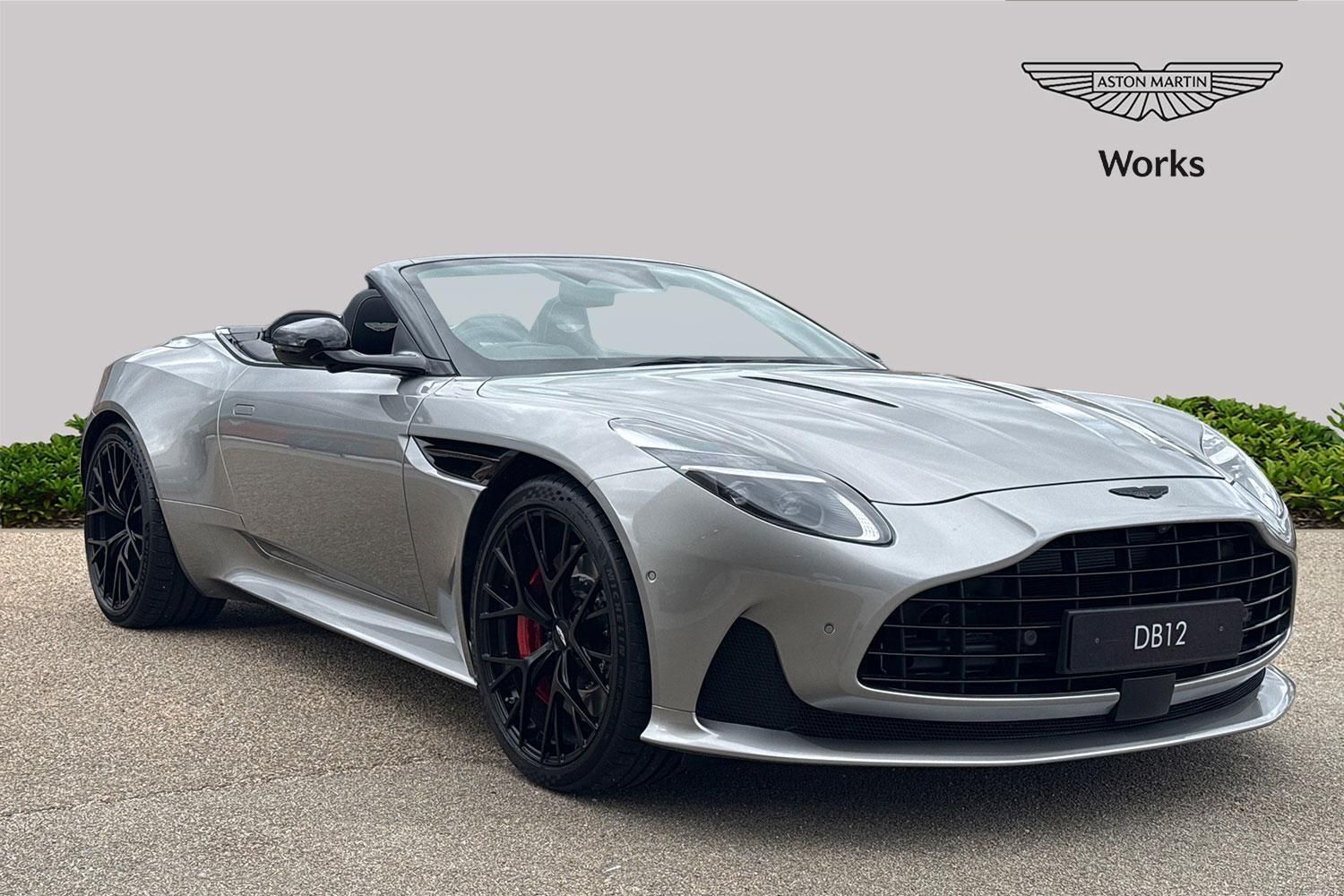
The second argument relates to the customer base. In the ultra-luxury segment, the automaker sees no significant demand for all-electric sports cars. Those who place an order with Aston Martin are seeking a sound, a character, and a mechanical presence that their internal combustion engines provide—and which, in their eyes, a battery cannot yet replace. Launching a car early that no one is asking for would be like committing engineering resources and capital to an audience that, for now, is looking elsewhere.
The V12 Gets a Reprieve
Keeping internal combustion engines until 2035 is no given. Emissions standards are getting stricter, starting with Euro 7, and the brand has had to develop a specific engineering plan to ensure its engines remain compliant until that deadline. Two engine types are involved. On one hand, the V8s supplied by Mercedes-AMG. On the other, the in-house twin-turbo V12, which powers the Vanquish, among other models.
Hybridization will be essential to pass emissions tests. The key question is what form it will take. Management indicates a preference for a mild, non-rechargeable hybrid system rather than a plug-in hybrid (PHEV) system. The reason is weight. A PHEV would add about 200 kg to the car’s weight—a rough estimate provided by management, not a value measured on a specific chassis. For a sports car, this extra weight takes its toll across the board: on agility, braking, and the feeling of lightness that the brand’s customers expect.
Caution is warranted, however. This rejection of the PHEV stems from a strategic intention expressed by the CEO, not from an approved technical specification for every future variant. The engineers have ten years ahead of them, and trade-offs may still evolve on a model-by-model basis.
One exception already exists, and it’s unlikely to change: the Valhalla. The hypercar retains its plug-in hybrid architecture, built around an electrified V8. For a vehicle of this caliber, the focus isn’t on regulatory compliance but on pure performance, and the brand has determined that it’s worth the effort.
Lucid: A Contract on Hold
The postponement raises a concrete question: what will become of the partnership with Lucid Group? In June 2023, Aston Martin signed a supply agreement with the California-based manufacturer for electric powertrains and high-performance batteries. Lucid had acquired a stake of approximately 3.7% in Aston Martin.

The agreement is by no means symbolic from a financial standpoint. As of December 31, 2025, the minimum contractual commitment for future purchases of components from Lucid totaled 177.0 million pounds sterling, or approximately 212 million euros. As of June 30, 2026, Aston Martin also reported an outstanding cash liability to its partner of 74.7 million pounds, approximately 89.5 million euros.
Adrian Hallmark turns the argument of the delay into an advantage. By postponing the industrial implementation of the contract, the brand will be able to incorporate technology that is more advanced than what was defined in 2023. The reasoning makes sense on paper: locking in an architecture in 2023 that is intended to be on the road in the mid-2030s would have been like betting on components that would have had time to become obsolete even before the first delivery. It remains to be seen how purchase commitments amounting to hundreds of millions will play out by then.
The other technical pillar remains unchanged. Mercedes-Benz AG continues to supply the V8 engines as well as the electrical and electronic architectures. The German alliance, which powers the brand’s current lineup, is thus bolstered by the continued use of internal combustion engines.
Tighter Budgets
The delay in the electric transition is also part of a budget tightening. The five-year research and development investment plan has been scaled back to approximately 1.7 billion pounds, down from the 2.0 billion announced in 2023. That’s 300 million pounds less over five years, at a time when the company must both keep two engine families up to standard and prepare to refresh its entire lineup.
Within this budget, electric vehicles now occupy a minuscule share. Engineering expenditures dedicated to them have been scaled back to a level focused on research and development—less than a few million pounds, according to management’s own description. The project hasn’t been abandoned; it’s been put on hold, with just enough resources to keep the momentum going.
For Aston Martin customers, the coming decade will therefore have the scent of gasoline and, for most models, discreet electric assistance rather than a charging port. The Lucid contract, meanwhile, continues to weigh on the bottom line, with 74.7 million pounds still owed as of mid-2026 for a car whose name and release year have not yet been disclosed.