
Make Texture a preferred source on Google to support us
Add Texture to GoogleOutside the Chanel boutiques in major capitals, the long lines are a very visible measure of the interest Matthieu Blazy has generated. Yet they don’t tell the whole story. To understand what’s happening at the fashion house, one must also look to a much older location: Deauville, where Gabrielle Chanel opened a boutique in 1912. On Tuesday, April 27, 2027, the Normandy resort town will host the 2027/28 Cruise Collection. Between the crowds in the stores and this return to the brand’s roots, the choice of location raises a creative question: how do you bring a legacy to life when the present already seems to be racing ahead?
Enthusiasm is not yet a definitive assessment
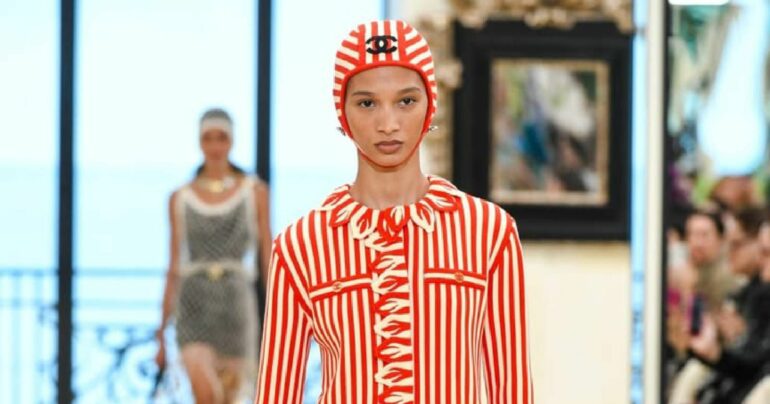
The phenomenon now has its own catchphrase: “Blazymania.” The term refers to the reception—season after season—given to the creative director’s work, in both accessories and ready-to-wear. Matthieu Blazy’s designs appeal to Chanel’s loyal customers and attract a wider audience beyond that circle. The lines outside the stores are the most immediate sign of this, almost like an advertisement that needs no campaign. But this fervor should be distinguished from its financial consequences.
The latest annual results, announced in May, cover the year 2025. That year, Chanel generated revenue of $19.3 billion, or approximately 16 billion euros. Growth stood at 3% at current exchange rates and 1.8% at constant exchange rates. The discrepancy between the two measures serves as a reminder that a reported increase does not solely reflect changes in business activity: its interpretation also depends on how currency fluctuations are accounted for. In both cases, growth is clearly present, though it does not reach the pace that the current enthusiasm might suggest.
Above all, these figures do not allow us to measure the commercial impact of Blazy’s collections. His first collection was presented in October, with the products arriving in stores early the following year. Its impact will therefore be visible in the 2026 financial statements. This timeline matters: attributing the 2025 performance to the new creative director would amount to confusing the anticipation surrounding his name with sales that had not yet taken place.
Deauville, Before the Heritage
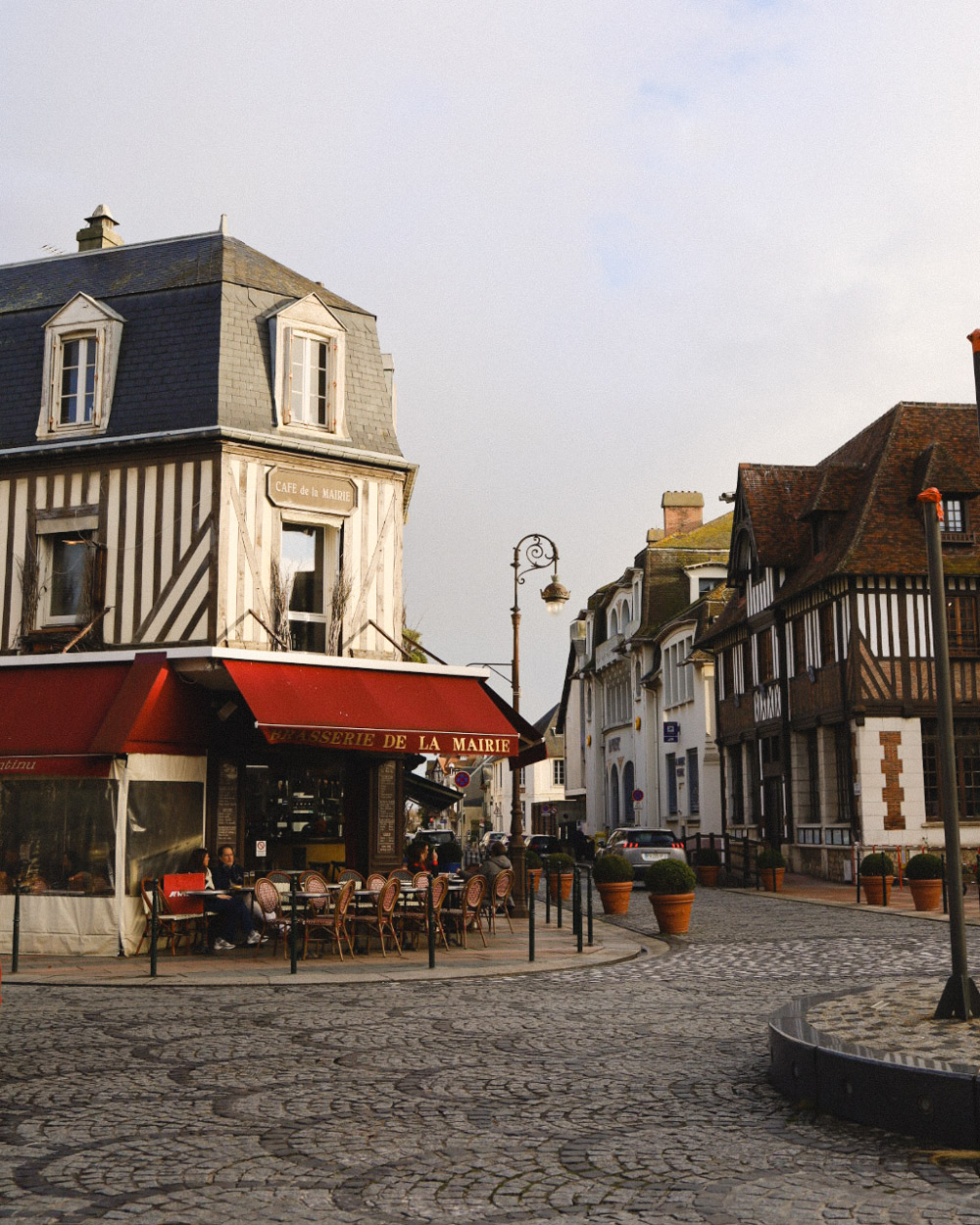
Returning to Deauville offers a counterpoint to this news cycle driven by the rhythm of collections and results. In 1912, Gabrielle Chanel opened a boutique there following her early successes as a milliner in Paris. The following year, she began selling her first garments there. Two dates close together, but a decisive shift: the transition from hats to a broader range of clothing. Before becoming a historic landmark for the house, Deauville was thus a place where its business changed in both scale and nature.
It is this shift that makes the choice of Normandy so interesting. One might see it merely as a setting steeped in memories, convenient for linking a new collection to a familiar history. Yet the most telling fact lies less in the age of the location than in what took place there. Gabrielle Chanel expanded her scope of activity there. For a designer called upon to renew the house’s language, the location thus evokes a beginning—not merely a repertoire of symbols to be preserved.
An old photograph accompanying the announcement shows Gabrielle Chanel aboard a boat with the opera singer Marthe Davelli. This detail lends a human touch to a story that founding dates can sometimes render abstract. Of course, it reveals nothing about future clothing designs. It simply serves as a reminder that a fashion house’s archives also contain moments of life, social circles, and ways of inhabiting a space. It is up to the designer to decide what they wish to draw from them.
After Biarritz, a Different Take on the Origins
The Deauville presentation will follow the Biarritz fashion show and will mark Matthieu Blazy’s second cruise collection for Chanel. The event is scheduled for Tuesday, April 27, 2027, for the 2027–28 season. At this stage, the announcement provides a destination and a schedule, not an aesthetic program. There is nothing to suggest what the silhouettes, materials, or staging might be. This precision is useful, as the mere name of a place can be enough to spark imagination.

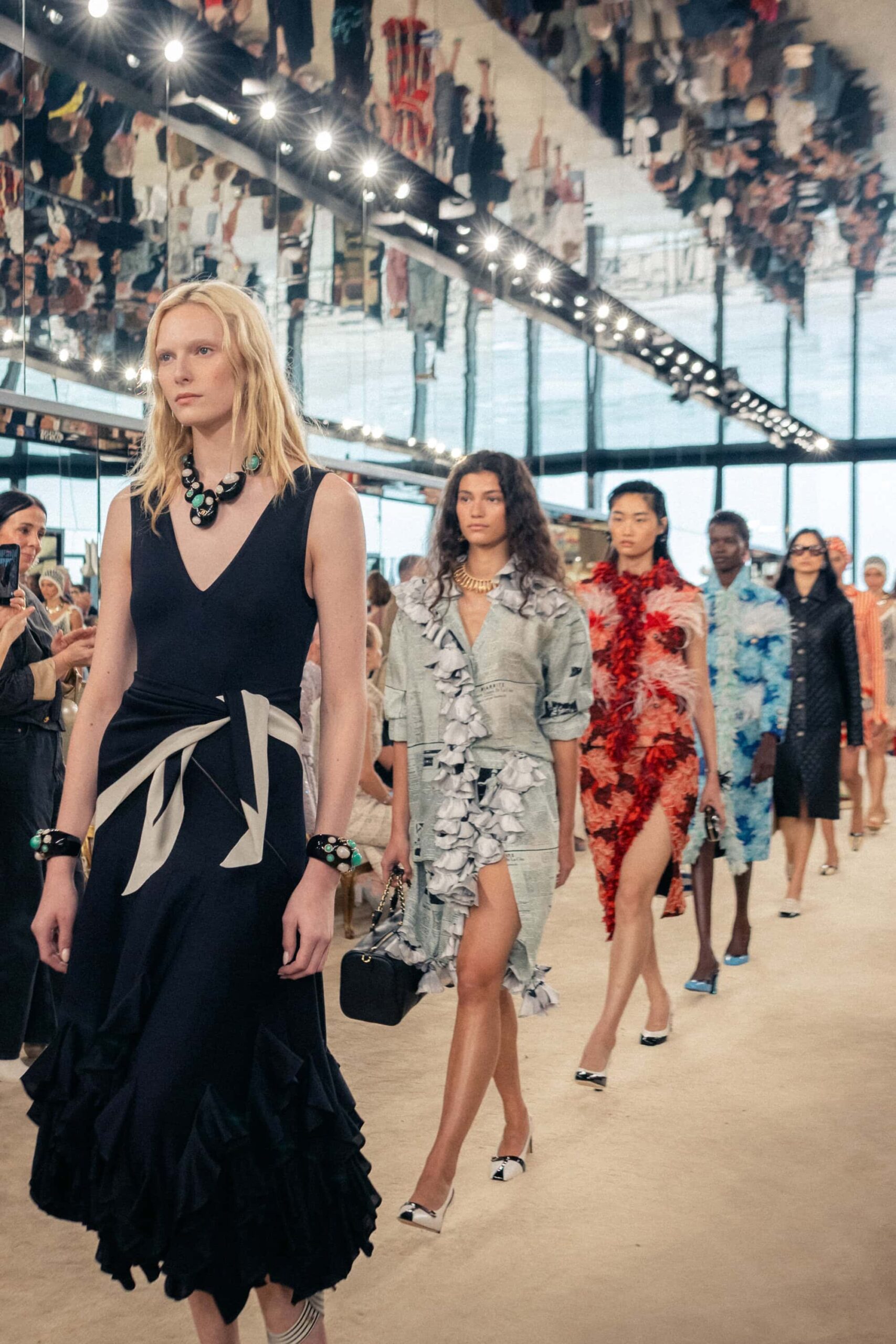
The choice nevertheless invites us to view this upcoming collection as more than just another stop on the fashion show calendar. Deauville directly links Blazy’s work to a defining moment. The designer will not be presenting his first cruise collection there; he will arrive with prior experience in this area for the house. This second collection will offer a chance to observe continuity, shifts, and perhaps deviations. Their nature, however, remains entirely to be discovered.
Bruno Pavlovsky, president of Chanel’s fashion division, has expressed his eagerness to see the perspective Matthieu Blazy will bring to this place of his beginnings. The term “perspective” is key; it leaves room for interpretation rather than reconstruction. The house points to its history as a starting point, while placing its hopes on the creative director’s personal response. This is where the appeal of the event lies—far more so than in the mere recognition of a familiar address.
Creating Under the Gaze of Customers
This freedom of interpretation unfolds in a favorable yet demanding context. The reception given to the accessories and ready-to-wear collections indicates that interest in Blazy extends beyond the runway image. It extends to the stores and encompasses several aspects of the brand’s offerings. However, the lines do not indicate either a growth rate or the likely duration of this craze. They signal a desire; the financial results will have to clarify how that translates into actual sales.
Morgan Stanley analysts, cited by BoF, foresee growth for 2026 that could reach double digits. This is an estimate, not a guaranteed outcome. The gap compared to the growth reported for 2025 would be significant, but it remains to be determined. For Chanel, two interpretations are therefore emerging in parallel: one of a creative renewal that has already been noted, and one of a commercial acceleration still expected in the annual figures.
Deauville will not answer this second question. The fashion show will have its own mission: to demonstrate what Blazy can achieve in a place where Gabrielle Chanel began selling clothing in 1913. On April 27, 2027, this past will, for a moment, cease to be merely a date in the house’s history. It will become a proposal presented to the public’s scrutiny and, later, to the customers’ choice.