
Make Texture a preferred source on Google to support us
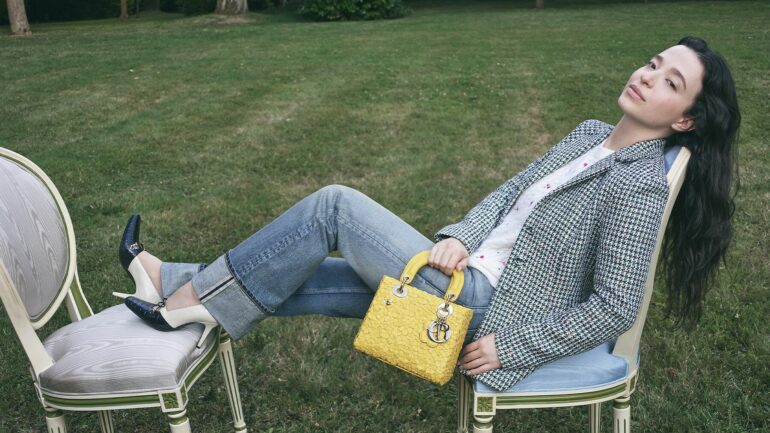
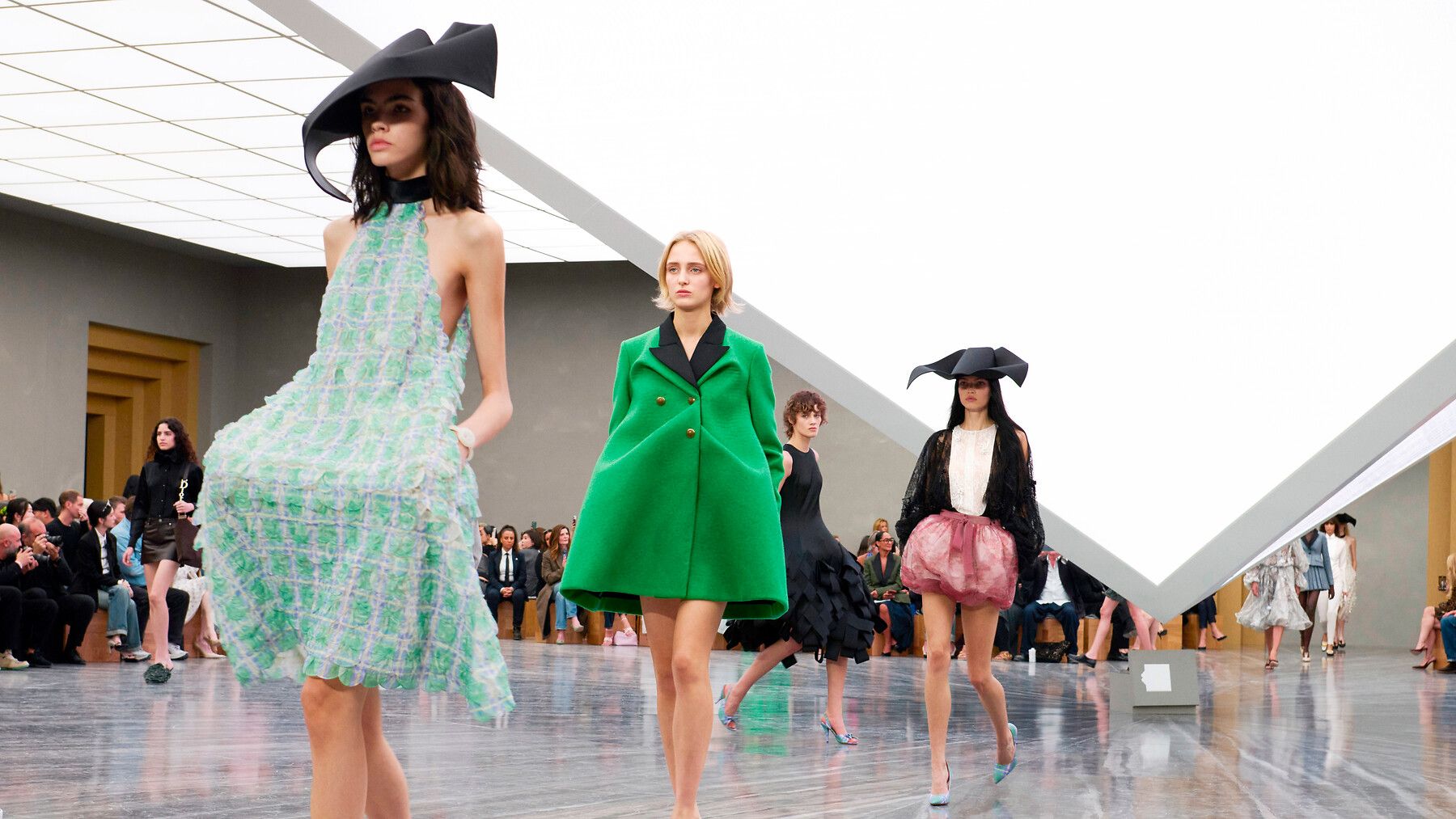
Add Texture to GoogleBefore the first outfit appears, there’s a list of names. As Dior unveils its Summer 2027 collection—the first women’s runway show designed by Jonathan Anderson—that’s often where insiders begin their analysis: who does the hair, who does the makeup, who selects the models, who sets the lighting. For a debut of this magnitude, these credits matter just as much as the clothes. They reveal how a designer intends to work—with whom and using what methods. The credits the house has released are therefore worth examining, line by line.
The Credits as the First Clue
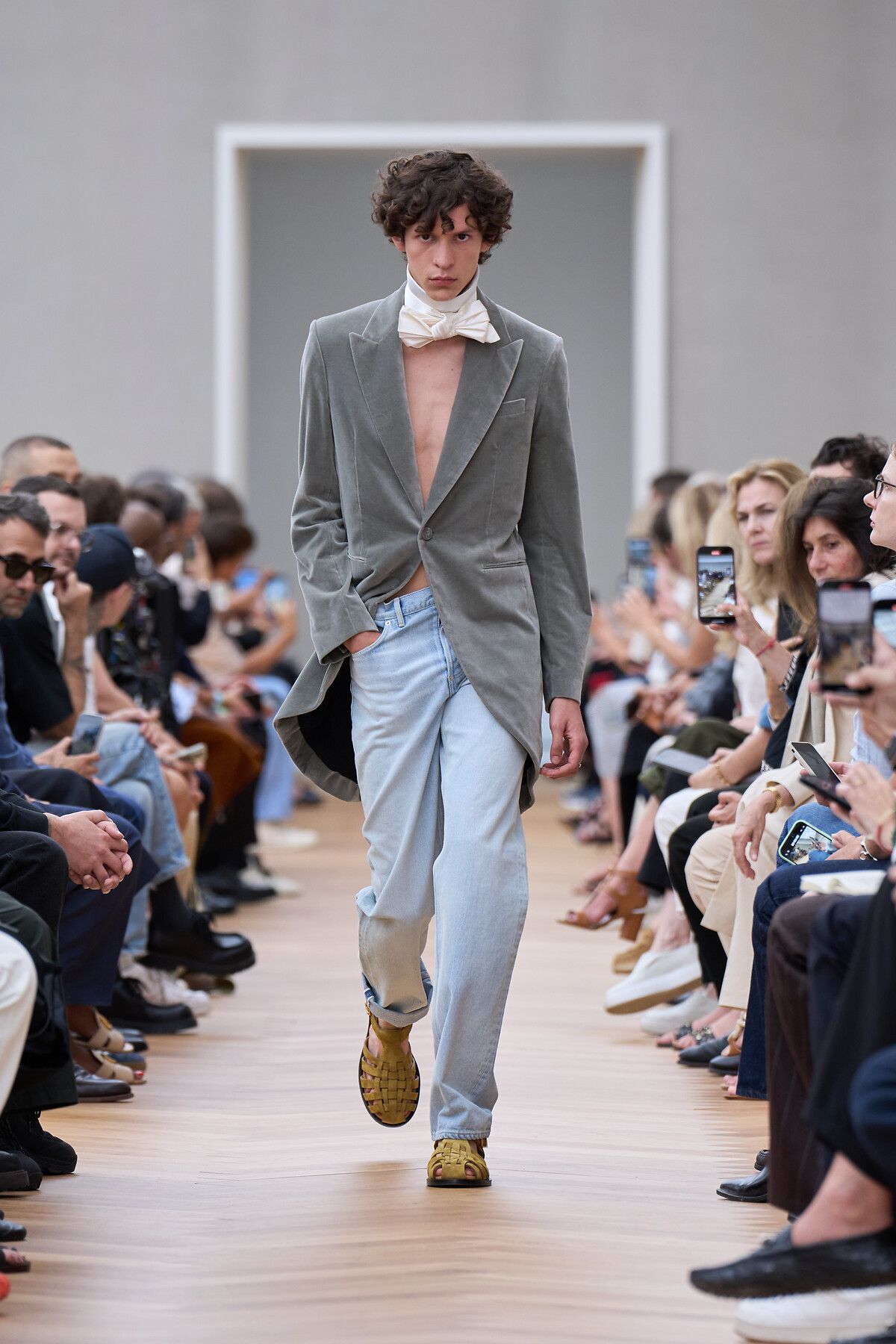
We often think of a creative director as a solitary artist. A fashion show, however, is more like a film shoot: each role contributes to the final image, and the viewer only perceives the whole once all the parts are in harmony. Anderson left nothing to chance. The styling is handled by Benjamin Bruno—that is, the person who decides how a garment is worn, how it fits, and how it pairs with another. Between a garment on a hanger and one on the runway lies precisely this work—rarely visible, yet decisive.
The choice to surround himself in this way for his debut collection seems like a form of active caution. You don’t walk into a house founded in 1947 with a makeshift team. You arrive with people whose touch is sure, so that attention can be focused on what matters most.
Hair, faces, bodies: precision over spectacle
Two names in this lineup embody the same culture of precision. Guido Palau is responsible for the hairstyles, and Peter Philips for the makeup. Each, in their respective fields, is known for a high level of technical mastery—the kind that serves the creative vision rather than overshadowing it. When hairstyling and makeup are entrusted to such exacting standards, the message is clear: nothing should distract from the interpretation of the garments, and yet everything must contribute to shaping that interpretation.
That leaves the question of the models. The casting is the work of Ashley Brokaw, and this role is perhaps the most political of all. Choosing who walks the runway means deciding what the collection says about the woman wearing it: her poise, her apparent age, and the way she occupies space. In a fashion house whose women’s collection has always embodied a certain idea of femininity—inherited from its founder—this choice carries significant weight. It is the first concrete expression of how Anderson intends to interpret this legacy.
Sound, Light, and Footsteps
Next come the elements we never consciously notice, yet which set the mood of a show. The music was composed by Damien Quintard. The lighting design was entrusted to Philippe Cerceau. And the movement direction—a role that remains relatively obscure in the industry—is handled by MJ Harper. This last detail is significant: it means that the models’ walk, rhythm, and attitude were conceived as a form of expression in their own right, rather than left to the usual conventions of the runway.
The entire production is by Bureau Betak, whose expertise in fashion show set design is well established. With such a structure in place, the venue’s architecture, the entrances, the models’ paths, and even the pauses are all carefully calculated. Taken together, all these elements come together to create a project in which the garment never appears on its own: it is presented in carefully chosen lighting, worn by a carefully chosen model, and set to the rhythm of a score written specifically for it.
A Word Rather Than a Slogan
The most interesting aspect, however, isn’t listed in the credits. To introduce this debut show, the house chose a term that stands out from the usual vocabulary of debuts: “process.” A collection that takes shape, that unfolds over time, that is shown in the process of being made rather than frozen in a final form.
The contrast with convention is striking. A new creative director usually seeks a spectacular debut—a clear break from the past evident from the very first show, the photo that will go viral on social media that very evening. Anderson takes the opposite approach. He isn’t presenting a thesis; he’s launching a project. And this approach—stated in black and white—is in itself a declaration: rejecting the manifesto is yet another way of writing one, a more discreet and perhaps more enduring one.
This stance also establishes a unique relationship with the house’s history. Rather than making a clean break—deciding what to keep and what to discard—the designer engages in a dialogue with the legacy left by Christian Dior, who asserted that one must “do things with passion.” Here, passion takes the form of patience.

What Christian Dior Knew About Taking the Road Less Traveled
This commitment to the long term finds a striking echo in the founder’s biography. Christian Dior was not born a fashion designer; he became one step by step. He first ran an art gallery. He then learned patternmaking under Robert Piguet, before moving on to fashion design at Lucien Lelong. Each experience built upon the previous one, like successive layers, until it shaped the designer who would revolutionize postwar fashion.
Looking back at this journey in light of Anderson’s runway show, it becomes clear that the idea of gradual development is by no means foreign to the Normandy-based house. It is, in fact, one of its founding principles. By placing his first collection under the banner of craftsmanship, the new creative director is not straying from Dior: he is aligning himself—perhaps without saying so—with the very way Dior himself was shaped.
The Bar Jacket, or a Lesson in Continuity
There is an item in the house’s archives that encapsulates this relationship with time. The Bar jacket, presented at Christian Dior’s very first fashion show on February 12, 1947, remains the brand’s ultimate icon. It has never been shelved. Each season, the house reinterprets it, gives it a new twist, and redesigns it, without ever letting it disappear. It is a piece that lives precisely because it is never finished.
This philosophy of continuity, cultivated by Dior for nearly eighty years, offers Anderson a foundation to build upon rather than an obstacle to circumvent. Everything suggests that he has chosen to make it his own in his own way, accepting that his work, too, will evolve from collection to collection. The Bar jacket has proven that a fashion house can reinvent itself without betraying its roots; the designer seems intent on applying this lesson to his own arrival.
A verdict postponed
The event remains the most talked-about of the season, and everyone will want to voice their opinion as soon as the show ends. Yet that is precisely the exercise this first runway show seeks to thwart. By presenting itself as a stepping stone, the Summer 2027 collection defuses immediate judgment and forces us to postpone any conclusions. What it opens up for Dior is a chapter whose contours will only become clear over the course of several seasons.
What we can already gauge is the level of care that has gone into it: from the models’ strides to the lighting that accompanies them, nothing has been left to chance. The rest will play out elsewhere—in Anderson’s ability to deliver on this promise of movement over the long term. The images from the runway show, shared on Dior’s Instagram account, constitute the first installment of this story. The next installments will arrive with upcoming collections, and it is there—season after season—that Jonathan Anderson’s vision for Dior will truly unfold.