
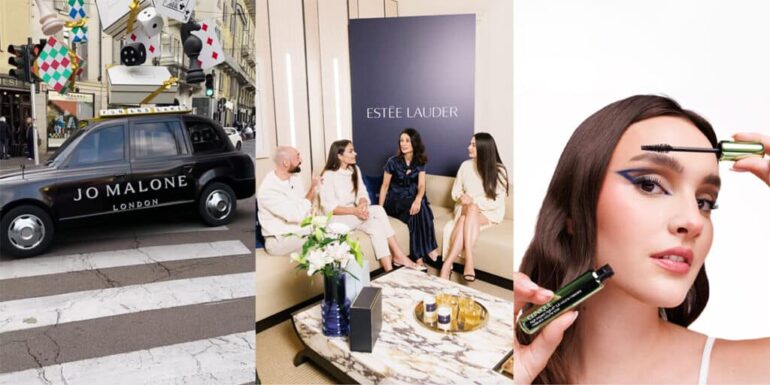
The beauty industry is undergoing a profound transformation in the way it shapes perceptions, launches products, and engages with consumers. Generative artificial intelligence, computer-generated imagery (CGI), and Fake Out-of-Home (FOOH) are becoming structural tools of contemporary communication, enabling the deployment of campaigns at both the strategic and creative levels. In this context, digital agencies like Digital Dust help brands choose solutions that combine creativity, production efficiency, and performance impact.
Generative AI is establishing itself as one of the pillars of beauty marketing, particularly in the creation of text, images, and videos. This technology is used to generate content consistent with the brand’s tone, while reducing production time and costs. A global study, cited by Storyboard18 and reported by Yahoo Finance, highlights that AI-generated ads perform similarly overall to those created by human creatives, with a slightly higher click-through rate (CTR) and no negative impact on downstream conversions. “This allows us to produce high-quality content at scale without doubling budgets,” said Alessandra De Siena, co-founder of the agency.
At the same time, CGI is now a strategic asset for beauty campaigns, whether on social media or on large-format screens. A “CGI Beauty Campaign Guide” published by Helio shows how many brands use digital models, hyper-realistic product close-ups, and compositions blending live-action shots with CGI to highlight textures, reflections, and details that are difficult to reproduce with traditional filming. The main advantages include streamlined logistics (no complex sets and fewer reshoots), greater flexibility (rapid updates to variants, packaging, and taglines), and total control over the image—all perfectly aligned with the brand’s premium or luxury positioning.
Fake Out-of-Home, meanwhile, represents one of the most innovative frontiers in beauty communication. This format uses CGI or augmented reality (AR) technologies to simulate giant billboards in real urban environments, although it is primarily designed for distribution on social media. A sector analysis of DOOH in 2025 highlights that the growth of digital screens and hybrid formats is making the transition between FOOH content and programmatic campaigns increasingly seamless. This enables high visibility and viral storytelling, with content that is easily “capturable” by smartphones, while reducing physical installation costs and allowing the same creative asset to be reused across multiple markets.
All this content finds its natural home on a few key platforms: Meta, TikTok, YouTube Shorts, and DOOH. Meta is proving to be the ideal space for Reels, carousels, and FOOH-style formats; TikTok, with its vertical format, is perfect for high-impact visual concepts where effects and fast-paced storytelling meet the world of beauty; YouTube Shorts allows for a deeper exploration of textures, benefits, and technical demonstrations through CGI and live-action compositing; while DOOH brings originally viral content into the physical space, thus closing the loop between digital and physical. At the same time, platforms specializing in generative AI and CGI for beauty are emerging, allowing brands and agencies to outsource part of the production process while maintaining creative consistency.
While beauty is now told through AI, CGI, and FOOH, the channel that best embodies this evolution is TikTok. Contrary to the myth that described it as a platform exclusively reserved for Gen Z, 2025 data highlights an increasingly diverse audience: the 18-24 age group accounts for about 35% of users, while those aged 25-34 and 35 and older together make up about 47%. In Italy, TikTok has over 19 million users, representing about 37% of the online population, with significant growth among 25- to 45-year-olds. A marketing report also highlights that over 61% of professionals use TikTok for influencer marketing activities, drawn by a highly engaged audience, with an average of about 30 hours of usage per month per user.

Investing in TikTok advertising therefore allows brands to reach an extremely diverse audience: from young women aged 16 to 24 to young adults, including millennials and part of Generation X, all of whom are increasingly interested in beauty, skincare, and lifestyle content. For a brand, this translates to greater visibility, increased brand awareness, and—when campaigns are effectively structured—better conversion rates. This is made possible by short, visually powerful formats that integrate seamlessly with AI, CGI, and FOOH content. “In this context,” added Alessandra De Siena, “agencies like Digital Dust, which operates as a TikTok partner, play a decisive role: they guide not only creative production but also investment strategy on the platform, leveraging advanced advertising features, collaborations with creators, and tools reserved for official partners.”
Where the market is headed and the role of agencies like Digital Dust
Industry data indicates that Digital Out-of-Home (DOOH) is set to experience double-digit growth by 2030, while the role of generative AI in advertising is increasingly viewed not as an experiment, but as a structural asset. AI is indeed capable of matching—and in some cases surpassing—the performance of traditional campaigns in terms of engagement, without compromising ROI.
For an agency like Digital Dust, this translates into the ability to offer brands an integrated communication model, in which AI-generated content, CGI, and FOOH—supported by platforms like TikTok—become strategic levers for increasing visibility, brand awareness, and conversions, while maintaining a more efficient investment compared to traditional productions.
It is now clear that the agencies capable of managing this technological convergence will be the ones able to guide the industry toward a more advanced form of communication: digital, visually powerful, and strategically sustainable.