
Make Texture a preferred source on Google to support us
Add Texture to GoogleTo the touch, the fabric feels rough, dense, almost three-dimensional. Whether on the lapel of a impeccably tailored outerwear jacket or on the tongue of a pair of sneakers produced in a limited run of just a few hundred pairs, the texture of the stitched thread catches the light. High-end fashion has long understood that a piece’s value isn’t always shouted from the rooftops by an oversized printed logo. It’s often whispered through the richness of the fabric. In this context, the embroidered patch has established itself as a silent marker of prestige, relegating the mundane iron-on patch to the status of a relic of fast fashion. But the journey of this small patch of fabric—from the battlefields to the racks of luxury boutiques—tells a story far more complex than a mere aesthetic whim.
The grammar of thread and the quest for depth
The secret to this fascination lies first and foremost in the brutality of the technique. Unlike a printed surface—which is hopelessly flat and doomed to fade under the onslaught of repeated washings—traditional embroidery demands substance and strength. The needle violently pierces a base fabric—most often a tightly woven twill—to force the thread through. This mechanical construction process builds the pattern layer by layer. The result is not merely a design applied to a garment, but a textile protrusion that possesses its own weight and rigidity.
This tactile density corresponds exactly to the contemporary definition of material luxury: a promise of permanence. The eye perceives the mass of the thread even before the hand confirms its solidity. Design studios, moreover, draw on a very broad technical spectrum to modulate this perception. Some pieces feature only light typography—a simple textual inscription just grazing the surface. Others, by contrast, opt for total saturation. The surface of the twill disappears entirely beneath an extremely dense embroidered overlay, transforming the patch into a small, rigid breastplate that alters the drape of the fabric on which it is affixed.
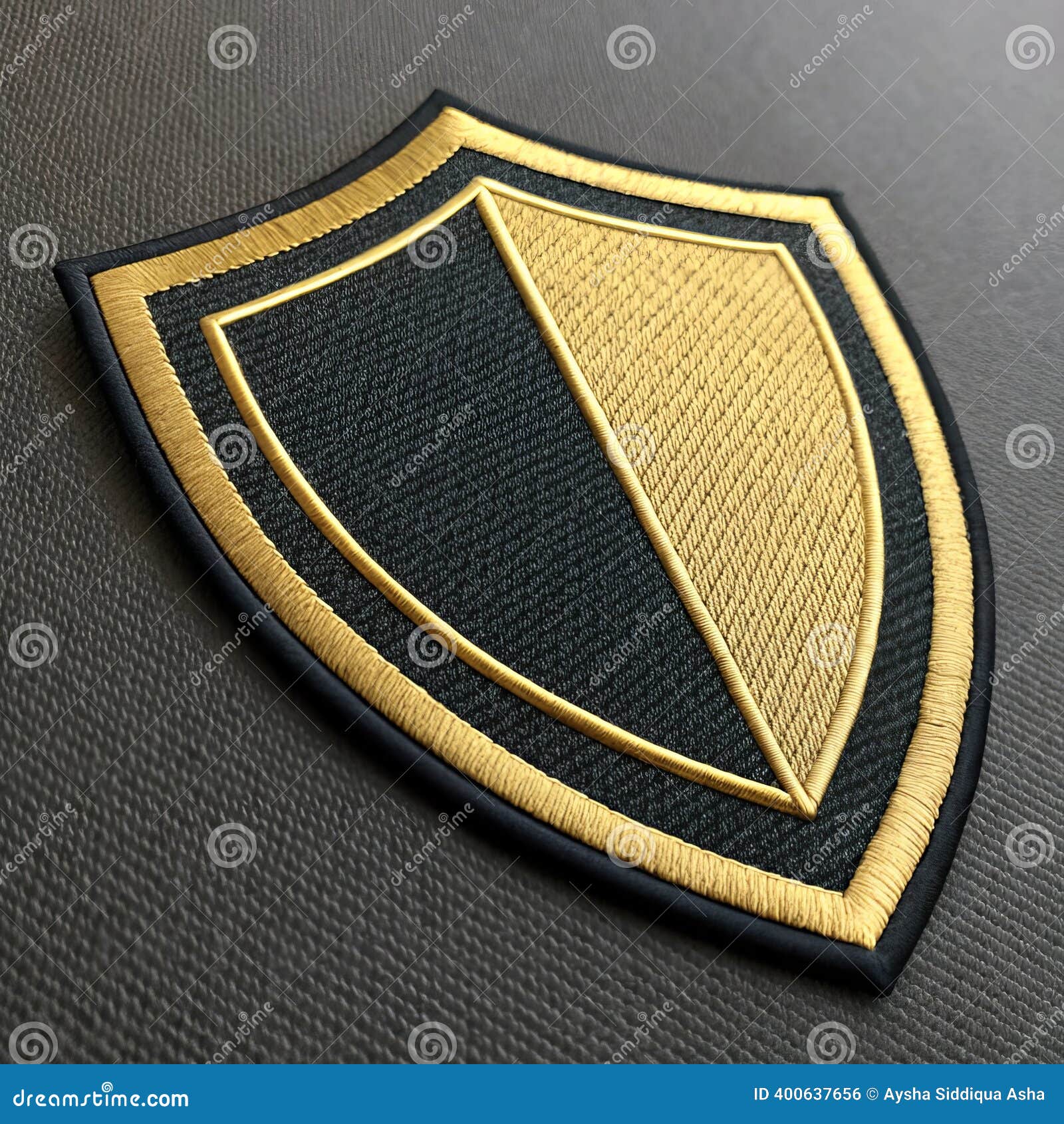
The edge finishes are subject to the same exacting standards. To give a garment a nostalgic aesthetic, ateliers use what’s known as a “merrowed” hem. This thick, rounded edge immediately brings to mind American college sports jackets or mid-20th-century military uniforms. Conversely, when the goal is to ground the design in cool modernity, laser cutting slices through the fabric with surgical precision, creating a clean outline that breaks with the conventions of the past.
Buying One’s Rank: The Paradox of Appropriation
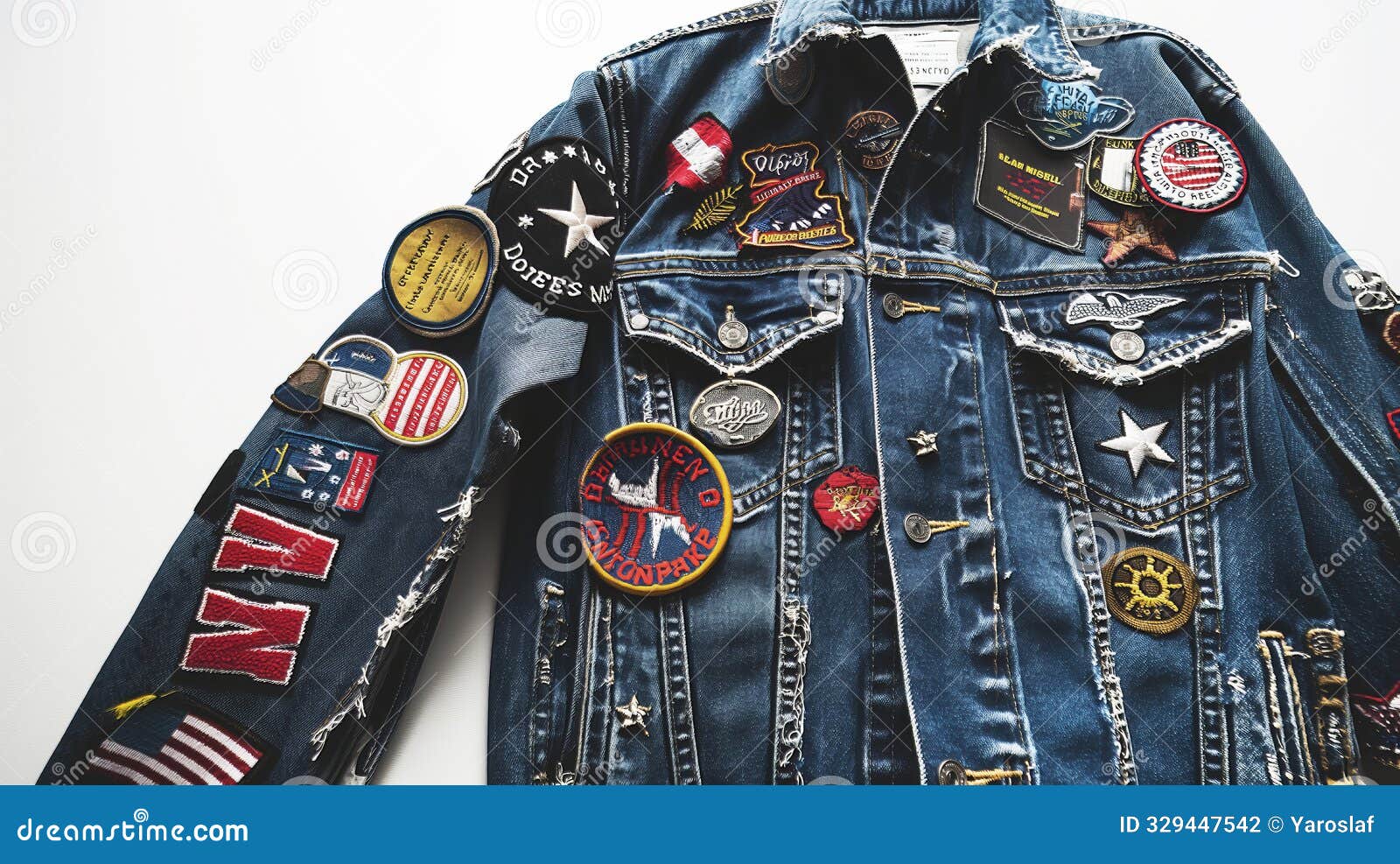
Behind this technical mastery lies a remarkable sociological shift. Originally, insignia weren’t bought. It was earned. Whether it was a fighter pilot’s distinction, a Scout’s rank, the graduation year on a varsity sweater, or the colors claimed by a motorcycle club, the patch functioned as a symbol of social status. It symbolized a rite of passage, service rendered to a nation, or allegiance to an often-marginalized subculture. Its value lay not in the cost of its fabric, but in the strict exclusivity of its award.
By transposing this element onto luxury ready-to-wear pieces, fashion houses are making a dramatic shift. The symbol is suddenly stripped of its original meaning. The visual form of belonging is preserved, but the barrier to entry is no longer personal achievement, initiation, or risk: it is purchasing power. Anyone with the necessary means can now wear a garment imbued with this heroic or rebellious significance. The prestige associated with action is replaced by the status conferred by design.
Today’s designers, moreover, do not bother to invent a new ornamental grammar. They are content to hijack a purely functional language and serve it up to a clientele that has never set foot on a tarmac or in a biker gang’s hideout. Fashion has always known how to leech off the codes of workwear or society’s fringes, but the use of the patch represents the crudest form of this borrowing. Designers are no longer merely drawing vague inspiration from a silhouette; they are literally ripping the object from its original context to graft it onto a tailor-made jacket.

The Verdict of Auctions and the Illusion of Heritage
This thirst for authenticity—even when fabricated—stems directly from collectors’ behavior. The secondhand and vintage market follows an unyielding rule: wear and tear tells a story, but the patch certifies it. On the racks of specialty retailers, a genuine vintage flight jacket or an old black leather biker jacket commands stratospheric prices if it has retained its original insignia. An identical model, produced in the same factory the same year but devoid of any embellishments, will sell for a fraction of that price.
The original patch crystallizes a geography, a unit, and a specific decade. It acts as a seal of provenance that cannot be forged without destroying the piece’s aura. The creative directors of brands working with the concept of heritage have perfectly analyzed this speculative dynamic. When they reissue a model from their own archives or draw inspiration from a military jacket, the addition of a newly machined emblem is enough to instill a sense of patina. The brand-new piece immediately suggests a glorious past that it has never actually experienced. The symbol does the work of the imagination, filling the historical void of a garment fresh from the workshop.
Durability as the ultimate selling point
If this embellishment survives the steamroller of seasonal trends, it is ultimately thanks to its very nature. Fashion is, by its very nature, fleeting, with a penchant for novelties that go out of style within six months. The embroidered patch, on the other hand, was designed to withstand tar, inclement weather, and combat. Its structure resists abrasion, and its colors hold up against external stresses. If the patch is applied to the garment according to best practices, it will likely outlast the fabric it’s attached to.
This technical durability resonates perfectly with the new expectations of a clientele weary of the planned obsolescence of their wardrobes. Buying an outerwear piece adorned with heavy embroidery means acquiring a garment designed to stand the test of time. It no longer matters whether one knows anything about motorcycle culture or infantry regiments. The emblem’s protective and identity-defining functions have faded, leaving behind its primary virtue: a stubborn ability to resist the wear and tear of time.