
Beneath the gilded ceilings and amid the marble columns of the Jack Shainman Gallery in New York, the imagery of the conquest of the West has definitively laid down its arms. Or rather, it has traded its ruggedness for theatrical refinement. Last February, the staging conceived for Ralph Lauren’s Fall 2026 collection immediately established a new visual language. The space, adorned with oriental rugs, restored vintage furniture, and a hand-painted structure simulating a forest shrouded in night, bore no resemblance to a dusty ranch. Worn leather mingled with crumpled velvet, marking a clear break with folklore. The American frontier myth has become gentrified, now favoring sophisticated salons over arid plains.
This sophistication reflects a profound sociological shift. Rural aesthetics are no longer consumed at face value. They have become more refined and sophisticated, incorporating the codes of “chic pragmatism”—a term judiciously used by the editors of *Marie Claire* to describe the fifty-nine looks from that famous New York fashion show. This show of strength was particularly evident in the use of more than fifty custom-developed fabrics. The look—centered around a knit corset, a tank top, and a matching skirt worn by Gigi Hadid to open the show, and culminating in a caramel-colored velvet dress—sets a new standard. The buzz extends beyond mere fashion criticism to become a digital frenzy: the previous quarter ended with a 132% surge in searches for zip-neck sweaters on Lyst, while the American brand garnered over 33,000 mentions on TikTok and Instagram in a single month.
The Accessory as an Urban Manifesto
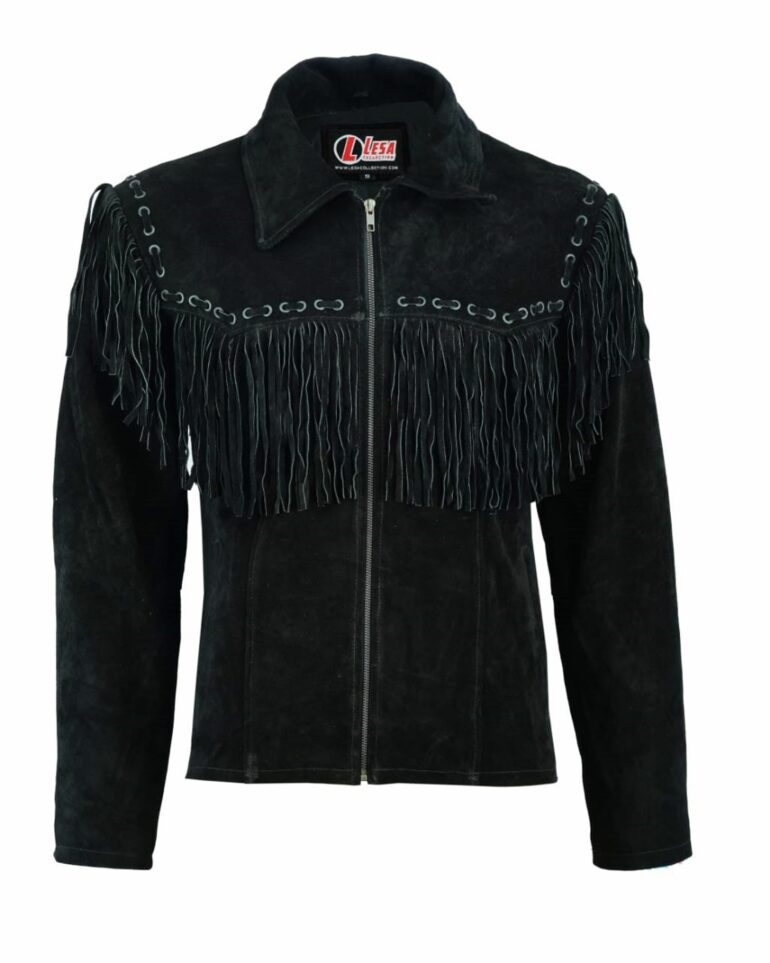
Fall 2026 confirms this assimilation of equestrian fashion into everyday wardrobes. The look no longer seeks to mimic the movie cowboy but infuses its references in subtle doses. The wide-buckle belt, the classic felt hat, or the fringed stole playfully disrupt purely urban pieces. Vogue’s trend reports from early September document this stylistic friction precisely: the Texan belt is now tied without hesitation over sleek winter coats or immaculate tailored pants. Khaite, Chloé, Altuzarra, and Michael Kors are all contributing to this redefinition, erasing any trace of a costume.
The irony of this appropriation lies in the financial valorization of an image historically linked to labor. Rustic charm now commands the price of fine jewelry. To treat yourself to a piece of this territorial fantasy, you’ll need to shell out $1,990 for the Running model that cinches the waist at Chloé, or $598 at Ralph Lauren for a leather version accented with turquoise. Smaller, niche labels are following suit, with Nili Lotan’s Wayne piece priced at $650, or the Santo model designed by Déhanche at $395. The utilitarian object has become a status symbol, a fantasy for city dwellers longing for the great outdoors.
The tactile antithesis of a digital age
While the wardrobe has served as a testing ground, the home is embracing the trend with surprising intensity. The horse is making its way into living rooms, stripped of any childish or carnival-like connotations. Interior design platforms, such as Apartment Therapy, are highlighting the explosion of a trend dubbed “horse girl decor.” The statistics confirm this appetite for materiality. At TaskRabbit, Tamara Rosenthal notes a tangible shift in DIY and home improvement requests: requests related to Western-style aesthetics have quietly increased by 5% over the past year, but projects incorporating leather have risen by 12%, and ranch-inspired projects have literally skyrocketed with a 93% surge. Inspiration is moving beyond virtual mood boards to reshape the layout of walls and floors.
This thirst for organic textures responds to a contemporary anxiety. The astrological calendar, which designates 2026 as the Year of the Fire Horse, gives House Beautiful the opportunity to decipher this need for physical warmth. In a technological and political climate perceived as unstable, the return to weathered materials acts as a shield. Lindsay Gerber Northart sums up the situation with sharp clarity: this aesthetic is the absolute antithesis of artificial intelligence. Worn leather, aged brass, thick wool, and dark iron embody the passage of time and human imperfection. Jennifer Miller sees in this a visceral desire for romantic freedom—a need to reconnect with nature. As for the equine motif, Maria Burke highlights its enduring presence in the history of design, noting that this fascination dates back to the earliest frescoes at Lascaux.

Incorporating these elements, however, requires strict discipline to avoid the pitfall of a themed cabin. Martha Stewart’s guidelines align with those of interior designers: restraint is key. One or two statement pieces per room are enough. Kerrie Kelly recommends pairing this earthy color palette and natural materials with decidedly modern lines. At Etsy, Dayna Isom Johnson observes the emergence of an alluring contrast, where suede and fringe flirt with chrome accents and vibrant colors. The goal is to thoughtfully incorporate mementos and textures, whether you live on the West Coast or in a Northeast apartment.
Deconstruction Through Contemporary Art
To understand the longevity of this movement, one must look to the galleries. It is art that prevents this imagination from becoming frozen in sterile nostalgia. The Kevin Barry Art Advisory report on the “Contemporary Cowboy” highlights how visual artists are appropriating these codes to subvert them. Artists such as McKenzie Fisk and Kev’Ron Madden manipulate the iconography of the Wild West through unsettling plays on scale, unexpected color combinations, and compositions bordering on surrealism.
The curatorial approach eschews historical reenactment in favor of traces and wear and tear. The works incorporate elements rescued from oblivion, such as hand-crafted ceramics and oxidized metal pieces. These material fragments establish a dialogue with our own era, celebrating the artisanal craft in the face of standardized production. The approach rejects the perfect copy, cherishing deviation and strangeness.
The appropriation of this culture by the luxury sector inevitably raises questions about its sincerity. Stripped of its roughness, does the Western aesthetic retain its down-to-earth roots? The answer lies precisely in this rejection of pastiche. As long as the treatment remains suggestive—the patina of dark metal, the curve of a sculpture, the tactile quality of a belt—it achieves a remarkable feat: extracting a bygone era from its folkloric straitjacket to make it the most relevant aesthetic vocabulary for an age in search of reality.