
Luxury Facing the Challenge of Autonomy: Manolo Blahnik’s Profound Transformation
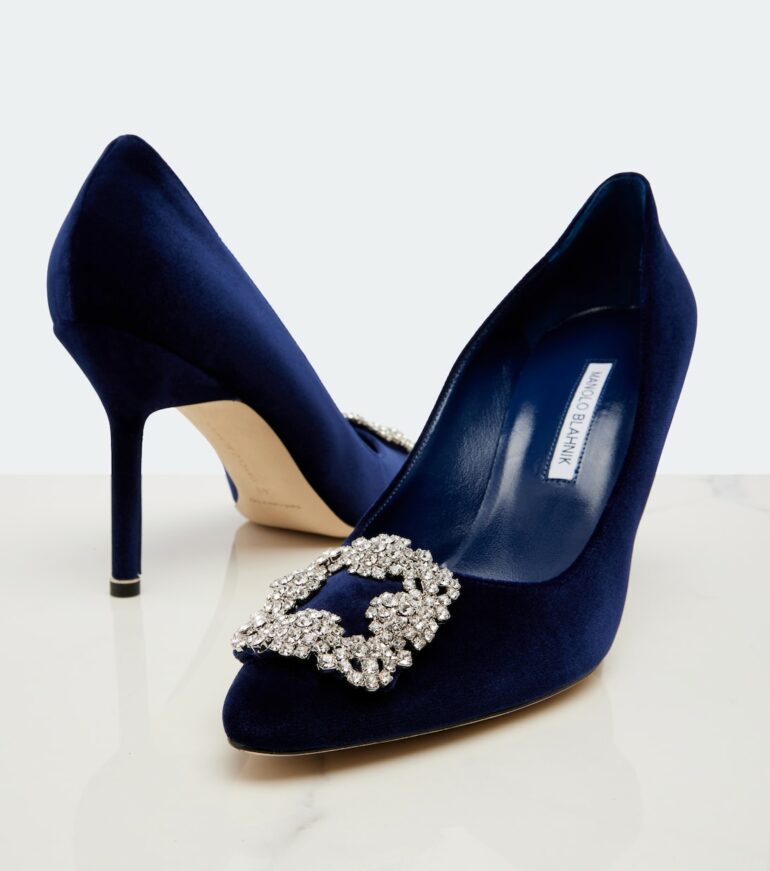
In the collective imagination, the name Manolo Blahnik immediately conjures up images of sky-high stilettos, crystal buckles, and an air of absolute chic, immortalized in the archives of pop culture. Yet behind the glitz of fashion shows and red carpets, the British fashion house is undergoing a major transformation, as its financial strategy seeks to align with an unaltered brand image. The year 2025, whose results have just been released, perfectly illustrates this turning point: a period in which investment in the future is temporarily weighing on immediate profitability but is reshaping the contours of a company ready to take its destiny back into its own hands.
Annual revenue totaled 83.5 million euros, marking a 3% decline at current exchange rates and only a 1% decline at constant exchange rates. While these figures show a slight decline, they primarily reflect a remarkable stabilization. One need only look at fiscal year 2024—marked by a sharp 19% drop in revenue to 86.4 million euros—to see that the bleeding has been stopped. This gradual recovery is taking place against the backdrop of a particularly unstable global economic environment for the luxury sector, proving that the brand maintains a solid foundation among its loyal customer base.
The End of the Wholesale Era and the Shift to Direct Sales
One of the main obstacles the company faced during fiscal year 2025 stemmed from the major turbulence experienced by its primary business partner in the United States. The financial collapse of Saks Global—the entity that now oversees institutions such as Saks Fifth Avenue, Neiman Marcus, and Bergdorf Goodman—directly impacted wholesale sales volume. This upheaval among U.S. retailers served as a catalyst for Kristina Blahnik, the brand’s CEO, to accelerate her strategy. Faced with the fragility of traditional department stores, Manolo Blahnik intensified its shift toward a “Direct-to-Consumer” (DTC) model.
This paradigm shift is already bearing fruit in terms of operating profitability. The gross margin has increased by one percentage point in one year, driven by this commitment to selling directly to the end customer without intermediaries, coupled with much stricter management of operating costs. This newfound autonomy allows the brand to better control its image, its pricing, and, above all, the close relationship it maintains with its customers. Early indicators for 2026 confirm this trend, with double-digit growth recorded in the direct-to-consumer channel during the first half of the year.
Physical Investments: From Milan to Beijing
While immediate profitability has taken a hit, this is also because the company chose not to stand still. EBITDA fell by 36% to 5.4 million euros, a decline attributable to an ambitious physical expansion strategy. Opening company-owned stores is expensive, but that is the price of independence. The network now comprises 24 retail locations, including 14 flagship stores managed directly by the company, with the remainder operated by franchise partners.
The year 2025 was marked by strategic openings in key markets: Miami, Costa Mesa, California, and, most notably, the brand’s first store in Italy, in Milan. This Milan location is symbolic for a brand that manufactures its entire collection on the Italian peninsula. In January 2026, the footwear brand set up shop in Beijing, rounding out its expansion into China with the launch of a dedicated e-commerce platform. To solidify its position in Asia, the company also acquired the remaining shares of its Hong Kong subsidiary, thereby securing full control over its operations in that region. Although these investments resulted in a pre-tax loss of 1.6 million euros due to external factors, management views them as the necessary foundation for future growth.
The Shoe as an Object of Culture and Collaboration
Beyond Excel spreadsheets, the brand’s vitality was expressed through a notable cultural presence. In 2025, Manolo Blahnik partnered with the Victoria and Albert Museum in London to sponsor the “Marie Antoinette Style” exhibition. This project was more than just a sponsorship initiative: it gave rise to a dedicated capsule collection, celebrated at exclusive events in London and Paris. This ability to link luxury craftsmanship with art history reinforces the brand’s high-end positioning, elevating it above mere passing trends.
The end of 2025 was also marked by an unexpected collaboration with Balenciaga. This meeting of two distinct aesthetic worlds resulted in a line of crystal-embellished necklines, fusing Blahnik’s sophisticated classicism with the contemporary boldness of the George V Avenue house. These special projects, while sparking desire, serve as a showcase for technical expertise that continues to captivate a discerning clientele.
The wedding segment: an unexpected growth driver
While certain sectors of the luxury ready-to-wear market have stalled, the wedding segment has proven to be a true driver of performance for the house. With meteoric growth of over 40% in a single year, the “Wedding” line has established itself as a financial pillar. For many brides, choosing the right shoes has become just as crucial as choosing the dress, and Manolo Blahnik holds a prominent place in this ritual. This dynamic helps offset the volatility of seasonal collections with more stable and highly profitable demand.
Despite external pressures and a U.S. wholesale market undergoing restructuring—the benefits of which are not expected to materialize until 2026—Kristina Blahnik’s vision remains resolutely optimistic. The resilience demonstrated during these challenging months is a testament to the brand’s strategic agility. By strengthening its margins and carefully selecting new markets to enter, the brand is not merely weathering the industry crisis; it is actively preparing for a recovery cycle that forecasts already predict will be more stable in the second half of 2026. The brand seems to have understood that to stay afloat, one must sometimes be willing to slow down long enough to reposition oneself.