
The Spirit of a Roman Home: Beyond Traditional Hospitality
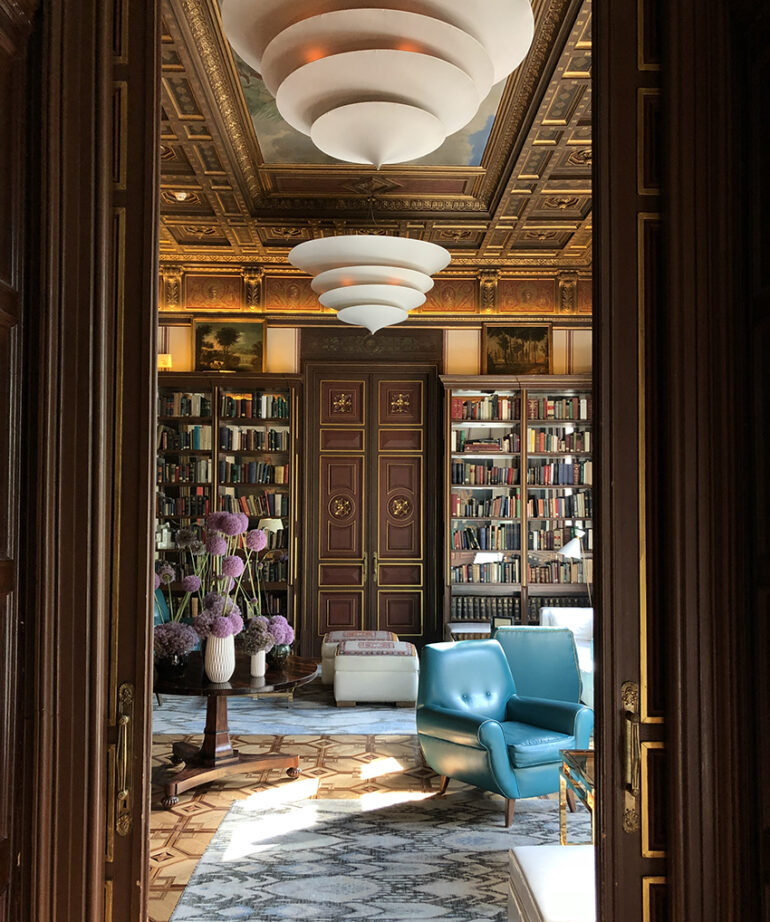
In Rome’s historic center, the opening of Casa JK Place is shaking up the conventions of traditional hospitality by offering an experience that feels more like a private residence than a conventional hotel. Here, the concept of a “room” gives way to generously sized apartments, where five-star service blends seamlessly with a sophisticated, home-like atmosphere. Florentine architect Michele Bönan, a longtime partner of owner Ori Kafri, designed these spaces to resemble the home of an art collector. The hallways are punctuated by double doors with gilded handles that open onto bold color schemes: Venetian red contrasts with ivy green, while tobacco tones envelop the relaxation areas.
This approach, refined over twenty-five years of collaboration between Bönan and Kafri, is based on a delicate balance between grandeur and absolute comfort. Premium materials are everywhere, from kitchens topped with massive slabs of Calacatta marble to bathrooms carved from black marble. The furnishings—a mix of custom-made pieces, antiques, and chrome—follow an aesthetic that the group has already refined in Capri and Paris, ahead of a future project planned for Milan. Ori Kafri’s stated goal remains privacy and flexibility, offering travelers the feeling of living in Rome rather than simply staying there. This immersion in Roman life is complemented by a vibrant local scene, epitomized by Drink Kong, one of the city’s most popular cocktail bars, which has just opened right next door to the hotel.
Florida and Austria: The Radical Reinvention of the Built Environment
In Fort Lauderdale, nicknamed the “Venice of America,” the hotel landscape is often dominated by massive, ostentatious complexes. Le Perroquet takes the opposite approach, one of understated craftsmanship and respectful integration. Housed in a former 1950s motel, the 37-room hotel has been transformed by Belgian architect Bernard Dubois. Rather than making a clean break with the past, Dubois preserved the low-rise silhouette of the original building while streamlining its design. The guest’s journey is designed like a choreographed dance, leading from the cozy entrance to a pool surrounded by lush greenery.
Inside, European minimalism meets the laid-back East Coast lifestyle. The rooms feature custom-made furniture, Sferra linens, and Byredo toiletries, all enhanced by a curated art collection that includes works by Jean Cocteau and Jeff Koons. Located just minutes from the beach and the NSU Art Museum, the Perroquet stands out as a serene base for exploring a city that is diversifying its cultural offerings, far from the clichés of Miami. The project highlights a strong trend: the revitalization of mid-century architecture through the lens of contemporary luxury.
A similar philosophy guided Berlin-based architect Piotr Wisniewski in the creation of The Companion in Vienna. On Mariahilfer Strasse, the challenge was to revitalize a Wilhelminian-era building without betraying its soul. Wisniewski opted for geometric clarity, where the historic, weathered columns contrast with black-lacquered metal structures. The chosen materials directly echo Vienna’s heritage, particularly through the use of terrazzo and bubinga veneers that clad the lobby’s bookcases. The culinary aspect plays a central role here with the Boca restaurant. Chef Lauryn Therin, who honed her skills in the kitchens of Ottolenghi in London, offers a Mediterranean menu centered on sharing, highlighting vibrant flavors such as tahini, sumac, and pistachio, which accompany dishes like tuna skewers.
La Darbia: A Lesson in Geology and History in Tuscany
Less than an hour south of Florence, in the Chianti region, architect brothers Gian Carlo and Matteo Primatesta took on a unique challenge: restoring an 11th-century hamlet to transform it into the La Darbia hotel. Far from seeking to create a destination famous in its own right, the project aimed to capture the region’s deep-rooted identity. To achieve this, the two brothers imposed absolute rigor on their choice of materials, using exclusively regional resources that tell the story of the Italian Renaissance.

*Pietra serena*, a gray stone quarried in Tuscany and once favored by Michelangelo, forms the mineral backbone of the site. It is paired with Impruneta terracotta—the same material used for the tiles on the dome of Florence Cathedral—and travertine from the historic quarries of Rapolano. This attention to architectural detail is complemented by an immersion in the property’s agricultural cycles. The estate is not merely a place to stay, but an active farm where olive oil and lavender honey are produced, thanks to forty beehives on the premises. In the kitchen, chefs Matteo Monfrinotti and Sebastiano Pagliaro follow this seasonal rhythm, grounding guests’ experiences in the physical and gustatory reality of the Tuscan landscape, amid cypress trees and sloping vineyards.
The Geography of Cultural Renewal in Rome
A stay at Casa JK Place naturally invites guests to explore an Italian capital that is reinventing itself far from the overcrowded tourist circuits. Rome’s current vibrancy is evident in hybrid spaces where fashion, art, and gastronomy intersect. The Amanita Gallery, which specializes in contemporary art, exemplifies this movement: after making a name for itself in New York, it chose to establish its Italian roots here, breathing new life into the local art scene.
The fashion scene isn’t to be outdone, thanks to Le Tre Sarte. This Roman brand stands out for its ethical approach, using surplus fabric to create custom collections. It recently opened a second boutique offering matching outfits for parents and children, showcasing an elegant and sustainable family style. For lovers of culture in the broadest sense, the Teatro della Cometa—a venue steeped in history—has been revitalized under the leadership of Maria Grazia Chiuri, creative director at Fendi, to become a multidisciplinary cultural hub.
Gastronomy is following this same quest for innovation. Retrobottega, known for its avant-garde cuisine and selection of natural wines, has moved to higher ground. It now occupies the rooftop of the Rhinoceros Hotel, a building designed by Jean Nouvel. Finally, for a more intimate tasting experience, Cantina Pipistrello (Piazzale degli Eroi, 7) has established itself as the new haunt for lovers of natural wines, carrying on the spirit of the famous Fischio bar. These venues paint a picture of a city where classical heritage serves as the foundation for vibrant contemporary creativity, echoing the hospitality philosophy of these new international destinations.