
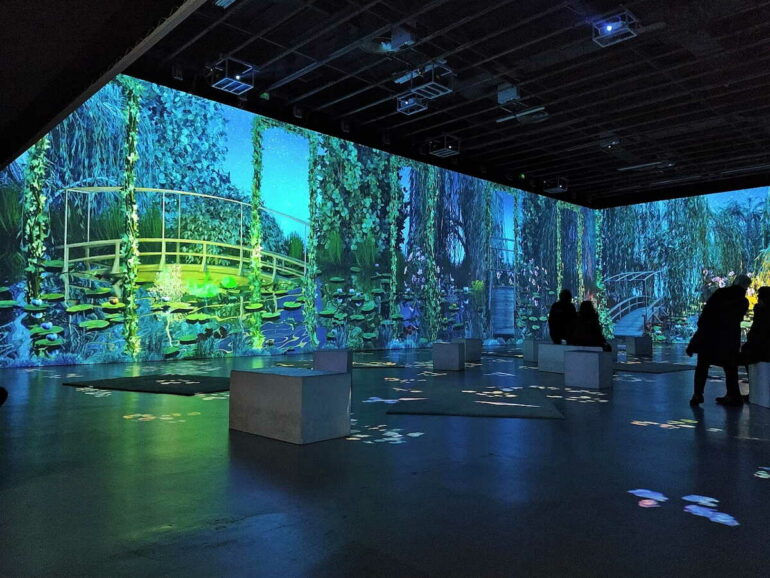
Museums are incorporating digital innovations with a newfound elegance, transforming the visit into an immersive, multisensory experience, all while ensuring that their primary mission of sharing knowledge remains at the forefront.
When technology enhances the museum space
In the hushed galleries of our museums, technology has shed its status as a mere fleeting gadget. It now stands as a sophisticated tool for engagement, sometimes offering an unexpected way to bring the past to life. At a time when visitors are seeking more interactive experiences, these cultural sanctuaries are reinventing themselves while preserving the essence of their purpose: to exhibit, interpret, and share.
The Work on Display: Beyond Contemplation
The contemporary museum is no longer content to simply display works or artifacts: it shapes their narrative and presentation. The Science Museum in London, for example, unveiled “Tomorrow’s World,” a virtual reality experience that allows visitors to relive British astronaut Tim Peake’s return from the International Space Station. Far from being mere artifice, this immersive experience keenly highlights how innovation can illuminate an already majestic scientific narrative.
This avant-garde dynamic is not an isolated phenomenon. The National Gallery has integrated the Smartify app, transforming the smartphone into a true digital label. With a simple gesture toward the canvas, visitors access a myriad of details, free to save or share their favorites. A discreet, almost mundane gesture that nevertheless profoundly redefines our relationship with artistic contemplation.
The traditional institution is thus transforming into a digital guide, marking an evolution as subtle as it is essential.
The Abolished Space: A New Architecture of the Visit
As early as 2014, Tate Britain was experimenting with a bold approach. In the dead of night, four robots equipped with cameras offered internet users the privilege of exploring the gallery remotely, broadcasting the atmosphere of the galleries live. While only a handful of privileged individuals could control these robots, the whole world could follow this nocturnal stroll. An initiative at the crossroads of performance, contemplation, and the augmented walk.
This virtual scenography raises a contemporary question: is physical presence still the only prerequisite for the museum experience? What was once taken for granted is fading. Institutions today strive to orchestrate a harmonious dialogue between accessibility, conservation, and the desire for embodiment. Digital tools do not replace the exhibition hall; they extend its architecture.

The Victoria and Albert Museum masterfully explored this tension with “The Future Starts Here,” an exhibition bringing together some 100 projects centered on connected objects, artificial intelligence, and digital culture, while examining the role of design in the face of the climate crisis. The future, illuminated beneath the museum’s vaults, is no longer an abstraction, but a prism through which to decipher our era.
Technology in the service of preserving history
According to the American Alliance of Museums, these smart tools provide real added value: they enhance the visitor experience while streamlining archive management. The museum is not merely a stage for aesthetic emotions; it is also a formidable mechanism dedicated to classification and documentation, making intelligible what would otherwise be lost to oblivion.
In this same quest for excellence, English Heritage has developed an augmented reality app that transports art lovers back to the pivotal moments of British history. The intention is not to mask reality, but to enrich it with unprecedented depth. Heritage becomes more accessible, provided that technical prowess takes a back seat to the nobility of the purpose.
The real challenge lies here: resisting the easy allure of digital technology to ensure these tools serve an uncompromised narrative rigor. Institutions that excel in this transition do not succumb to the siren song of novelty, but instead harness it to weave subtle connections between the works, history, and the public, with an elegance that must remain discreet.
Ultimately, the modern museum’s ultimate ambition is undoubtedly to make the voice of the past resonate, while jealously guarding against ever altering its purity.