
India has long been viewed by fashion observers as the next El Dorado, a sort of “new China” capable of absorbing the excess production of European ultra-luxury goods. However, the reality on the ground, as it is taking shape by 2027, tells a very different story. While the giants of Avenue Montaigne—from LVMH to Kering—continue to plant their flags in New Delhi, Bangalore, and Mumbai, the real seismic shift isn’t taking place in the hushed salons of high-end jewelry. India’s transformation is being driven by an emerging middle class, formidable in its business acumen, which is gradually moving away from disposable consumption toward a more demanding “premium” segment—one that is, paradoxically, highly price-sensitive.
The Indian retail landscape is undergoing a dramatic transition. According to the latest analysis from Deloitte, the apparel market on the subcontinent is following two trajectories that, though parallel, are about to intersect and trigger a historic shift. On one hand, fast fashion—estimated at approximately 12.9 billion euros in 2025—is expected to reach the 18 billion dollar mark by 2027. On the other, the premium segment, starting from a slightly lower base, is poised to take the crown with a projected value of $19 billion over the same period. This shift is not merely a matter of numbers; it reflects a profound sociological shift in which clothing is becoming a more enduring marker of social status than in the past.
The Psychology of the Indian Shopper: Between Aspiration and Calculation
To understand this shift, we must examine the motivations of two generations with opposing behaviors. While Gen Z remains the main driving force behind fast fashion—drawn in by the immediacy of social media and weekly micro-collections (36% of them swear by this model)—Millennials, for their part, are shifting toward quality. Nearly 44% of them are actively exploring higher-end lines, seeking to break free from the uniformity of mass-market ready-to-wear.
But beware: the Indian consumer is not an impulsive buyer. He may be one of the most calculating in the world. The data reveals an extremely fragile brand loyalty: 29% of potential customers systematically wait for sales periods before making a premium purchase. Even more telling, 21% do not hesitate to turn to less expensive alternatives if the added value of the garment is not immediately apparent. Only a tiny elite of 3% is willing to pay top dollar without batting an eye. This “merit-based premium” demands ironclad discipline from brands: it’s no longer enough to be expensive to appear desirable; every rupee spent must be justified by impeccable quality or a unique shopping experience.
This demand is particularly evident in what experts call “Premium+,” that gray area between affordability and absolute luxury. This specific niche is expected to more than double, reaching $5 billion by 2027, with a record annual growth rate of 36%. This is where the real battle for market share is being fought.
The Push by International Brands
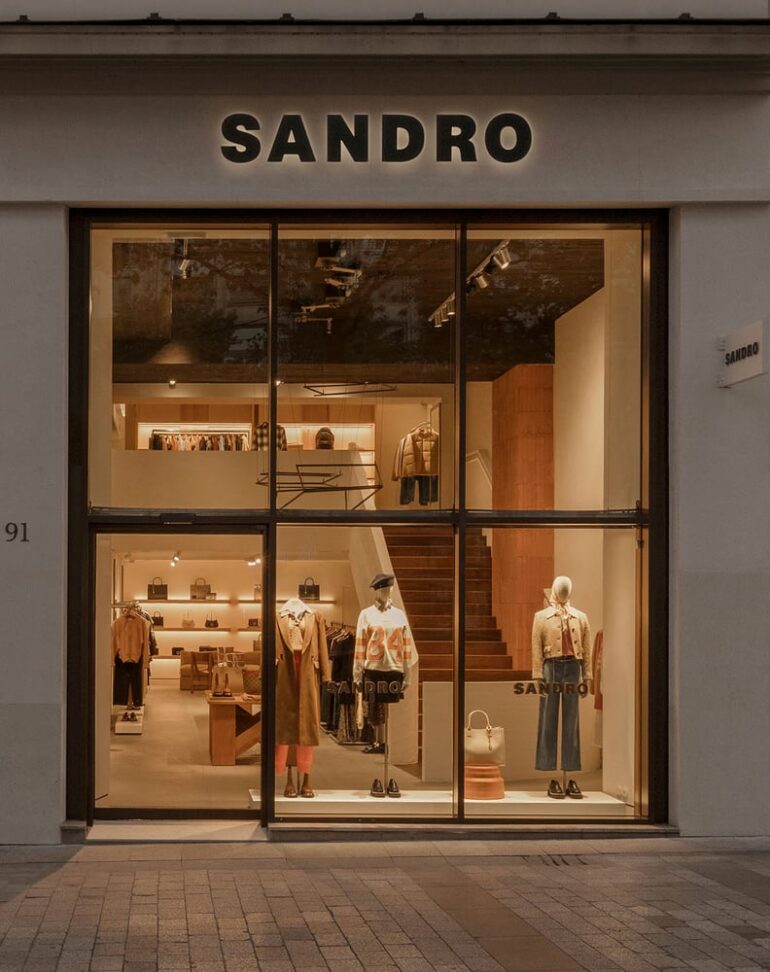
Faced with this potential, barriers are coming down. The number of global brands entering the Indian market has literally exploded, rising from a dozen new entries per year to 27 in 2024 alone. The profile of the new entrants is diverse, ranging from Sandro to Superdry, including Bershka and Cos. The sportswear sector is no exception, driven by a growing “appetite” for technical and wellness apparel, with players like Lululemon and the strategic return of Chinese giant Anta Sports, which is already planning about ten store openings by 2027.
Italy, drawing on its expertise in textiles and accessories, is leading a particularly high-profile push. OVS has set up shop at the Pacific Mall in New Delhi, the starting point for an expansion that also targets Mumbai. In the leather goods sector, Carpisa has made a major move by signing a licensing agreement with Neopolis Brands. The plan is massive: after opening its first store in Bengaluru, the luggage brand aims to open more than 100 retail locations nationwide.
The Benetton Group is following the same strategy, having chosen to partner with the Myntra Jabong India platform to relaunch its premium label, Sisley. Here, the focus is no longer just on brick-and-mortar stores, but on an omnichannel approach that integrates shop-in-shops and a massive digital presence—essential for reaching an ultra-connected population.

Narendra Modi’s Tax Headache
However, not everything is smooth sailing. Narendra Modi’s government recently introduced a tax measure that could throw a wrench in the premium market’s gears. The Goods and Services Tax (GST) on clothing priced above 2,500 rupees (approximately 27 euros) has risen from 12% to 18%. Conversely, for items below this threshold, the tax has been lowered to 5 percent.
The Clothing Manufacturers Association of India views this move as an alarming signal. By penalizing the segment priced above 2,500 rupees—a price now commonplace for the middle class and no longer reserved for the wealthy—the government is indirectly favoring ultra-fast fashion at the expense of the move toward higher-end products. Leaders such as Zara, Levi’s, and H&M are already being forced to revise their pricing policies and relocate part of their production to absorb this additional tax burden without driving away customers who are already very price-conscious.
2027: The Year of Liberalization
The major turning point, however, could come from geopolitics. The free trade agreement concluded in early 2026 between the European Union and India, scheduled to take effect in 2027, promises to reshuffle the deck. By eliminating or reducing tariffs on 96.6% of products exported from Europe, this agreement could double trade flows by 2032. For the European textile industry, this is a boon: the removal of the 12% tariff barrier will make Italian, French, and Spanish brands far more competitive against local or regional producers (Bangladesh, Vietnam, Turkey).
But trade is a two-way street. India is consolidating its position as a major manufacturing hub for Europe. Indian manufactured goods will enter the European market with virtually no tariffs, boosting the competitiveness of its leather and textile sectors. A new model is taking shape: an India that is no longer content merely to manufacture for the world, but that also consumes the products of those it supplies, in a shared cycle of moving upmarket.
Ultimately, success on the subcontinent will depend neither on marketing clout nor on brand recognition alone. It will hinge on a fine line: perceived value. Fast-fashion brands will have to raise their standards of service and quality to avoid being swept aside by cheaper local alternatives. As for premium brands, they will need to master the art of targeted promotion and hybrid distribution to win over consumers who, while dreaming of other places, always keep a close eye on their wallets. India is not the new China; it is a testing ground where the aspiration for elegance clashes, every day, with uncompromising economic pragmatism.