
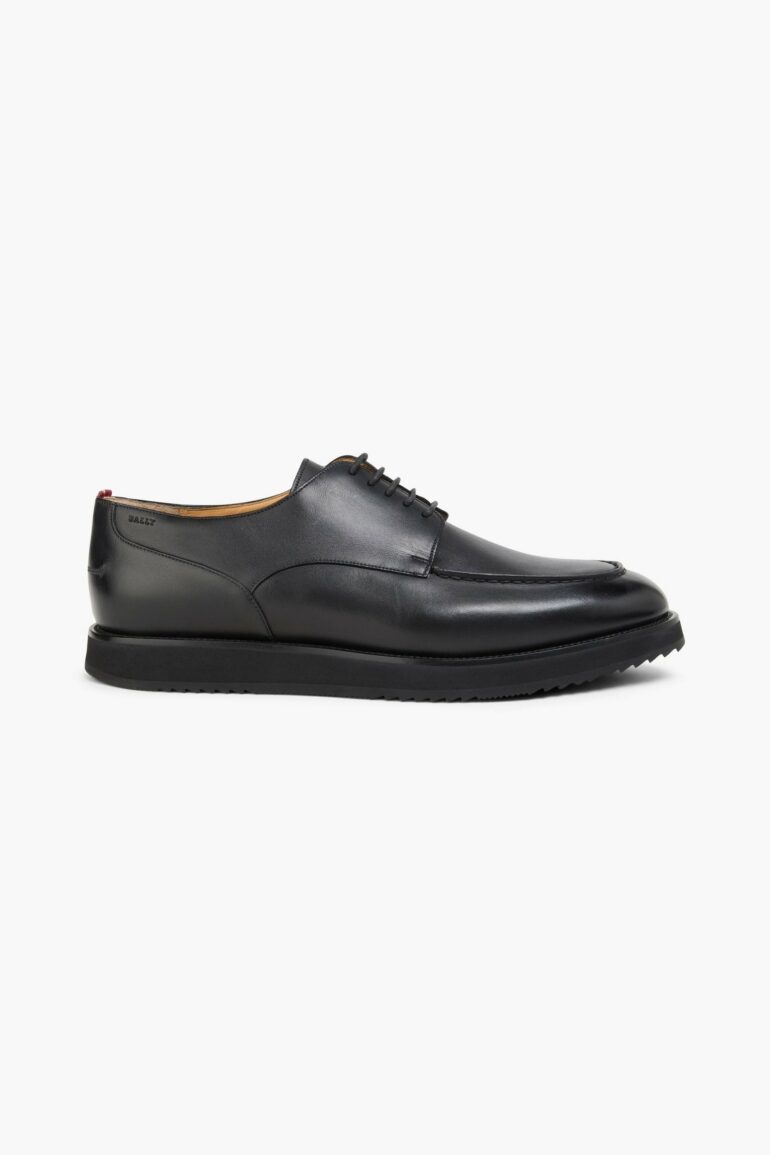
Silence has finally settled over the workshops in Caslano. The machines that once shaped leather for Bally have come to a standstill, abruptly bringing to a halt more than 170 years of Swiss manufacturing history. Twenty-seven artisan shoemakers have already received their layoff notices, draining the production lines of their expertise. While about a hundred employees still work in the administrative offices, the future of their jobs hangs by a thread. Placed under protective measures since June, the Ticino-based manufacturer faces a fateful deadline set for October. Once that deadline passes, the specter of total collapse will become a reality. Behind this accelerated industrial decline lies not merely a sector-wide crisis, but a financial maneuver of alarming proportions, orchestrated by its new owner.
The Predator’s Tactics
The fate of the Swiss brand is now being decided in the offices of the American investment fund Regent, led by Michael Reinstein. Acquired in early 2024 for a purely symbolic sum—but burdened with clearly heavy liabilities—the Swiss bootmaker has fallen into the hands of a specialist in extreme restructuring. A lawyer by training, Reinstein boasts an impressive track record with more than forty-five acquisitions to his credit. His scope of activity knows no sectoral boundaries: his portfolio spans equipment manufacturers, lingerie, media, and fashion brands.
Across the Rhine, the financial community has even given this investor a nickname that speaks volumes about his methodology: the “Heuschrecke,” or grasshopper. This term refers to financial players who swoop down on faltering companies to extract every last bit of residual value before leaving the company drained of its vitality. Regent’s approach is based on a well-oiled mechanism that involves buying out companies on the brink of collapse, slashing operating costs, and exploiting the loopholes and opportunities in bankruptcy law with surgical precision. The ultimate goal is always to revive an entity that has been dramatically streamlined of its physical and human resources.
The Escada Case
To anticipate what is unfolding in Ticino, one need only look at the trail Regent has left in the apparel sector. The recent history of the Munich-based women’s fashion label Escada serves as a textbook example. Acquired by the fund in 2019, the German company was quickly pushed into insolvency. Economic observers and the German-language financial press raised serious suspicions at the time, pointing to a tactical bankruptcy—deliberately engineered to avoid legal obligations related to severance pay. The systematic silence maintained by Regent’s management in the face of these accusations only deepened the unease.
Today, Escada still exists, but only as a shadow of its former self. The hundreds of employees who once kept the company running have disappeared, replaced by a team reduced to just under twenty people. The brand has been transformed into nothing more than an online storefront. This scorched-earth policy, incidentally, isn’t limited to the fashion industry. When the same group took over the tech media outlet TechCrunch, the entire European editorial staff was laid off immediately after the deal was signed. The strategy remains the same: slash payroll to retain only the intangible assets.
The value of a name, the weight of a factory
The gap between official communications and the reality of management is staggering. Last August, when the takeover was made official, Michael Reinstein publicly extolled Bally’s legacy, praising the artisanal tradition of this jewel of Swiss luxury. On paper, the word “luxury” still features prominently in the fund’s reports. In reality, Ticino magistrates had to intervene this week to urgently block an attempt to sell the Bally brand to a mysterious limited liability company based in the United States.
This thwarted legal maneuver illustrates the central issue at stake in this case. Franco Lorandi, a professor specializing in bankruptcy law, highlights a fundamental principle of the contemporary economy: a brand with a long-standing reputation retains considerable market value, regardless of the financial health or production capacity of the company that owns it. The Bally name can certainly survive the collapse of the Bally company. It is precisely this disconnect between intangible assets and industrial reality that threatens the shoe manufacturer’s Swiss roots.
The Refusal to Maintain Local Operations
The disconnect between the brand and its workshops, moreover, derailed a local rescue attempt. Roberto Martullo, head of the shoe manufacturer Künzli, stepped forward to take up the torch. His industrial plan was based on the logic of production synergies, aimed at ensuring the long-term survival of genuine Swiss manufacturing. Logically, this required acquiring the entire operation: both the production facilities and the brand.
Regent’s response made the American firm’s intentions clear. The investment fund declared itself willing to sell the factories, machinery, and production operations, but demanded to retain exclusive ownership of the Bally name. The Swiss buyer deemed this separation absurd and ultimately threw in the towel in the face of this refusal.
The manufacturer, founded in the nineteenth century, now finds itself backed into a corner. The options on the table are dwindling drastically as the fall deadline approaches. Bally could be broken up, with its production facilities liquidated on one hand and its name licensed out on the other. It could also suffer the same fate as Escada and be reborn as a mere digital shell, stripped of its artisans. The outcome in the coming weeks will determine whether the Ticino-based brand retains a tangible presence or joins the list of major luxury names reduced to mere financial assets.