
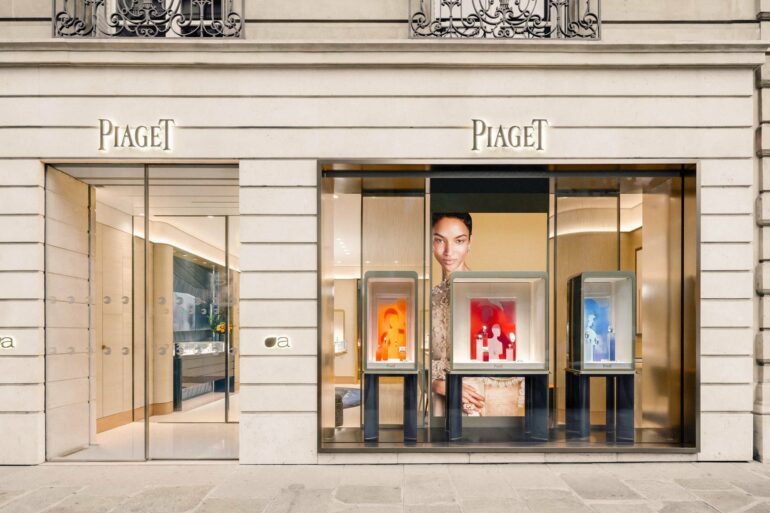
Faced with an unprecedented downturn in the global luxury market and the saturation of advertising strategies, major luxury brands must rethink their relationship with customers. To survive in a rapidly changing ecosystem, the time has come to return to credibility and authenticity.
The sector is currently experiencing a period of turbulence that goes far beyond a mere cyclical slowdown. According to Bain & Company, the global market for luxury personal goods declined by 2% in 2024 to €363 billion, marking a sudden halt after years of almost automatic expansion. A KPMG study published in July 2025 confirms that this is the very first annual contraction since the pandemic. Behind this correction, a new reality is taking hold: a large portion of the customer base no longer responds to the ostentatious signals of the past.
The End of the Advertising Illusion
For a long time, the industry capitalized on a repetitive visual language: polished campaigns, ubiquitous brand ambassadors, and a constant stream of idealized images. Today, this approach has lost its effectiveness. The explosion of sponsored content, fatigue with influencer marketing, and the emergence of AI-generated images have trivialized what was meant to be exceptional. Now, transparency and meaning are taking precedence over mere staging.
This shift is particularly pronounced among young consumers. KPMG estimates that Generation Z is increasingly less inclined to invest in luxury goods, within a global market that has already seen its customer base shrink by approximately 50 million people in the space of just two years. Far from being a mere generational whim, this decline reflects heightened expectations regarding the provenance, consistency, and intrinsic value of each creation.
The Illusion of Asian Hyper-Growth
The sharp slowdown in the Chinese market remains one of the main factors behind this reversal. As early as November 2024, Bain indicated that sales in China could fall by 20 to 22% over the year. This forecast was echoed by *Le Monde*, which emphasized that the global luxury market could, in fact, contract by 1 to 3% in 2024. The impact is severe for a sector whose growth over the past decade relied largely on the insatiable appetite of China’s urban clientele.
However, this geographic setback does not explain everything. Successive price increases have ultimately driven away aspirational customers, while North American demand is becoming more selective. To compensate, Bain recommends exploring new markets, particularly in Latin America, India, and the Middle East, where the upper-middle classes are gaining economic clout.
LVMH: The Limits of Volume-Driven Growth
While LVMH retains its status as the undisputed leader, the giant is not immune to this widespread slowdown. In the fall of 2024, Le Monde was already reporting a 3% decline in the group’s quarterly sales—the first such drop since the health crisis. The fashion and leather goods division, the true growth engine driven by Louis Vuitton, has in particular suffered a sharp slowdown.
The group maintains considerable clout thanks to iconic brands such as Louis Vuitton, Dior, Tiffany, Sephora, and Moët Hennessy. Nevertheless, this colossal scale is now revealing its weaknesses. When the occasional customer hesitates, the volume-driven model slows to a crawl. While this immense scale certainly provides financial resilience, it inevitably exposes the group to fluctuations in overall market sentiment.
Kering and the Wear and Tear of Escalation
Kering illustrates even more directly the end of a certain narrative in the luxury sector. Gucci, its main growth driver, has long embodied spectacular fashion, based on controlled excess and maximum visibility. But this aesthetic seems to have reached a point of saturation, as the public is gradually growing weary of this stylistic clamor.

The group, which also owns Saint Laurent, Bottega Veneta, and Balenciaga, faces a complex path ahead. The crisis is not merely economic; it is, above all, cultural. The brands most dependent on the culture of the moment and constant attention are the first to suffer when that attention wanes. The glitz of yesterday, which was their main draw, struggles to win people over in an era when excess no longer inspires dreams.
Craftsmanship and Rarity as Safe Havens
At the opposite end of the spectrum, certain fashion houses are thriving by refusing to join the race for fleeting attention. Prada, for example, has solidified its desirability by focusing on an intellectual and sophisticated identity, with Miu Miu serving as its creative spearhead. Hermès, for its part, remains the absolute embodiment of timeless luxury, founded on rarity, artisanal excellence, and meticulously controlled distribution.
Their strength lies not in inventing yet another catchy slogan, but in preserving absolute integrity. In a market saturated with prefabricated narratives, the difference lies in the essentials: discernible craftsmanship, a long-term vision, and a certain restraint. Enduring luxury is, by its very nature, often the least talkative.
The Era of Creative Authority
The current cycle marks the end of a model in which prestige could be artificially inflated by the sheer power of screens alone. The new landscape favors houses capable of demonstrating their material excellence, rather than those that merely promise exclusivity through flashy campaigns.
This shift does not signal the end of luxury, but it does require a profound reevaluation of its codes. Brands whose sole leverage is advertising volume will face an increasingly skeptical and well-informed public. Those that, conversely, cultivate genuine creative authority will possess a subtle but infinitely more lasting advantage.