
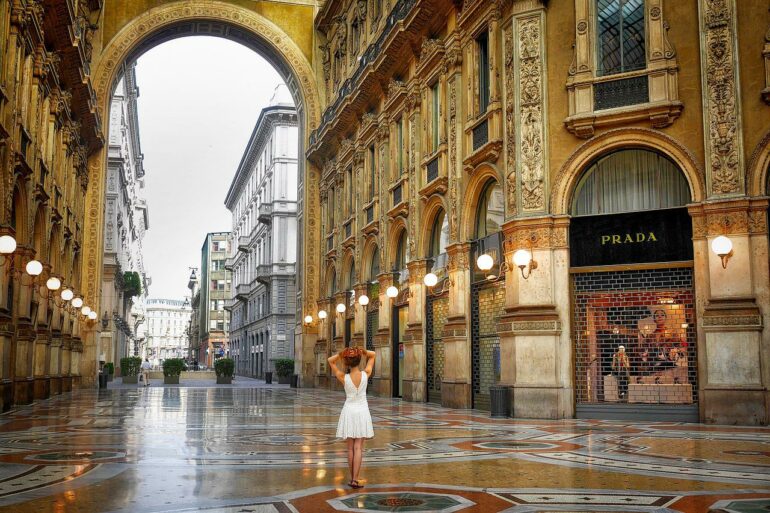
Major luxury brands are continuing their unstoppable expansion into European city centers. Faced with economic turbulence and fierce competition for prime locations, the sector is pursuing a dual-pronged strategy: cultivating ultra-luxury while maintaining strategic accessibility. According to Bloomberg and recent commercial real estate indicators, the number of high-end boutiques actually increased in several capitals last year, reshaping the face of luxury retail.
The strategic balancing act: between ultra-luxury and the aspirational market
After several months of economic uncertainty, many brands chose to refocus their efforts on ultra-high-net-worth clients. According to Bloomberg, this shift was initially intended to offset declining sales to more modest buyers. This approach resulted in the closure of retail locations deemed less profitable in favor of hyper-exclusive spaces, often reserved for VIP or highly targeted clientele.
However, this absolute move upmarket faces an unavoidable commercial reality. Les Échos Études points out that nearly 95% of buyers in the luxury segment are aspirational consumers. These consumers alone generate more than 60% of the sector’s total revenue, underscoring that the premium mass market remains the foundation of the major brands’ financial stability.
A Map Redrawn by Luxury Real Estate
On the ground, the battle for the best locations is raging. According to Cushman & Wakefield, 83 new boutiques opened in 2024 on Europe’s most coveted high streets, driving an average rent increase of approximately 3.6%. This real estate vitality, which reflects the intensity of the competition, is largely driven by the recovery of international tourism and the return of foreign visitors. A study by Bain & Company also forecasts global growth in the sector of between 8% and 10% in 2023, approaching €1.5 trillion in sales, driven in particular by the boom in tax-free shopping.
Geographic expansion is not uniform, however. Paris stands out as the epicenter of this dynamism, accounting for more than one-fifth of new European openings this year, while Spain has shown remarkable growth since 2022, according to Savills. Unsurprisingly, the industry giants are setting the pace: one-third of these new locations are being opened by the LVMH, Kering, and Richemont groups, primarily in the fashion and accessories sectors.

Luxury perfumery, a new gateway to accessibility
Alongside the fashion titans, the market is witnessing a fascinating proliferation of boutiques dedicated to luxury perfumery, particularly in the French capital. Experts attribute this trend to the high accessibility of these olfactory creations. Perfumes are naturally more affordable than a piece of fine jewelry or a luxury watch. They serve as a gateway to attract a younger or aspirational clientele, allowing brands to forge an initial sensory and experiential connection with a broader audience.
The challenge of long-term desirability
While the sector has shown a certain resilience in the face of uncertainty, an exclusive focus on the ultra-luxury segment has its own limitations. Market data suggests that neglecting the aspirational clientele could ultimately reduce revenue in the medium term. At the same time, soaring rents on prime shopping streets threaten to slow the opening of new flagship stores if the most exclusive offerings become financially scarce.
Luxury brands are currently navigating a complex process of adaptation. According to Cushman & Wakefield and Savills, the high-end retail market will remain extremely competitive but fragmented. Brands continue to invest in spectacular locations while offering more varied formats to expand accessible offerings. In summary, the continued growth of the retail footprint in Europe illustrates this dual necessity: establishing a status-symbol presence while diversifying revenue streams. The challenge ahead will be to best balance brand image, the in-store customer experience, and commercial results.