
Escaping Exoticism to Rediscover One’s Roots
For decades, a bottle of perfume served as a plane ticket. All it took was uncorking a fragrance to be promised a fantasized Orient, a nameless island, or an abstract “elsewhere”—concepts the industry milked to the last drop. The very vocabulary of perfumery had become frozen in a postcard-like fantasy, prioritizing distant escapism over substance. But the market has shifted. Designers’ olfactory compasses now point inward. Faced with consumers saturated with disembodied narratives, the major houses are abandoning geographical fiction to delve into their own archives. The current trend demands a rigorous exploration of the brand’s archives, raw materials, and foundational geography. Luxury is no longer found in the unknown, but in the dizzying precision of the familiar.
This redefinition of the olfactory journey requires perfumers to become archivists. They map out very real territories, explore family estates, and isolate the fragrance accords that have forged their employers’ reputations. The challenge is no longer to create a jarring sense of disorientation, but to establish intimacy—an almost heritage-inspired dialogue. While this approach gains in depth, it excludes neither power nor formal audacity. It simply reframes the narrative: the storytelling centers on a tangible truth, thereby avoiding the pitfall of folklore that has become far too easy to commercialize.
The Land as an Anchor
Physical space once again becomes the foundation of creation—but a measured space, defined by a designer’s history. Dior perfectly illustrates this strategic retreat with “Dior Paradise.” Francis Kurkdjian does not seek an artificial paradise here, but rather captures the atmosphere of the Château de La Colle Noire. This Provençal estate, acquired by Christian Dior in 1951, serves as the inspiration for the composition. By building the fragrance around bitter almond, supported by warm woods and a hint of citrus, the perfumer crafts a natural world that functions as a secluded refuge. The fragrance evokes a specific landscape, dramatized just enough, refusing any drift toward tacky exoticism.
The same logic of an intimate territory permeates Chloé’s latest offerings. The “Atelier des Fleurs: The Mediterranean Essences” collection is rooted in Gaby Aghion’s sun-drenched geography. The very names of the creations serve as raw topographical landmarks: Vert Soleil, SableLavande, Sous les Pins, Plage du Figuier. There is nothing explosive or flashy here. The approach is one of total clarity, tracing the contours of a pine forest or scrubland with a consistency that commands respect. The fragrance extends the founder’s story without succumbing to a prefabricated narrative.
Across the Channel, Burberry applies this spatial rigor to an urban environment, but strips it of its heaviness. The “Her” line sidesteps the clichés of London’s asphalt to focus on the British capital’s sky. The intention is to inject air and space. The result opens with a fruity and floral top note blending pear, cherry, and freesia, before settling into a base of musk and vanilla. The brand opts for expansiveness rather than intensity, capturing a sense of freedom in a setting that is usually portrayed as stifling.
The Art of Isolation and a History Lesson
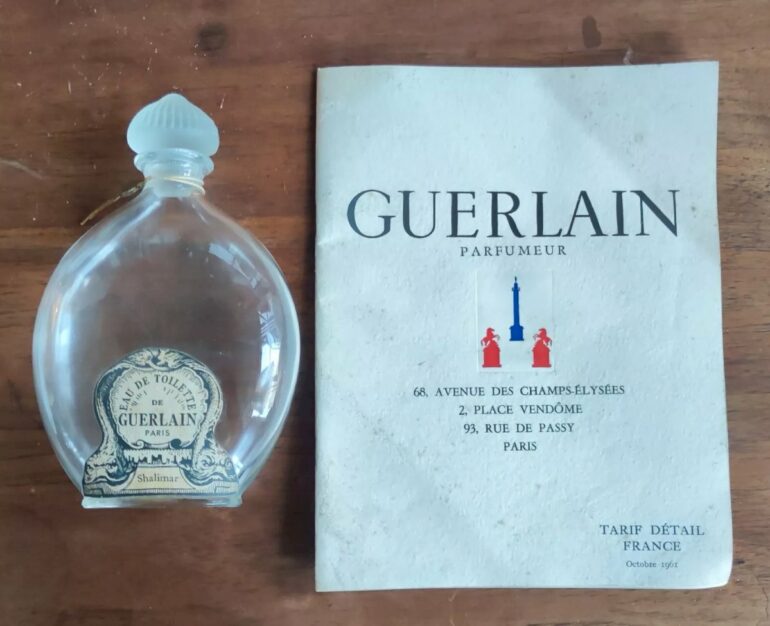
Beyond the concept of space, it is the treatment of the ingredients that undergoes a radical overhaul. The era of muddled blends, where ingredients are drowned out by fleeting trends, is over. At Guerlain, Thierry Wasser is leading a dizzying return to the brand’s roots with the “Les Privilèges” collection. The perfumer takes on a landmark: the Guerlinade of 1828. Rather than offering yet another sweeping reinterpretation, he dissects this historical foundation into six limited-edition creations. Iris, vanilla, rose, bergamot, tonka bean, and jasmine each receive their own dedicated formulation.
This approach is almost like a museum exhibition. It requires a clinical analysis of the brand’s heritage. Guerlain reminds us here that fine perfumery is built on infinite variations of raw materials, not on the constant rejection of the past. By isolating its cornerstones, the house rejects the contemporary olfactory clamor to establish a sense of rarity rooted in the uncompromising quality of its ingredients.

Bottega Veneta adopts a similar stance of clarity with its new line of ten eaux de parfum called “Alta.” Here, the method relies on measured contrast. Each bottle orchestrates a face-off between an element drawn from the Italian terroir and a note from afar. Salt meets oud, fig stands against cedar, basil confronts vetiver, and saffron challenges benzoin. Presented in a case featuring the leather goods house’s signature woven pattern, the collection shines through its restraint. The Italian house demonstrates that it is possible to work with strong contrasts without resorting to a show of force.
Working with Leather, Amber, and Oud
When houses move away from floral or citrus brightness to explore denser notes, the art of storytelling proves just as rigorous. Hermès remains steadfast in its exploration of materials with “Barénia Pleine Fleur.” Christine Nagel continues her work on the house’s chypre structure. Leather remains the unwavering anchor—the saddler’s ultimate reference—but the treatment is lightened. The blend incorporates patchouli, orange blossom, white lily, and the “miraculous berry” to lend the fragrance an unexpected brightness. The bottle, designed by Philippe Mouquet as a durable and refillable object, reflects this desire to anchor the product in the long term, balancing floral sensuality with strict architecture.
Louis Vuitton also chooses to freeze time, but focuses on a specific moment in the day. With “Ambre Levant,” Jacques Cavallier Belletrud seeks to capture the golden hour. The fragrance opens with a spicy top note, evolves into resinous notes, and concludes with the depth of oud imported from Bangladesh. The challenge was to infuse the fragrance with intensity without ever making it opaque or suffocating. The challenge has been met, offering a self-assured sophistication without weighing down the scent’s trail.
Not all brands, however, opt for minimalism. AMAFFI takes the exact opposite approach to restraint with its very first collection dedicated to oud, available in six fragrances for men and women. Here, the resin is pushed to its limits, blended with incense, caramel, saffron, and even dark chocolate. The bottle—a heavily sculpted crystal block—sets the tone: the object is meant to be ostentatious, rare, and precious. Yet, given this grand display, the collection’s overarching concept sometimes seems to overshadow the individual character of each fragrance. The display of opulence takes precedence over the raw essence of the ingredients.
The luxury industry has realized that vagueness no longer sells. Whether it’s dissecting a fragrance accord from 1828, recreating the atmosphere of a Provençal estate, or harnessing the power of an Asian wood, the houses that are making their mark are those that are narrowing their focus. Escapism hasn’t disappeared from perfume counters; it has simply taken on a new form. Today, it demands foundational acts, tangible places, and a self-assured sense of history. True exclusivity now lies in this ability to achieve precision.