
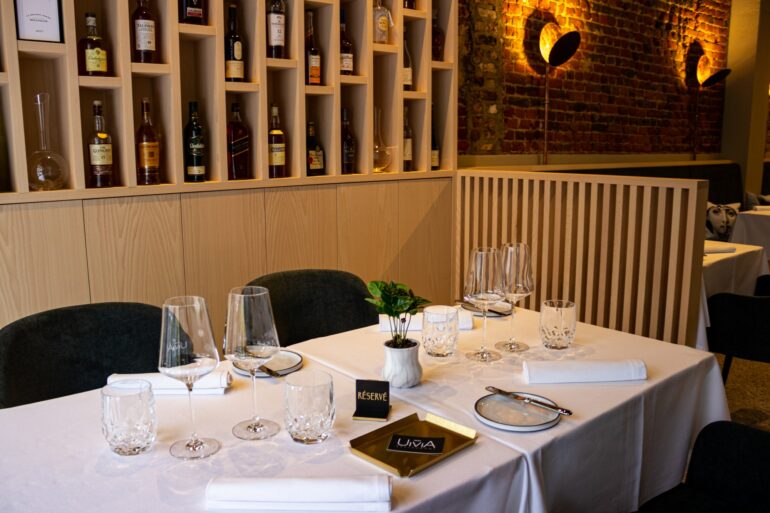
Time Stands Still on Rua Castilho
In Lisbon, certain traditions die hard, and that is precisely what shapes a city’s identity. In 2003, on Rua Castilho, a certain spot began to make a name for itself thanks to a strange, time-based ritual. At exactly 12:50 p.m., a sudden buzz would take over the place. It was time for “Dez Prá Uma”—“ten minutes to one”—the moment when service would shift into a joyful frenzy. Mafalda Travassos, the founder, still remembers those packed tables, those lunches that dragged on, and that neighborhood atmosphere where people jostled for a seat. But a restaurant’s success is sometimes measured by how insistently its regulars want to take a piece of that conviviality home with them. What began as a concession to customers in a hurry became, in 2015, the cornerstone of a bold business model.
Mafalda Travassos’s conclusion was crystal clear: the demand for takeout meals—whether fresh or frozen—exceeded the seating capacity of her restaurant. By deciding to transform her restaurant into a chain of gourmet food counters, she wasn’t closing a door—she was opening a new chapter in Lisbon’s art of living. Today, Dez Prá Uma is no longer limited to a single historic location but has expanded to twelve outlets scattered throughout the Portuguese capital. This transition from individual dining to family meals took place without compromising the essence of the original concept: offering high-quality home-style cooking that can go from the freezer to the oven without losing its soul.
The counter’s aesthetic: green tiles and antiques from Estremoz
Stepping into one of the brand’s stores, you immediately realize that the setting matters just as much as the product. The visual identity, entrusted to interior designer Marta Lucena, eschews the clinical conventions of traditional food retail. Here, the eye is drawn to deep shades of green, ceramic tiles that catch the light of the Atlantic, and a setting that evokes the fine grocery stores of yesteryear. It’s no coincidence that you’ll find old beam scales, flour tins weathered by time, or objects that clearly once served another purpose.
This visual authenticity didn’t come from a standardized home decor catalog. It is Mafalda Travassos herself who scours the aisles of antique fairs in Estremoz—a historic town in the Alentejo region renowned for its treasure trove of vintage finds—to unearth these one-of-a-kind pieces. This personal sourcing infuses the twelve stores with a warm and distinctly Portuguese atmosphere. The open shelves do more than simply hold products; they tell a story of heritage and tradition. There you’ll find a meticulously curated selection of kitchen utensils, handcrafted ceramics, and woven baskets that serve as a reminder that, at Dez Prá Uma, gastronomy is inseparable from a certain domestic decorum.
The Culinary Grammar of Campo de Ourique
Despite the growing number of retail locations, the beating heart of the business remains in a single kitchen, located in the Campo de Ourique neighborhood. It is there, under the direction of Chef Dinha dos Santos, that the recipes which have made the restaurant famous are crafted. The secret to this enduring success lies in the use of family recipes, passed down and adapted to meet the demands of larger-scale production without ever veering into impersonal industrial production. The chef oversees every dish as if she were cooking for her own dining table.

The menu features the cornerstones of Portuguese cuisine, reinterpreted with the precision of a luxury caterer. The creamy, gratinated bacalhau espiritual is served alongside perfectly golden croquettes and the must-try arroz de pato (duck rice), the ultimate comfort food. Each portion, whether fresh or frozen, is designed to recreate in just a few minutes at home the complex flavors of a dish that has been simmering for hours. Whether it’s shrimp crepes to bake in the oven or more substantial main courses, the standard remains the same: the finished product must live up to the promise of homemade quality. This meticulous attention to detail allows the brand to carve out a niche in the premium frozen food market, where convenience is never an excuse for mediocrity.
A Story of Heritage and Roots
The growth of Dez Prá Uma is also the story of a family that has grown alongside its business. For years, Mafalda Travassos’s four children cut their teeth within the company. Their summers weren’t just about the beach—they also involved clearing tables and packing boxes during the Christmas season, when business reaches its peak. This early immersion paved the way for a natural transition: today, this new generation has taken the reins of day-to-day management, infusing the business with fresh energy while honoring their mother’s legacy.
Under their leadership, the brand’s ambitions are extending beyond Lisbon. A location in Porto is already in the works, marking Dez Prá Uma’s first foray outside its historic stronghold. For Mafalda Travassos, this passing of the torch goes hand in hand with a philosophy of cautious growth. She often reminds her children that expansion should never be an end in itself. “Growth must be built on strong foundations,” she insists. It is this solid foundation, nurtured by two decades of hands-on experience, that now allows the brand to look to the future with confidence. The goal is not to saturate the market, but to continue offering this elegant solution to city dwellers in search of authentic cuisine, while preserving that intimate connection to the family recipes that started it all on Rua Castilho.
In an urban landscape that is rapidly becoming standardized, Dez Prá Uma’s evolution proves that a concept born from a simple lunch rush can become an institution if it knows how to reinvent itself without losing its local roots. The transition from restaurant to specialty shop demonstrates a keen understanding of new consumer trends: less time for cooking, but ever-higher standards for what ends up on one’s plate. The twelve current stores are merely the branches of a tree whose roots run deep into the Portuguese terroir and the rigor of traditional cuisine.