
The Art of Observation: When Journalism Inspires Luxury Hospitality in the Heart of Japan
Adrian Zecha, the renowned founder of Aman Resorts, often likes to point out that he is not a hotelier at heart. He defines himself instead as a man of the press who, in his early forties, made an unexpected foray into the world of hospitality—only to never leave it. Far from being a mere biographical anecdote, this initial calling is the true cornerstone of his success. Journalism, by its very nature, relies on the art of capturing details. It is precisely this visual acuity that has shaped his entire body of work.
The reporter’s keen eye as a pillar of creation
Before envisioning the very first Amanpuri hotel on a former coconut plantation in Phuket in 1988—initially conceived as a private retreat—Adrian Zecha spent years honing his eye in the field. As a correspondent for Time magazine in Tokyo, he also founded The Asia Magazine, the first regional color supplement on the Asian continent, when he was just 28 years old. He then took the reins of the art magazine Orientations from Hong Kong. For nearly two decades, he did what the best journalists do: observe with extreme attention, analyze with precision, and resist the temptation to impose his own biases on the reality before him.
Creating for oneself before appealing to the market
This intellectual rigor has given Aman Resorts its unique aura. The first properties were never designed to meet the demands of a specific market segment. The goal was to create places that appealed to Zecha himself, as well as to a select circle of connoisseurs whose expectations he understood perfectly. As one of the original board members noted, the ambition was to build the hotel of their dreams for their own lifestyle. Zecha’s intuition is legendary: during the design of the Amangiri resort in Utah, it is said that he was able to identify the exact spot where the pool would blend perfectly with the surrounding rock. His unwavering patience in acquiring the ideal land and his tenacity gave rise to timeless spaces.
However, since Vladislav Doronin acquired Aman in 2014, the brand has taken a decidedly different direction. Now expanding into clothing lines, skincare products, fragrances, leather goods, and even yacht and private jet concepts, the brand has transformed into a formidable luxury goods platform. An undeniable commercial evolution, yet one that strays significantly from the intimate spirit that forged its initial reputation.
Azuma Farm Koiwai: a new chapter in the heart of nature
Now 93 years old, the tireless Adrian Zecha is launching a brand-new project in close collaboration with Naru Developments, a Tokyo-based hotel developer. Named Azuma Farm Koiwai, this exclusive retreat is nestled on the grounds of the historic Koiwai Farm in Iwate Prefecture. This 3,000-hectare estate, founded over 130 years ago on arid volcanic soil at the foot of Mount Iwate, has been transformed through generations of meticulous work into a haven of lush forests and fertile pastures.
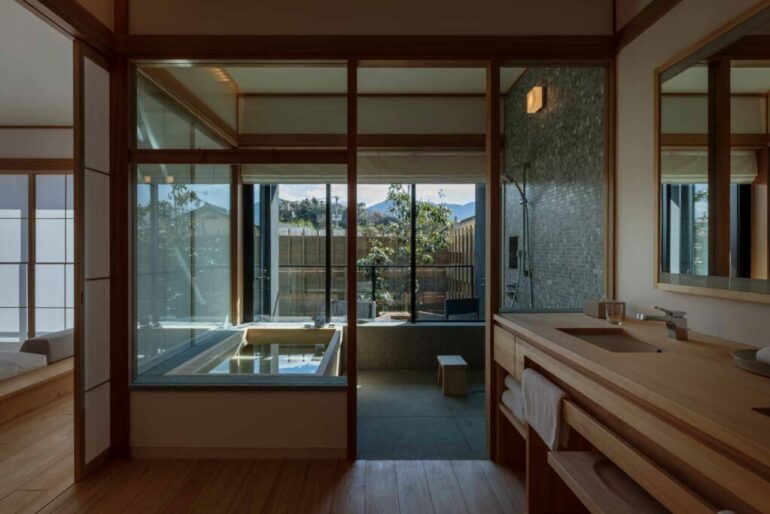
The resort, which spans an eight-hectare grove, features 24 guest rooms designed by architect Shiro Miura of the Rokkaku-ya studio in Kyoto. True to the spirit of the location, the architecture prominently features cypress and red pine harvested directly from the estate. Miura reimagines the traditional sukiya style here: exquisitely crafted wooden interiors designed not to dominate the landscape, but to blend harmoniously into it. Nestled beneath the trees, three pavilions house wood-fired saunas, complemented by cold baths and daybeds opening onto the forest. The experience is designed to be authentic and rooted in the local terroir, with a culinary focus on locally sourced ingredients, complemented by walks or horseback rides through this working farm.
The luxury of simplicity
This project is also distinguished by its partnership with the East Japan Railway Company, lending the journey an elegance of great simplicity. Here, forget helicopters and private landing strips: visitors arrive at Morioka Station after a two-hour Shinkansen ride from Tokyo, before being picked up by a simple shuttle. A train, a farm, and nothing superfluous.
Ultimately, this is the very essence of the philosophy that Zecha was already applying in Thailand forty years ago: discovering a place, observing its intrinsic beauty, and building only the bare minimum of infrastructure to allow others to contemplate it. At 93, the former reporter’s eye has certainly lost none of its brilliance.