
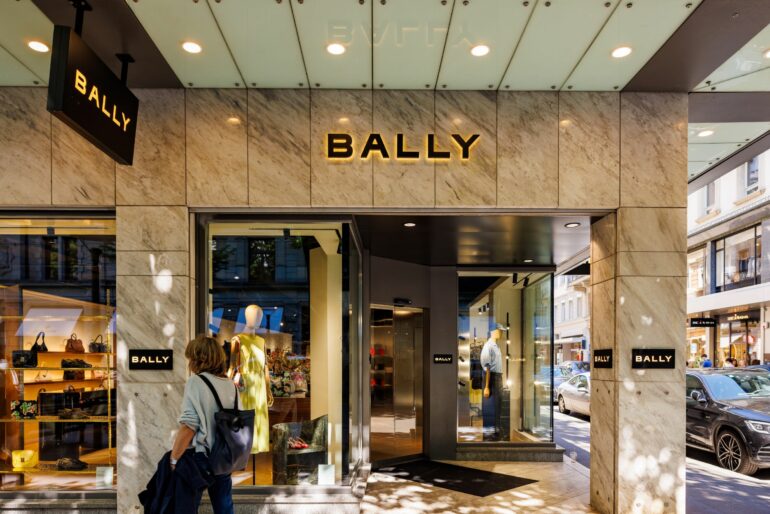
The shadow of the Lugano court looms over Bally’s future
The silence that has settled over the workshops in Caslano and Lastra a Signa is not the hushed silence of artisanal excellence, but that of an industry holding its breath. For several months now, the name Bally—a jewel of Swiss heritage—has no longer been making waves in the fashion pages for its latest leather goods collections, but rather in the legal and financial columns. The situation took a critical turn with the forceful intervention of the Lugano Bankruptcy Office, bringing a sudden halt to an already highly discordant situation.
The case took a dramatic turn when Lugano’s Pretura 2 decided to freeze a transaction that had seemed all but finalized. In the crosshairs: the transfer of the company’s assets to Aare LLC. This entity, established last May in the United States, appears to Swiss authorities as an opportunistic shell company. Authorities suspect a “controlled devaluation” maneuver—a mechanism that would allow the healthy parts of the company to be bought out while leaving historical debts and social obligations by the wayside. By placing Bally under receivership, the Swiss courts are shedding light on the opaque behind-the-scenes workings of a restructuring that increasingly resembles a dismantling.
The Regent Method at the Center of Criticism
At the center of this storm is Regent, the American investment fund that took the reins of Bally in early 2024. While the arrival of a new shareholder is often synonymous with a turnaround, the honeymoon proved short-lived. The business model imposed by Regent has sparked widespread outrage, particularly among local entrepreneurs who view this management approach as a direct threat to the brand’s very identity.
Roberto Martullo, a prominent figure in the Swiss industrial landscape who acquired the shoe manufacturer Künzli SwissSchuh AG in October 2024, has openly spoken out against this strategy. Having himself attempted to put forward an offer to save part of the business and retain the workforce, he was met with a categorical refusal from Regent. For Martullo, the assessment is clear: the fund would prioritize aggressive monetization through licensing, at the expense of the production facilities and loyalty to suppliers. Without full ownership of the brand—the central pillar of the case—any industrial rescue operation becomes moot, giving way to a purely speculative approach.
An Unprecedented Social and Industrial Bloodletting
The human impact of this crisis can be quantified with mathematical coldness. In two years, Bally has seen its workforce melt away like snow in the sun. Of the initial 220 employees, only about 100 remain today. This reduction of more than half the workforce took place through five successive waves of layoffs and voluntary departures, affecting both administrative functions and core production operations.

The brand’s geographic footprint has also shrunk considerably. The end of production in Caslano and the permanent closure of the Lastra a Signa site in Tuscany mark a historic break with the company’s manufacturing expertise. Added to this is the closure of strategic retail locations in several Swiss cities and the shutdown of the Milan boutique—a sign of a commercial retreat that is causing concern among luxury industry observers. This is no longer a simple restructuring, but a gradual erosion of Bally’s regional presence.
The alarm raised by unions and creditors
On the ground, anger is mounting. The OCST union has stepped up to denounce a lack of transparency deemed unacceptable. According to workers’ representatives, it is unacceptable that the social and financial cost of this debacle should be borne by employees and local partners, while financial decision-makers shirk their responsibilities. The stakes extend beyond the company itself: an entire ecosystem of suppliers, with outstanding debts totaling tens of millions, now finds itself in a precarious position.
The lack of a clear business plan to secure Bally’s future raises fears of the worst. The question posed by the unions and economic stakeholders is stark: are we witnessing a sincere attempt at a rescue, or a financial “squeeze” aimed at stripping the company of its assets before liquidating it? The risk of a severe social impact on the Ticino region is now a concrete reality, as the moratorium proceedings initiated last June appear to be bogged down in a legal impasse.
Bally’s fate now lies in the hands of the external administrators and the judges in Lugano. Between the heritage-focused vision of entrepreneurs like Roberto Martullo—who succeeded in preserving the tradition of Künzli SwissSchuh AG—and the cold calculus of transatlantic transactions, the divide has never seemed so deep. For now, the brand that was once the symbol of Swiss elegance has been reduced to a bankruptcy case, where every judicial decision weighs on the future of the hundred families still connected to the company.