
The Aesthetics of Asphalt and Earth: The Metamorphosis of the Archive at New Balance
Amid the buzz of Paris Fashion Week, where all eyes are on the spring-summer 2027 season, one silhouette stood out for its mineral-like presence and structural precision. This is not an innovation created from scratch, but a resurrection. By reimagining the New Balance 1226—a technical running shoe from the 2000s previously relegated to the dusty catalogs of pure performance—COMME des GARÇONS HOMME issues a manifesto on the enduring nature of the technical object. It is no longer just a sneaker you slip on; it is a piece of textile engineering that illustrates how contemporary luxury assimilates the utilitarian wardrobe to extract a new form of elegance—one that is rawer, almost wild.
The choice of the 1226 is no accident. It is part of a process of stylistic evolution initiated by New Balance over the past several seasons. After successfully reviving the 1906 and 860v2 models, the Boston-based brand is now exploring the deeper layers of its past. Where its predecessors emphasized a certain fluidity, the 1226 boasts a more assertive silhouette—an urban “trail” look that rejects the usual compromises of street shoes. It is this texture—this visual density—that captivated the Japanese label, the undisputed master of the art of deconstructing men’s clothing to better highlight its function.
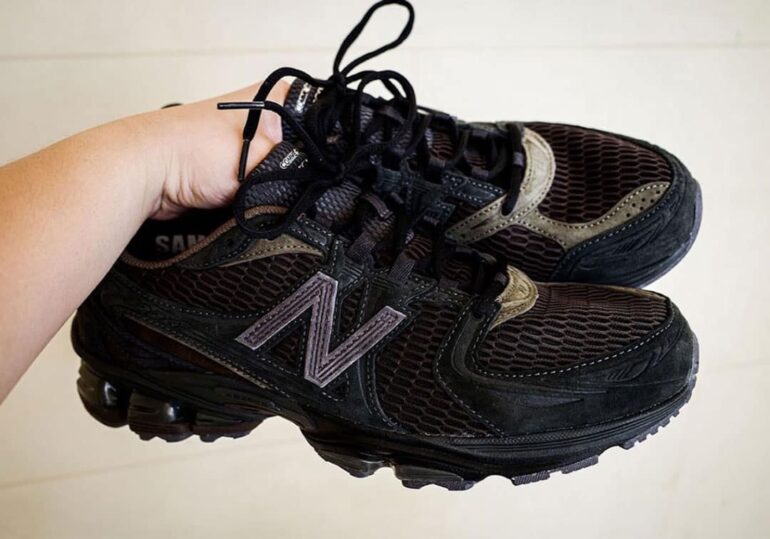
A design featuring mesh and debossed nubuck
The collaboration could have been limited to a simple play on colors. But that’s not the case. COMME des GARÇONS HOMME performed a veritable cosmetic surgery on the upper of the original model. The first, radical decision was to eliminate all digital artifice. The standard prints and shiny metallic finishes—which were synonymous with running shoes of that era—have been replaced by a tactile, organic approach. Instead, we find premium nubuck leather, its surface embossed with subtle patterns. This understated embossing lends unprecedented depth to the panels, creating plays of light and shadow that highlight the shoe’s natural boldness.
The contrast of textures is at the heart of this reinterpretation. The base of the shoe is constructed from a wide-mesh fabric—an ultra-breathable nylon mesh positioned on the upper and side panels. This technical choice, originally designed for thermal regulation in long-distance runners, becomes a pure design element here. This “oversized” mesh is much more prominent than that of the standard versions, giving the pair a prototype-like look. By playing on this contrast between the velvety texture of the nubuck and the architectural transparency of the mesh, the designers create a visual dynamic that breaks with the usual monotony of high-end sneakers.
The color palette: between charcoal and umber
While the form is captivating, it’s the color palette that truly wins you over. For this Spring-Summer 2027 collection, the design studio has set aside its usual radical monochromes—the deep blacks and whites that made it legendary—to embrace a much more organic color palette. The combination of “Charcoal,” “Brown,” and “Khaki” evokes a geological stratigraphy—a blend of shale, damp earth, and dry sand. It’s a shoe that seems to have been sculpted from the landscape before making its way to the Parisian runways.

Anthracite gray serves as the foundation—a muted shade that absorbs light—while shades of chocolate brown and sandy khaki highlight the structure’s defining lines. This “trail-ready” approach is more than just a stylistic statement; it responds to a fundamental trend in which luxury seeks to ground itself in reality, in substance. The branding, true to the Japanese brand’s philosophy, remains utterly understated. No ostentatious logo on the side, but a custom TPU patch, precisely stitched onto the tongue, which authenticates the collaboration without ever shouting its name.
Engineering Designed for Everyday Use
Beneath this nubuck exterior lies a technological powerhouse that has lost none of its brilliance. The revitalized New Balance 1226 retains its “high-mileage trainer” DNA but adapts its capabilities to the demands of modern life. The highlight of this technical design lies in the midsole unit, which features a generous dose of ABZORB SBS cushioning. This cutting-edge technology, inherited from the performance division, offers optimized shock absorption. Whether you’re walking the cobblestones of major cities or more rugged trails, comfort remains consistent, transforming every step into an experience of stability.
Yet, despite this use of premium materials and cutting-edge technologies, one of the most notable aspects of this release is its positioning. The manufacturing process was designed to maintain a relatively accessible price point within the high-end lifestyle sector. It’s a subtle democratization of this archival piece, allowing a new generation of consumers to embrace a piece of history without sacrificing modern functionality. By reviving the 1226, the duo proves that true innovation does not always lie in inventing tomorrow, but sometimes in looking back at yesterday with enough insight to discern what will be relevant the day after tomorrow.
This collaboration between the American giant and the Japanese institution does more than simply deliver a product; it validates a worldview—that of a man who prioritizes substance over flash, structure over surface. By transforming a forgotten long-distance runner into an icon of functional outdoor gear, they’ve created one of the season’s most cohesive designs—a shoe ready to face both the flashes of photographers and the rugged terrain.