
Make Texture a preferred source on Google to support us
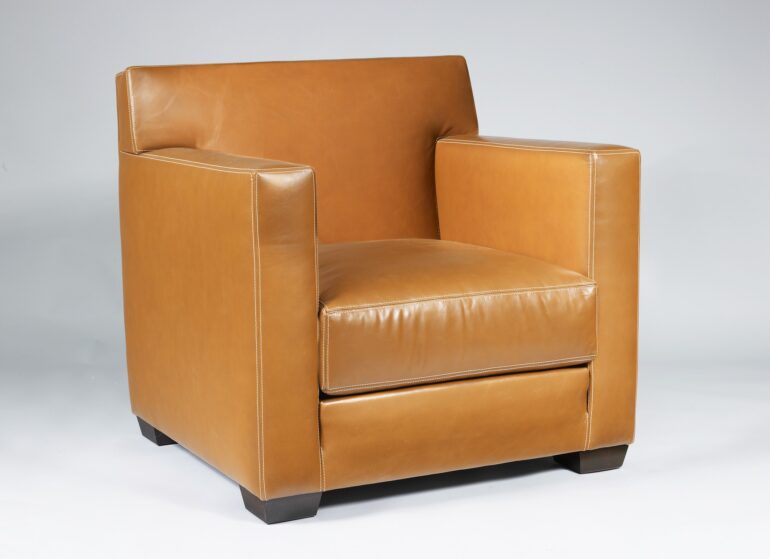
Add Texture to GoogleSimplicity is an achievement. We often forget this, accustomed as we are to the minimalism of contemporary interiors, but the emergence of a chair stripped of all artifice caused a quiet sensation when it first appeared in the 1920s. This armchair, reduced to its simplest geometric form, did more than simply offer a new way to sit; it redefined our relationship to space and to objects. A century after its introduction, its silhouette continues to exude a striking modernity, proving that restraint is sometimes the most powerful statement of all.
The Invention of a New Perspective
The transition to the 1920s marked a clear break with the ornate excesses of the previous century. Amid this profound transformation, furniture had to learn to step back to let architecture breathe. This armchair, whose design seems to have been sketched in a single stroke, embodies this pursuit of clarity. By choosing to subtract rather than add, its designers reversed the very logic of comfort. Luxury no longer lay in tufting or embroidery, but in the precision of a line and the purity of an angle.
This simplicity is not an absence, but a concentration. Each structural element, stripped of its embellishments, becomes a subject of observation. The framework is exposed, space opens up between the sides, and the piece seems to float, freed from the heaviness of traditional bourgeois furniture. It is this visual lightness that has allowed this model to stand the test of time without ever seeming dated. It does not follow a trend; it defines a structure.
The grammar of sharp modernity
The aesthetic of this chair rests on a cool yet precise harmony. One can discern a quest for balance that evokes engineering more than classical cabinetmaking. Modernity, here, manifests itself through a fluidity that could be described as aerodynamic, even though the object is stationary. It is the idea of suspended movement, of a visual efficiency that rejects the superfluous.
The choice of such understated lines demands absolute precision in craftsmanship. In a richly decorated piece of furniture, a sculptor can conceal an imperfection beneath foliage or gilding. In a 1920s armchair, however, there is no room for error. The junction of two legs, the curve of a backrest, or the tension of the upholstery must be perfect, for the eye is not distracted by any artifice. This demand for precision contributes to the impression of enduring quality that the object still exudes today.
A silhouette that defies time
Why does a design introduced a century ago still seem more relevant to us than creations released just last year? The answer undoubtedly lies in its ability to channel a form of universal modernity. This armchair is not a relic of the past; it is a tool for living that adapts to any setting, from an industrial loft to a formal living room. Its “pared-down” character allows it to serve as a highlight of the space around it.
There is a kind of paradoxical humility in this chair: it has a strong visual presence, yet takes a back seat to its function. It does not impose a style; it offers a structure. The 1920s recognized that to be timeless, an object must shed everything tied to the anecdotes or fleeting tastes of an era. By retaining only the essentials, this armchair has managed to transcend time to become a classic.

The Balance Between Rigor and Comfort
While the silhouette is austere, the experience it offers is not necessarily so. The modernity of the 1920s successfully reconciled formal rigor with a focus on ergonomics, even though the term was not yet in common use. This armchair invites a different, more conscious posture—one that is less slumped than in the deep seats of the 19th century. There is a certain dignity in this way of sitting, a way of being in the world that emphasizes alertness and elegant poise.
The enduring appeal of this model also stems from its ability to engage with the materials of its time while remaining open to future interpretations. The frame, whether made of metal or dark wood, highlights the contours of the cushions with an almost graphic authority. It is this contrast between the rigidity of the frame and the softness of the seat that creates the dynamic tension so characteristic of modern design.
A Living Legacy in the Contemporary Space
Today, as our interiors are saturated with images and objects, a return to this iconic armchair from the 1920s feels like a natural choice. It brings visual calm, a clear point of focus amid the surrounding clutter. It is not a museum piece to be gazed upon with nostalgia, but an active part of our daily lives. Its presence in a contemporary interior design project does not reflect a taste for retro style, but a quest for coherence and sustainability.
Ultimately, this chair reminds us that modernity is not a matter of technology, but a matter of perspective. In 1920, it was about seeing the object as it is, in its structural simplicity. In 2024, the message remains the same. This armchair continues to teach us that beauty often lies in what we had the courage not to design. It is in this controlled void, in this interval between function and form, that its timelessness resides.