
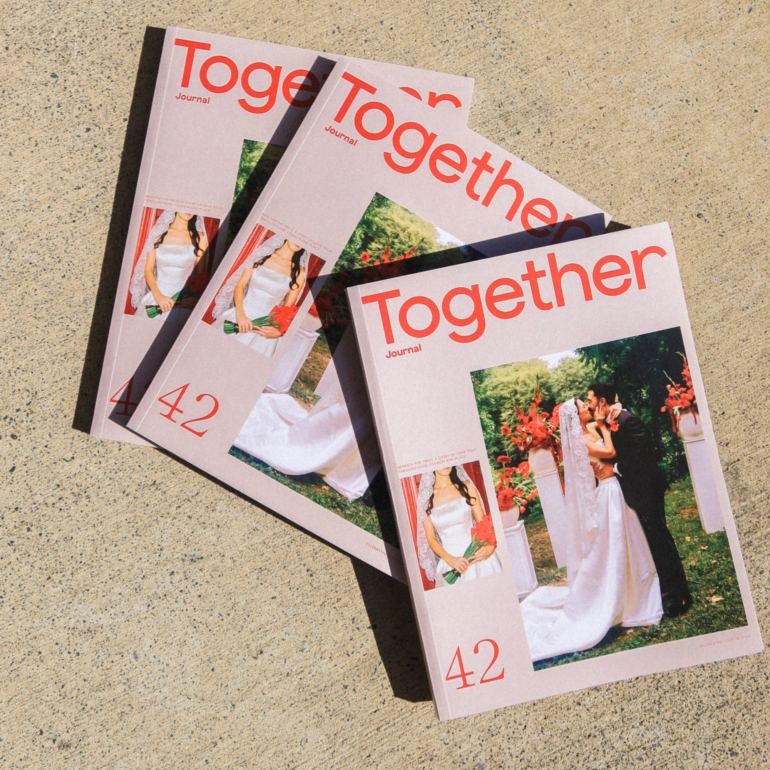
The latest issue of Lovely Things and Follow Me highlights a subtle yet powerful approach to luxury, emphasizing refinement and precision in fashion, interior design, and everyday objects, at a time when immediacy reigns supreme.
This new edition sketches a landscape where restraint stands as a language in its own right. The selection brings together contemporary designers around themes such as the bridal world, floral art, travel, and printed objects. The collection celebrates clean lines, meticulously chosen materials, and a form of craftsmanship that rejects the superfluous, far from any ostentation. In an era where our eyes are saturated by a multitude of images, this collection reminds us that a thoughtfully designed piece often speaks in silence, yet leaves a lasting impression.
The clean lines of a contemporary silhouette
The heart of this edition revolves around understated bridal silhouettes, at times almost architectural. Lola Varma, a brand launched by Courtney Illfield in 2016 and crafted in her Melbourne studio, perfectly embodies this philosophy. Her handmade dresses and ensembles prioritize fluidity over excessive glamour. Karen Walker, meanwhile, offers a more assertive New Zealand vision, where classic elegance is infused with a resolutely modern spirit. Meshki and Cloud Blvd extend this theme with contemporary designs aimed at women seeking effortless elegance, free from decorative excess.
This season, sophistication seems to lie less in accumulation and more in precision.
The drape, the cuts, and the way each garment moves on the body take precedence over ornamentation. It is a natural evolution toward a wedding that, for many, becomes an exercise in personal style rather than a mere formal ceremony.
The right accessory, the boldness of botanical motifs
Accessories, too, follow this same understated logic. Deadly Ponies, a New Zealand brand known for its leather goods, offers a discreet yet structured presence. The leather pieces complement the silhouette without ever overpowering it. Partridge Jewellers, Gem Totem, and Rembrandt also bring a precious touch, free from any excess. In this world, jewelry does not seek to make a splash: it complements the outfit with an almost timeless restraint, conceived as a legacy to be passed down rather than flaunted.
For the floral design, the approach dares to be more daring. Bowquet by BMJ, whose signature style shines through this selection, reminds us that contemporary floral art often resembles sculpture. Forms unfold, volumes take shape, and the bouquet breaks free from its secondary status to become a true architectural composition, an artistic gesture in itself.
The evidence of a reimagined everyday
The attention paid to everyday wardrobes is also striking in its relevance. Wearing James Sports, Elle and Riley Cashmere, Kowtow, or PJ Johnson World paves the way for transitional pieces, focused on comfort and resort-inspired style. These brands convey a valuable vision: luxury is no longer confined to the exceptional or the rare. It is measured just as much by the perfect drape of a cardigan, the cut of a summer piece, or the grace with which a garment fits into everyday life.

This approach skillfully avoids the trap of a slick, superficial lifestyle. Here, the image does not seek to flatter the eye in a fleeting way; it forges a concrete connection with the body, the fabric, and the season. It is an approach that may be more humble, but is undeniably more enduring.
The Memory of Gestures
Curation doesn’t stop at fabrics. The worlds dedicated to stationery, home linens, or printed objects underscore that connection is also a matter of imprints and transmission. The creations of Papira Design, Sarah Espeute, and Oeuvres Sensibles reintroduce a welcome slowness, almost domestic in nature. Paper, thread, writing: all these mediums once again become sanctuaries of an intimate and introspective ritual.
In a market often polarized by the instantaneous, this edition chooses persistence over flashy spectacle.
The objects highlighted here reject flashiness. They settle in gently, find their place, and tell their own story. It is this calm—now a rare luxury—that gives the collection a coherence as unexpected as it is precious.
Ultimately, this volume resembles a gallery of masterful gestures. Far from any nostalgia or forced futurism, it brings together fragments of modernity carried by their extreme precision. The bride gains in allure, the designers find a true space for expression, and the reader draws a certainty: true refinement has never needed to shout to be heard.