
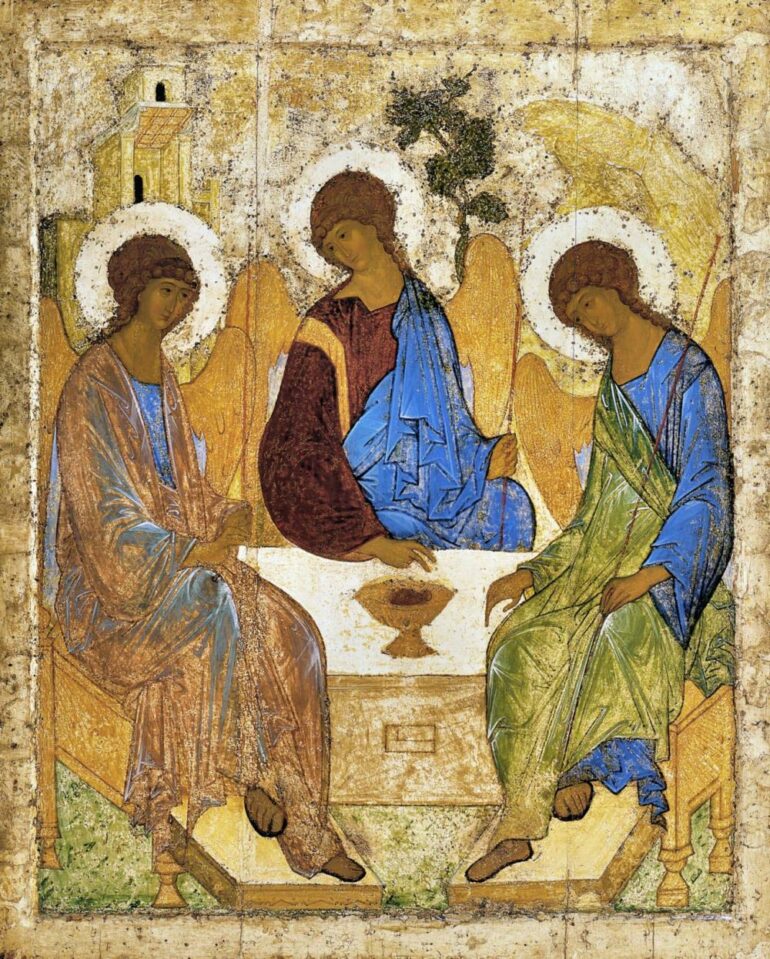
In the silence of the Trinity Cathedral, at the heart of the Trinity-St. Sergius Monastery in Sergiev Posad, the absence of the original is now palpable. Since August 2026, the faithful and visitors have been able to view only a replica of the famous “Trinity” icon. This absolute masterpiece of medieval Russian painting, attributed to the monk Andrei Rublev and dated to the early 15th century (c. 1411 or 1425–1427), was urgently removed from its iconostasis. This removal, confirmed in mid-September by religious and cultural authorities, followed a critical failure of the conservation systems intended to protect this 142 cm by 114 cm panel of linden wood from the ravages of time and the elements.
A politically charged relocation amid intense scientific scrutiny
The fate of “The Trinity” took a dramatic turn in May 2023. In a sovereign decision, President Vladimir Putin ordered the transfer of the work to the Russian Orthodox Church, thereby responding to an urgent request from religious authorities. This highly symbolic gesture met with outright and unprecedented opposition from the scientific community. Restorers, conservators, and art historians at the State Tretyakov Gallery—where the icon had been preserved under meticulously controlled environmental conditions since 1929—had issued numerous official warnings. For these experts, moving such a fragile panel painted in egg tempera out of a secure museum environment was tantamount to exposing it to irreversible damage.
Despite these warnings, the work left its historic storage facilities to be exhibited in June 2023 at the Cathedral of Christ the Savior in Moscow, before moving to its current location at the Sergiev Posad Monastery in 2024. Legally, the icon remains the property of the Russian state and is listed in the national collections of the Tretyakov Gallery, but its use and day-to-day management now fall to the clergy, creating a complex situation of shared management between the monastery’s restoration workshops and museum inspectors.
Technical Assessment and Concerns About Physical Integrity
The current situation, described by the Moscow Patriarchate as a simple maintenance operation, conceals a more troubling reality, according to several independent sources. The removal of the original was motivated by the need to assess the panel’s state of preservation and to make crucial adjustments to the climate-controlled, airtight display case in which it is sealed. Currently, the icon is located in a dedicated inspection room within the monastery, which is supposed to meet the strict standards of the Tretyakov Gallery.
While the director of the Tretyakov Gallery, Olga Galaktionova, seeks to reassure the public by referring to a simple “technical adjustment” of the display case rather than a restoration of the paint layer, the official silence regarding the damage sustained is fueling speculation. According to reports published by the media outlets Ekho and Meduza, citing anonymous sources, the findings are alarming: the linden wood panel is said to have warped significantly due to moisture, to the point that some have described it as “warped into a tube-like shape.” These leaks also suggest that the adhesive holding the panel’s joints together may have failed. However, this information regarding major physical damage has not been officially confirmed by the museum or the Church.
The Failure of the High-Tech Enclosure
At the heart of this heritage crisis lies the high-tech display case designed to isolate the artwork from the cathedral’s ambient air. Persistent rumors indicate that this internal climate-control system had been out of service for several months. As a result, the humidity level inside the capsule is said to have risen to 80%, whereas the preservation of a medieval work on wood requires strict stability between 50 and 55%.
Photos circulating on social media and the Telegram app since late summer 2026 appear to show the icon in a state of significant distortion. Although some independent experts consider these images to be authentic, no official expert report has confirmed this visual evidence. The technical difficulties are reportedly exacerbated by the geopolitical context. A German specialist reportedly intervened to attempt to repair the capsule, but the system reportedly broke down again shortly after his departure. Due to current diplomatic tensions, the possibility of another rapid intervention by foreign experts seems unlikely, leaving the restorers at the State Tretyakov Gallery to tend to the artwork on their own.
Supervision Under Close Watch
For now, Rublev’s icon remains under the direct supervision of museum experts who are conducting emergency inspections. Replacing the original with a replica in August 2026 will allow the iconostasis to continue serving its liturgical function without further exposing the masterpiece, but this situation underscores the fragility of the compromise reached in 2023 between the imperatives of faith and those of science. This Russian national treasure, a testament to six centuries of history, now awaits the verdict from the restoration workshops, while the line between a simple technical adjustment and heritage preservation remains particularly blurred for the public.