
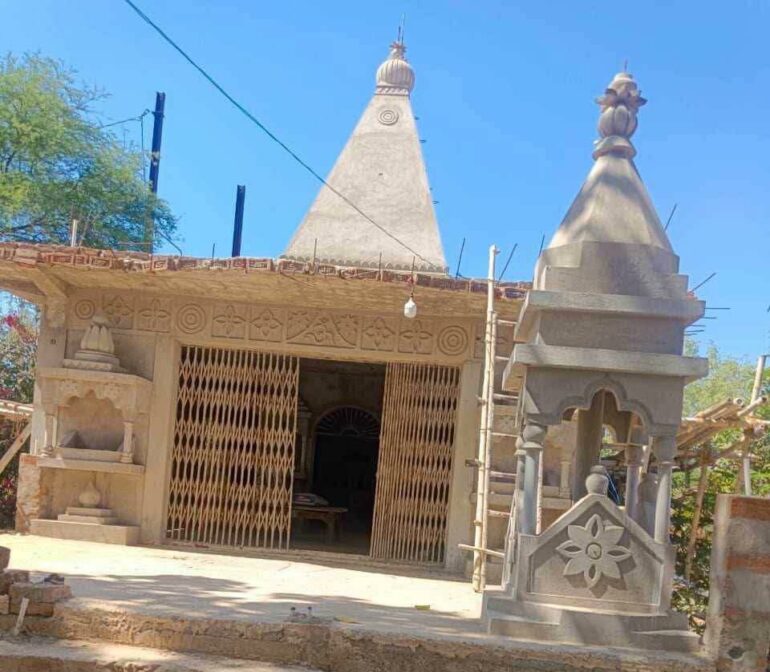
Uttar Pradesh is breathing new life into its cultural heritage. Through a series of major investments dedicated to the renovation and digitization of its sites, the region is orchestrating a subtle dialogue between architectural modernization and historical preservation, transforming its heritage treasures into true showcases of appeal.
Revitalizing Heritage: Rethinking Cultural Presentation
The government of Uttar Pradesh has unveiled an ambitious cultural project, allocating substantial funds to reimagine the museums and heritage sites in six of its cities. Led by the Minister of Tourism and Culture, Jaiveer Singh, this initiative outlines a contemporary strategy: the goal is no longer to freeze collections in the past, but to enhance them through immersive and accessible experiences. The political message is clear: heritage should not merely be preserved behind glass; it must also be showcased, promoted, and made accessible to the public.
This financial investment is being channeled to Varanasi, Firozabad, Deoria, Lucknow, Jhansi, and Kushinagar. In Varanasi, the Munshi Premchand Museum and Library in Lamhi has been allocated Rs 2.60 crore for interior design and restoration. In Firozabad, the Glass Museum has been granted Rs 4.40 crore for the preservation of its exceptional collections. In Deoria, Rs 30 crore will transform the Shaheed Late Ramchandra Vidyarthi Memorial Site, redesigning its landscaping and interior decor. This initiative reflects the region’s commitment to celebrating literary heritage and the national narrative through the lens of spatial design.
Lucknow: Between a Museum Laboratory and Architectural Renewal
The capital, Lucknow, is capturing a significant share of these investments to reinvent itself. The Lucknow State Museum is set for a makeover: new features designed for a younger audience, revamped workshop spaces, an elegant landscape redesign, and the creation of a cafeteria nestled in the campus’s historic Kothi. Behind the scenes, special attention is being paid to the invisible engineering of cultural luxury, including the reinforcement of the basements and the integration of a state-of-the-art storage system.
The museum’s modernization also involves redesigned technical infrastructure: a wastewater drainage system, an eco-friendly rainwater harvesting system, and a new well. An additional budget of Rs 4.60 crore has been allocated to reinforce the building’s foundations. On the curatorial front, Rs 1.74 crore has been allocated to orchestrate the reinstallation of the sculptures in the foreign art gallery—a spatial arrangement that is already 95% complete. These initiatives underscore how rigorous management of the collections and the fluidity of internal circulation are the pillars of conservation excellence.
Immersion and Preservation: The Digital Age
This investment momentum is part of a broader trend, already evident in several achievements. The recent inauguration of a completely redesigned auditorium at the Lucknow Museum, as well as the launch of a 360-degree virtual tour at the Mathura Museum, demonstrate a commitment to breaking down physical barriers. The goal is to broaden the public’s horizons while safeguarding the priceless value of the artworks.
Across the state, historic galleries are undergoing a meticulous restoration, coupled with upgrades to electrical and sanitary systems. Far from being a mere dusting-off, these efforts aim to truly elevate the museum experience, embracing the principles of sophisticated cultural renewal.

Local Impact: When History Shapes the Economy
The transformation of these places of remembrance is also seen as a catalyst for development. In Kushinagar, the Buddhist museum is being restructured to support the growth of spiritual tourism, while in Jhansi, urban design is working to highlight the city’s historical identity. The challenge is to forge an unbreakable bond between the region’s soul and its appeal.
This vision is being implemented on an equally grand scale in Lucknow, where the Hussainabad Museum of Heritage and Art is now integrated into large-scale urban planning projects. Even more boldly, the state is considering converting certain forts and historic monuments into high-end hotels or art galleries, in partnership with the private sector. The expansion of the temple museum in Ayodhya, recently entrusted to the prestigious Tata Sons group, perfectly illustrates this ambition to combine heritage preservation with tourism promotion.
The government is thus seeking to establish a coherent approach to heritage management: it aims to protect, redevelop, digitize, and monetize its sites, sometimes indirectly referring to public-private partnerships. While this strategy promises to breathe new life into these historically significant sites, it demands, in return, an absolute commitment to the quality of restorations, respect for the materials, and fidelity to the original narrative.
Attention to Detail: A Delicate Balance
During these announcements, Jaiveer Singh emphasized the imperative of meeting deadlines, while establishing the use of high-quality, durable materials as a golden rule. In the world of conservation, the line between enhancement and distortion is thin: poorly calibrated lighting, unsuitable storage areas, or a haphazard exhibition design are enough to shatter a place’s magic. The boldness of modernization must therefore be balanced with scrupulous adherence to conservation standards, so that the patina of time retains all its nobility.
By reimagining its museums and monuments, India is demonstrating its commitment to offering a multisensory cultural experience that is both lavish and firmly rooted in the present. Behind this titanic undertaking lies the art of transforming heritage into a catalyst for elegance and development, where the tension between architectural innovation and historical authenticity becomes the true hallmark of a masterfully executed renewal.