
The Spectacular Transformation of Auction Halls
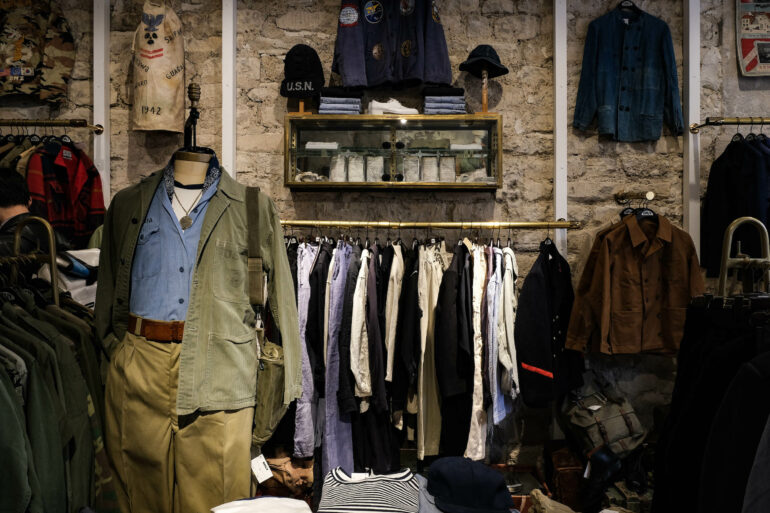
A ball gown designed in the mid-20th century no longer automatically ends its life tucked away in a protective cover, doomed to gather dust in the darkness of a storage room. Today, it has every chance of twirling under the strobe lights at a high school New Year’s Eve party. Elsewhere, a top hat leaves the airtight display cases of a numismatist or collector of antiques to join the joyful chaos of a costume trunk. These unusual trajectories illustrate a dramatic shift in fashion habits. Auction venues, long perceived as austere sanctuaries dedicated solely to the preservation of textile heritage, are gradually transforming into open-air wardrobes.
In Aylsham, the teams at Keys Auction House observe this sociological shift on a daily basis. Angela Marshall, a privileged witness to this evolution within the institution, paints a portrait of an audience that has radically reevaluated its priorities. The acquisition of a vintage piece is now driven by the desire for immediate use. Bidders aren’t looking for curiosities to be displayed behind glass in a museum; they’re on the hunt for styles to make their own, to wear on the streets, and to put to the test in the rigors of everyday life.
Archival clothing as an anti-disposable manifesto
Behind the excitement in the auction halls lies an extremely deep aesthetic and moral weariness. Mass-production channels saturate urban spaces with monotonous, bland, and fundamentally interchangeable collections. Choosing to dress in creations from the past thus becomes an act of rebellion, a direct way to break free from the uniformity dictated by globalized commercial imperatives. This rejection of industrial novelty goes hand in hand with a fierce environmental awareness. Extending the lifespan of a coat, a shirt, or a suit appears to be the only credible response to the systemic waste of the contemporary textile industry. The garment that places the least burden on the ecosystem is the one that has already been manufactured.
Moreover, the archives are brimming with fabrics, finishes, and drapes that, by definition, escape the premature aging of fleeting trends. Yves Saint Laurent—whose name, incidentally, comes up quite frequently at auction—summed up this inexorable dynamic by asserting that fads always eventually fade away, leaving style as the sole master of time. The elegance of a well-designed silhouette never goes out of style. It is precisely this architectural permanence that draws buyers to lots spanning the history of fashion from the late Victorian era to recent collections by leading brands such as Louis Vuitton or Versace.
The Paradox of the 1980s: Nostalgia Without Memory
Public behavior also reveals unexpected generational divides, particularly when it comes to addressing the pivotal period spanning the late 1980s to the early 1990s. The appearance of a Hugo Boss suit with highly structured shoulders—the quintessential symbol of that era’s aesthetic—would logically be expected to stir excitement among people in their fifties seeking to recapture a fragment of their own youth. Yet the makeup of the buyers consistently defies expectations.
The hands raised in the room belong overwhelmingly to people in their twenties. This generation has no firsthand memory of the fashion shows of that era, yet it embraces these silhouettes with unprecedented enthusiasm. The goal is by no means to celebrate a bygone era out of pure nostalgia, but rather to embrace a retro look capable of immediately catching the eye. In a visual culture dominated by the need to stand out on screen, owning a unique, textured, and highly photogenic outfit—tailored to the aesthetics of social media—is in itself justification enough for the cutthroat competition.
From pastoral ornamentation to black feathers: the purgatory of designers
An analysis of sales catalogs reveals a cruel yet fascinating map of the cycles of taste. The fate of Laura Ashley perfectly embodies this volatility. The British company, which emerged in the 1950s, dictated the silhouettes and prints of an entire era, reaching its commercial zenith in the 1970s and early 1980s. The sudden death of its founder in 1985 sounded the death knell for this golden age. By the early 1990s, women had overwhelmingly rejected this stylistic vocabulary—laden with intricate ornamentation and historical references—in favor of radical minimalism and clean lines.

But the wheel keeps turning. With austerity having eventually grown tiresome, romantic silhouettes are once again the subject of fierce competition. Recently, a red dress from the Laura Ashley workshops of the 1980s changed hands for 40 pounds, marking the resurrection of a signature style that many believed was buried for good.
In stark contrast to this bucolic aesthetic, the market is also embracing much darker visions. Founded in 1996, the Preen brand offers an approach crafted by Justin Thornton and Thea Bregazzi around a subtle balance—a look that is both darkly romantic and resolutely modern. Having gone from a discreet boutique in the Notting Hill neighborhood to the world’s red carpets on the shoulders of Beyoncé, Gwyneth Paltrow, and Scarlett Johansson, the brand is now sparking fierce competition at auctions. At the auction held last May, two black jackets elaborately embellished with beads and feathers sold for 360 pounds, proving the undiminished appetite for contemporary luxury with a bold visual identity.
Vintage Shoes and Suede Under the Hammer
The drive to revive archival pieces extends with equal fervor to accessories, transforming the footwear market into a field of exploration with porous boundaries. The range of acquisitions stretches from original raw-leather shoes from the Victorian era to Italian extravagances from the late 20th century. A pair of Gucci suede boots, cut to reach the knees, was sold for 65 pounds at a previous auction.
This figure illustrates a very concrete reality: treating oneself to the patina, craftsmanship, and boldness of a major house in fashion history now often costs less than investing in a disposable item lacking in substance. Secondhand clothing is definitely no longer a niche fad. The upcoming textile auction hosted by Keys, scheduled for Wednesday, September 9, at its Aylsham location and available live on digital platforms, will only serve to confirm this insatiable appetite for fabrics that refuse to fade away.