
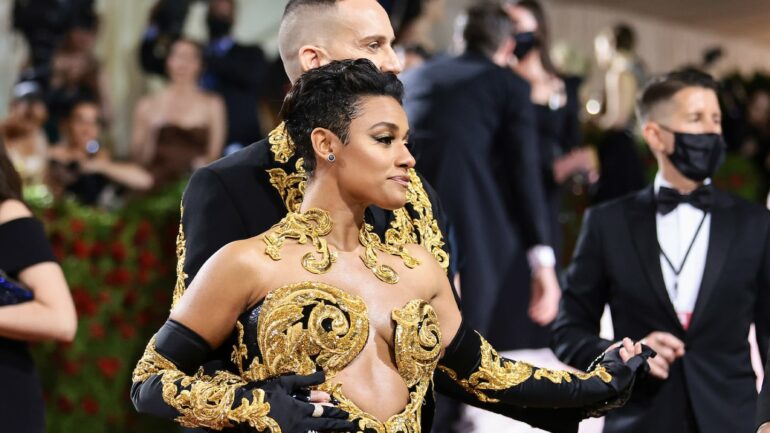
The Aesthetics of Resonance: When Style Takes on Multiple Forms
The impact of a solitary silhouette in the city often stems from self-assertion—a solitary performance that captures the eye through its precision or its radicalism. Yet the viewer’s perspective takes on a new dimension when it encounters two styles that respond to one another. Suddenly, clothing ceases to be a mere individual exercise and becomes a dialogue. This dynamic—where the whole ultimately surpasses the simple sum of two wardrobes—reveals a fundamental truth of contemporary style: visual impact is a matter of frequency and synchronization.
Observing these exceptional pairs—whether romantic duos, siblings, or family lineages—is akin to analyzing a form of living grammar. Here, elegance is expressed not through mimicry, but through a complex synergy. It is in this space—between two coat silhouettes that brush against one another or two color palettes that balance each other—that a narrative is constructed that is denser and richer than that of a single individual.
The Geometry of the Duo or the Arithmetic of Elegance
The principle that the whole is greater than the sum of its parts finds, in the context of style, a concrete and almost architectural application. When a couple or a family moves forward with a strong aesthetic coherence, they create a new visual entity. It is no longer a single person we are looking at, but a composition. This collective power alters our perception of urban space: the duo imposes a rhythm and a structure that a solitary passerby, however well-dressed, cannot match.
This superiority of the whole rests on a form of tension. For the result to work, one must avoid the pitfall of uniformity. The balance lies in the nuances: a subtle interplay between the texture of leather and the suppleness of knitwear, or a resonance between contrasting volumes. It is precisely this ability to maintain one’s own identity while fitting into a shared aesthetic that creates this sense of power. Clothing thus becomes the vehicle for a sense of belonging—whether chosen or imposed—but always magnified by the presence of the other.
The Couple: A Manifesto of Visual Complicity
When it comes to styling as a pair, the romantic couple holds a special place. Here, sartorial harmony acts as the visible extension of intimacy. It is not a matter of dressing identically—which would amount to a costume—but of sharing a worldview that is expressed through choices of cuts and fabrics. When a couple displays such mastery, clothing becomes a statement—silent proof that their tastes, like their lives, have ultimately intertwined.
The secret of these striking duos lies in their complementarity. One may embrace structured precision while the other explores a more relaxed fluidity, yet an invisible thread connects them. It might be a shared commitment to a certain quality of fabric, a mutual love for muted tones, or an identical way of subverting the codes of luxury. This unconscious synchronization reflects a shared life in which aesthetics is never a source of discord, but rather a constant playground. The effect is one of obviousness: they seem to belong to the same picture, making their mutual presence indispensable to understanding their respective styles.
Siblings and Legacies: The Mirror of Aesthetic Genes
The case of siblings adds a different nuance to this group dynamic. Here, synergy does not arise from an encounter, but from a shared origin. Siblings often share an intuitive way of wearing clothes—a legacy of gestures and postures that precedes the choice of the clothes themselves. This organic rapport manifests as a natural ease in coordinating their looks, without any visible effort.

For these pairs, style is often a matter of mirroring each other. We see similarities in their gait, in the way they roll up a sleeve or structure a silhouette, which reinforce the impact of their outfits. Whether they choose to play on total contrast or on variations of the same themes, the strength of their blood ties lends an extra layer of authenticity to their look. They do more than simply wear clothes; they embody a family identity that unfolds with natural authority. The sister duo proves that taste is also a matter of transmission and gradual absorption.
Transmission in the Present: The Mother-Daughter Dialogue
The mother-daughter duo undoubtedly represents the most fascinating manifestation of this arithmetic of elegance. It is a dialogue between two generations that unfolds through fabrics. In these pairs, clothing serves as a bridge. Here, we see the influence of the past and the energy of the present feeding off one another. The mother often brings a culture of cut and fabric, while the daughter infuses modernity—a way of breaking the rules that breathes new life into classics.
What makes these duos so memorable is the way they draw inspiration from one another. It’s not uncommon to detect in a daughter’s style a subtle homage to her mother’s younger years, while the mother adopts contemporary details borrowed from her child’s wardrobe. This constant exchange of ideas and pieces creates a hybrid aesthetic that is both timeless and perfectly rooted in the present. The visual result is richly evocative: it tells a story of the evolution of taste, where each generation enriches the other’s vocabulary.
The Final Balance: Beyond Appearances
Ultimately, these pairings remind us that clothing is a language of connection. If these duos manage to capture our attention, it is because they embody a form of human achievement: the ability to find common ground, to create harmony from two distinct individualities. Aesthetic success here is merely a symptom of a deeper connection, whether romantic, sibling, or parent-child.
The lesson to be drawn from these appearances is not that you absolutely must go out with someone to be stylish, but rather that elegance takes on greater significance when it is part of an exchange. These pairs do not seek perfection in isolation; they seek overall balance. It is in this quest for shared harmony that style reaches its most accomplished form, transforming every outing into a display of quiet strength where the other person is always the best accessory—the one who gives the outfit its full meaning.