
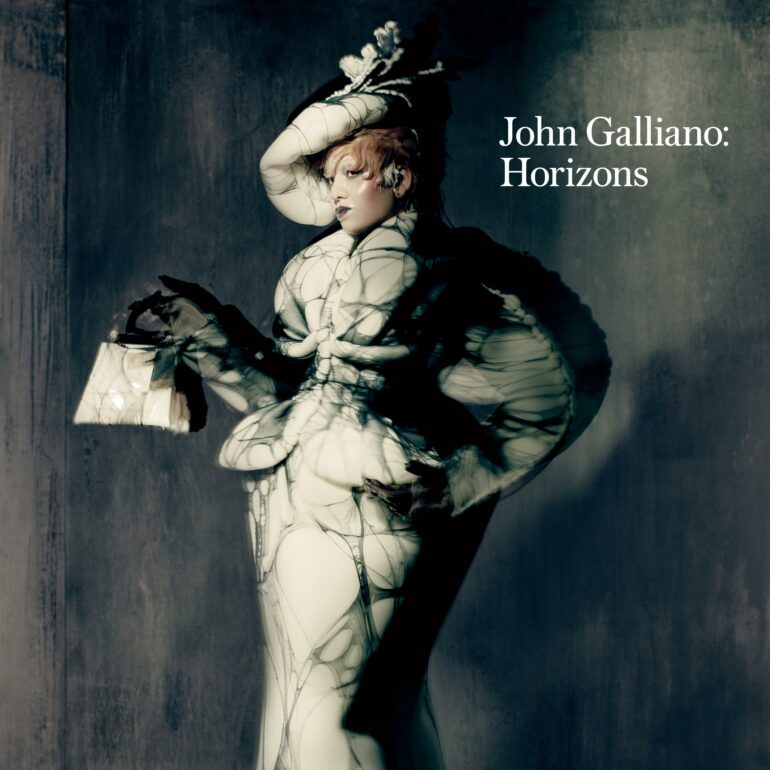
The Mirror Test: John Galliano Confronts the Institution
The secret had been well kept, sheltered from the gilded halls and hushed corridors of the Metropolitan Museum of Art. Last May, a meeting of a special kind took place within the walls of the New York institution. Seated around a table were Anna Wintour, the leading figure at *Vogue* and guardian of the Costume Institute, Andrew Bolton, its chief curator, and John Galliano himself. Facing them was a select circle of rabbis and community leaders from Manhattan’s Jewish community. The purpose of this meeting was not merely to discuss sketches or silk fabrics, but to probe hearts and gauge the social acceptability of a major event: the British designer’s triumphant return to the spotlight for a global retrospective.
This behind-the-scenes diplomacy speaks to the complexity of the man. For announcing an exhibition dedicated to Galliano, scheduled for spring 2027, is not merely an aesthetic celebration. It is a political act. Titled “John Galliano: Horizons,” this retrospective will be the first to encompass the entirety of a career that resembles a tragedy in three acts: the meteoric rise, the brutal fall into disgrace, and the slow rebuilding. By becoming the third living designer to receive such an honor at the Met, after Yves Saint Laurent and Rei Kawakubo, Galliano enters a pantheon where artistic genius must now coexist with ethical standards.
Mapping a Fragmented Journey
The exhibition, which will run from May 9, 2027, to January 9, 2028, eschews the linearity of a traditional catalog. Andrew Bolton has conceived the exhibition as a mental map, a journey through territories where eras and narratives collide. The starting point takes us back to 1984, at Central Saint Martins in London, with the graduation collection that sent shockwaves through the fashion world. From there, visitors will follow the designer’s path at Givenchy, then into the narrative opulence of the Christian Dior era, before diving into the experimental minimalism of Maison Margiela.
For Bolton, Galliano’s work is not limited to clothing; it is a form of “cartography of affinities.” Each collection is an interpretation of the world where the memory of the material and the precision of the gesture intertwine. The exhibition will be structured around three conceptual themes. The first, titled “Bearings,” will serve as a compass by situating the designer’s work within the broader context of cultural history. The second, “Horizons,” will explore his ability to build imaginary worlds from disparate sources. Finally, “Atlas of Transformation” (Atlante della Trasformazione) will lift the veil on the creative process itself: research notebooks, trial-and-error on the mannequin, prototypes, and, ultimately, the finished object that bears witness to unparalleled technical skill.
There is, however, one chapter the Met has chosen to omit: his recent collaboration with the Spanish giant Inditex. Although Galliano signed an agreement to design seasonal collections for Zara over a two-year period, these creations intended for the general public will be absent from the retrospective. The museum appears to want to maintain a certain separation between “high culture” and the demands of mass-market ready-to-wear, preferring to focus on Galliano’s contribution to the language of fashion rather than on his contemporary commercial ventures.
The Weight of Words and the Museum’s Responsibility
One cannot discuss Galliano without confronting the specter of 2011. The exhibition will not gloss over the anti-Semitic, racist, and anti-Asian outbursts that led to his dismissal from Dior and his conviction by a Paris court. The Met states this unequivocally: the exhibition will address this “derogatory conduct” head-on. The stakes are high: how can one appreciate a man’s artistic value while also acknowledging his moral responsibility?
The timing is all the more delicate given that New York is going through a period of acute identity-related tension. The city is facing a resurgence of hate crimes, tragically illustrated by the recent stabbing of two people in Manhattan. In this charged atmosphere, Galliano’s presence reopens wounds that have not yet fully healed. Some community leaders and political observers point to a sense of unease regarding this institutional rehabilitation. The New York Times also notes that this decision comes amid a complex local political context, marked by concerns about safety and the rise of antisemitism.

Yet the dialogue initiated by the museum appears to have borne fruit. During the May meeting, Galliano surprised those he was speaking with by his candor. Rabbi Rick Jacobs, president of the Union for Reform Judaism, who was present that day, highlighted a sense of unexpected sincerity. The man standing before them was not a public relations professional reciting a script memorized by heart, but an artist looking his past squarely in the eye, without flinching. It is this human dimension—far removed from the myth of easy redemption—that the “Bearings” section will seek to convey: the journey toward sobriety, the public acknowledgment of his actions, and the way in which cultural values, over time, shape the reception of a work.
From Image to Object: The Quest for Total Art
Beyond the controversy, “Horizons” aims to put technique back at the center of the debate. Galliano is, above all, a craftsman of the sublime. The final section of the exhibition, dedicated to transformation, promises an immersive journey into the atelier. Here, visitors will discover how a simple visual intuition is transformed into an architecture of fabric. Sketches and pattern trials will reveal a technical innovation that has often redefined the standards of modern couture.
The exhibition offers a reflection on memory and material. For Galliano, a garment is a repository of stories, an object that carries within it the tensions of its era. By inviting the public to observe the evolution of his work, from sketch to finished piece, the Met offers not only a tribute but also a critical analysis of fashion’s role as a cultural practice. Visitors are invited to reflect on what institutional success means in the face of individual failings.
This journey through Galliano’s body of work will undoubtedly be one of the most closely scrutinized events of the decade. Straddling the celebration of a visionary talent and the demand for an ethical memory, the Metropolitan Museum of Art is taking a calculated risk. The aim is to demonstrate that the history of fashion, like that of art in general, cannot be stripped of its shadows if we are to fully grasp its light. “Horizons” does more than simply trace a vanishing line toward the future; the exhibition compels us to look, with brutal honesty, at the rugged terrain of human genius.