
Kering’s Major Shift: Anatomy of a Carefully Orchestrated Resilience
On the Paris Stock Exchange, the numbers sometimes tell a more nuanced story than simple balance sheets alone. In the wake of Kering’s half-year results, the stock’s surge—jumping more than 10% right at the opening bell—sent a strong signal. For the luxury giant, this isn’t just a matter of revenue, but the validation of an approach. The roadmap laid out by Luca de Meo is beginning to bear fruit, revealing the first tangible signs of a turnaround anticipated by the industry’s most discerning observers.
The second quarter of 2026 emerged as the turning point in this transformation. With sales reaching 3.652 billion euros, the group posted a 2% increase on a like-for-like basis (comparable scope and exchange rates). While this recovery may seem modest at first glance, it is the result of a profound restructuring aimed at simplifying the internal organization while strengthening the unique appeal of each brand. For the half-year as a whole, revenue totaled 7.22 billion euros, thereby stabilizing a trajectory that, just a few months earlier, still seemed uncertain.
The debt reduction strategy and the luxury brand advantage
To understand the group’s current strength, one must look beyond the storefronts on Avenue Montenapoleone or Faubourg Saint-Honoré. Kering has undergone a spectacular financial transformation, reducing its debt to 3.3 billion euros—a massive decrease of 4.7 billion compared to the end of 2025. This renewed financial agility is driven by two major factors: strategic real estate transactions and, above all, the completion of the sale of Kering Beauty to L’Oréal on March 31, 2026.
This transaction, which injected 4 billion euros into the group’s coffers, demonstrates a commitment to refocusing on its most promising assets while optimizing profitability. Despite a volatile macroeconomic environment, the current operating margin remained steady at 12.8%, representing 921 million euros. This stability is the foundation upon which de Meo intends to build future growth, prioritizing operational efficiency and brand distinctiveness over a frantic race for volume.
Jewelry and Eyewear: The New Growth Drivers
While fashion remains Kering’s historic DNA, it is the jewelry and eyewear divisions that are now stealing the spotlight with their remarkable dynamism. Kering Jewelry, a key strategic priority for the group, posted what were described as excellent results. In the second quarter, the division saw its sales surge by 18% on a like-for-like basis, reaching revenue of 252 million euros. Over the first six months of the year, growth even reached 20%, driven by unprecedented enthusiasm in Japan and the Asia-Pacific region.
In this segment, Boucheron stands out as the leader, posting exceptional results in Asian markets. The Pomellato and DoDo brands are not far behind, confirming the relevance of the Group’s high-end positioning in the world of fine jewelry. As for Qeelin, the brand continues to capitalize on the strength of its iconic collections to appeal to a Chinese clientele that is increasingly drawn to pieces with a strong cultural identity.
At the same time, Kering Eyewear is cementing its status as a star performer. With half-year revenue of 965 million euros, up 8%, this division is demonstrating remarkable profitability, with an operating margin climbing to 23%. Several factors account for this success: the highly publicized launch of the Valentino eyewear collection, the revitalization of Maui Jim’s optical business, and the celebration of Lindberg’s 40th anniversary through an exclusive capsule collection. These initiatives have enabled the group to reach all key regions, thereby consolidating its presence in an accessories market that has become highly strategic.
Gucci and Fashion: A Recovery Under Close Scrutiny
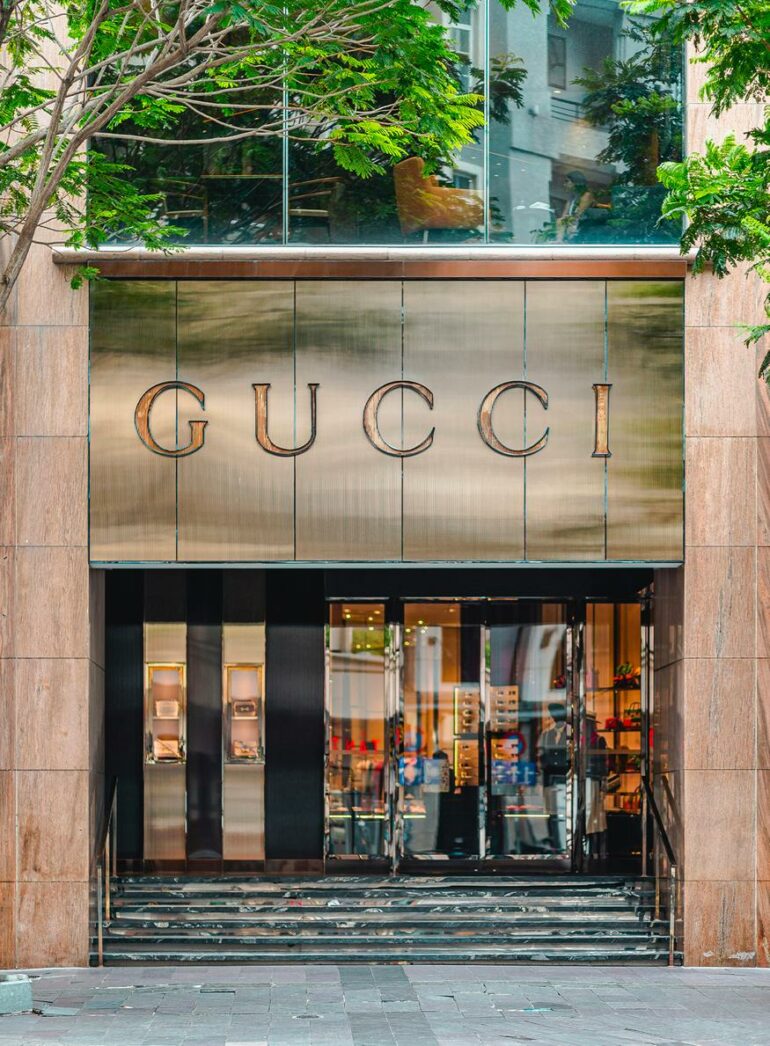
The Gucci portfolio remains the key barometer of Kering’s health. While the Florentine giant continues to report declining figures, the decline appears to have finally slowed. In the second quarter, revenue stood at 1.41 billion euros, limiting the decline to 2% on a like-for-like basis. This represents a notable improvement of seven percentage points compared to the first quarter of 2026, particularly within the company-owned store network. Luca de Meo makes no secret of his confidence in the future of the double-G brand, relying on its intrinsic popularity to kickstart a sustainable rebound.
The Fashion & Leather Goods division as a whole, which generated €2.9 billion in revenue for the quarter, is showing signs of stabilization. Saint Laurent, Bottega Veneta, and Brioni all continued their trend of sequential improvement, benefiting from a significant acceleration in their performance. Conversely, other houses are undergoing more complex periods of transformation. Balenciaga is continuing its creative and commercial transition, while Alexander McQueen is refining its strategic repositioning under the leadership of its new CEO. The focus is on tailored pieces and “statement” items, aimed at reaffirming the brand’s authority in the pure luxury segment.
The Geopolitics of Luxury: U.S. Momentum vs. Asian Challenges
Kering’s global sales map paints a mixed picture. North America stands out as the strongest region, with 9% growth over the half-year—and as much as 10% for the fashion and leather goods segment alone. Japan, buoyed by the yen’s strength, also performed well in the second quarter, following a more subdued start to the year. In contrast, Western Europe posted a 2% decline, weighed down by sluggish tourist traffic, particularly from travelers from the Asia-Pacific region.
Asia, in particular, remains an area of concern. While South Korea is showing exemplary momentum, the rest of the region is showing signs of stagnation. Even more concerning, the rest of the world posted an 8% decline, a figure directly linked to ongoing tensions in the Middle East. This conflict, in fact, weighed on the group’s overall second-quarter growth by one percentage point, illustrating the luxury sector’s sensitivity to global geopolitical upheavals.
A Deceptive Net Profit
While investor sentiment is high, interpreting the net profit figure requires some caution. Net profit stood at 189 million euros for the first half of the year, compared to 474 million a year earlier—a 60% decline. This figure, which seems at odds with the prevailing optimism, is attributable to non-recurring expenses of approximately 223 million euros, primarily related to the sale of the iconic building on Via Montenapoleone in Milan.
However, Kering’s true financial health is better reflected in its free cash flow, which reached 2.6 billion euros. This amount includes revenue generated from real estate transactions and agreements related to Gucci Beauty. For the remainder of 2026, the group is maintaining its initial targets, anticipating a continued improvement in profitability. By streamlining its organization and focusing on exceptional performance, Kering appears to have found the key to navigating a period of transition in which desirability has become the most valuable currency.
Kering’s strategy for the current year remains rooted in this commitment to controlled growth. Between the repositioning of its fashion icons and the explosive growth of its jewelry segments, the group is betting on a more transparent and effective brand architecture. The road to a full recovery is still long, but the foundations laid during this half-year seem solid enough to support the future ambitions of the Pinault empire.