
The Cannes Sensation and the Mechanics of Desire
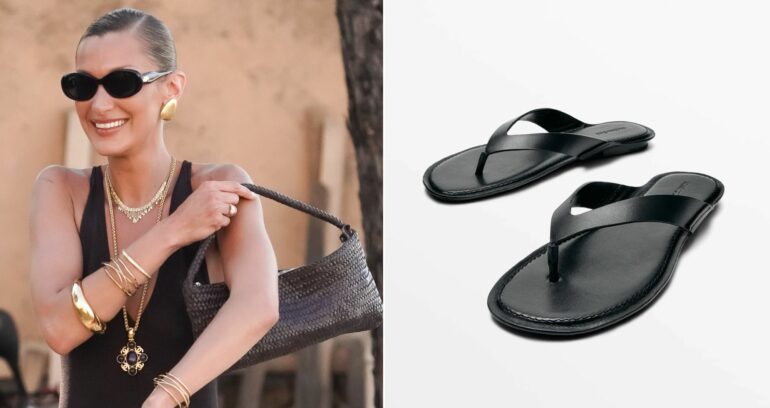
In May, the Cannes Film Festival typically imposes strict guidelines when it comes to image: spectacle, fine jewelry, and exclusive haute couture archives. Yet, amid this predictable extravaganza, a single appearance was enough to throw a wrench in the works and capture the attention of industry observers. Far from the red carpets, model Bella Hadid was photographed in an outfit of radical simplicity. A perfectly fitted dress, a woven bag, a pair of black leather sandals. The look exuded a distinctly Mediterranean identity, emphasizing restraint rather than ostentation.
The shock didn’t come from the cut—as precise as it was—but from the label. This look, which instantly flooded news feeds, wasn’t designed by a historic fashion house charging premium prices, but by Massimo Dutti. The chain of events that followed perfectly illustrates how fashion appeal works today. The pairing of a leading figure in contemporary fashion with a wardrobe of great simplicity acted as a lightning-fast catalyst for the Spanish brand.
The impact extended far beyond mere clicks on candid photos. A few weeks later, the famous black flip-flops worn by Bella Hadid that day climbed onto the highly exclusive list of the quarter’s most sought-after accessories. A simple piece of leather, sold at an affordable price, found itself propelled to the same level as the luxury leather goods that usually dominate these rankings.
The statistical anomaly of the quarter
This frenzy was reflected in the second-quarter 2026 data published by Lyst. The renowned index, which tracks fluctuations in desirability within the sector, delivered its verdict by placing Massimo Dutti in tenth place on its global ranking. A spectacular jump of eight spots that shakes up the established order.
While Chanel’s presence at the top of this ranking comes as no surprise, the emergence of a mass-market brand in the top 10 is a remarkable event. The analytical tool developed by Lyst is not merely a reflection of sales volumes. Its algorithm cross-references internet users’ search behavior with media coverage, while applying a strict filter. The platform’s developers claim to neutralize artificial spikes in attention generated by aggressive sales campaigns or manufactured controversies. Massimo Dutti’s tenth-place ranking therefore reflects organic traction—a fundamental shift in which consumers are actively seeking to embrace the brand’s aesthetic.
This breakthrough directly challenges the very notion of prestige. For decades, desirability was rooted in a rich heritage, orchestrated scarcity, and an exclusive price point. Today, the focus is shifting. The appeal of a piece no longer stems exclusively from the symbolic power of a century-old logo, but from its ability to fit into a visual language relevant to a specific moment in time.
The Architecture of Accessible Luxury
To understand how this brand has managed to take its place among the players in the contemporary luxury sector, one must examine its specific positioning within the Inditex Group. While its sister brand, Zara, acts as a frenzied trendsetter, translating runway looks into ready-to-wear in record time for an audience eager for novelty, Massimo Dutti has always maintained a different pace. Its identity has historically been built around office wear, featuring a more mature aesthetic and a certain stylistic calm.
The times seem to have caught up with this positioning. Industry analysts are observing a growing weariness with disposable fashion and constant visual noise. Customers are gravitating toward what is now referred to as “accessible premium.” They seek a relaxed style that doesn’t compromise on precision, favoring clean cuts and understated fabrics without being willing to pay the exorbitant prices of traditional luxury brands.
It is on this fine line that Massimo Dutti maximizes its results. The brand has now perfectly mastered this aesthetic of understated elegance. It projects a clear Mediterranean identity that precisely meets this quest for quiet chic. The true feat lies in the execution: the collections exhibit a consistency of style that is sometimes sorely lacking in theoretically more prestigious brands, whose messaging often strays between the storefront window and the shelves of their boutiques.
Marta Ortega Pérez’s Business Strategy
Behind the anecdote of the form-fitting dress on the Croisette and the cold hard facts of Lyst’s statistics lies a meticulous corporate strategy. This spectacular move upmarket bears the signature of Marta Ortega Pérez. Since she took over as chair of Inditex’s board of directors, the group has embarked on a process of radically transforming its image.
The objectives of this reorientation are ambitious: to erase the stigma of mass production while maintaining the formidable efficiency of a global supply chain. To achieve this, management has implemented several strategies simultaneously. The architectural design of the retail locations has been completely reimagined to emulate the aesthetics of luxury hotels and art galleries, offering a serene shopping experience. At the same time, the brand’s image has been entrusted to leading visual designers. Advertising campaigns now feature renowned photographers, cutting-edge designers, and influential figures from the fashion world.
This comprehensive effort aims to reshape the fundamental perception of the group’s brands. It is a complex balancing act: refining the aesthetic vision and increasing the perceived value of the garments, all while never breaking through the price ceiling that ensures sales volumes. According to recent influence rankings, the Massimo Dutti brand stands out as the most successful embodiment of this strategy. The brand has found the perfect formula to break away from the mass-market ready-to-wear category and establish itself as a credible alternative in the realm of contemporary luxury.