
Milan may reign supreme in the world of fashion and design, constantly attracting new residents, but even its biggest fans will admit that the atmosphere can get a bit stifling. So why not take a cue from the Milanese themselves and escape for a weekend—or even just a day? One of the Lombard capital’s greatest assets is its proximity to exceptional destinations. In fact, some of these getaways are quicker to reach than the trip to the Salone exhibition center.
Bologna, the vibrant antithesis of Milan
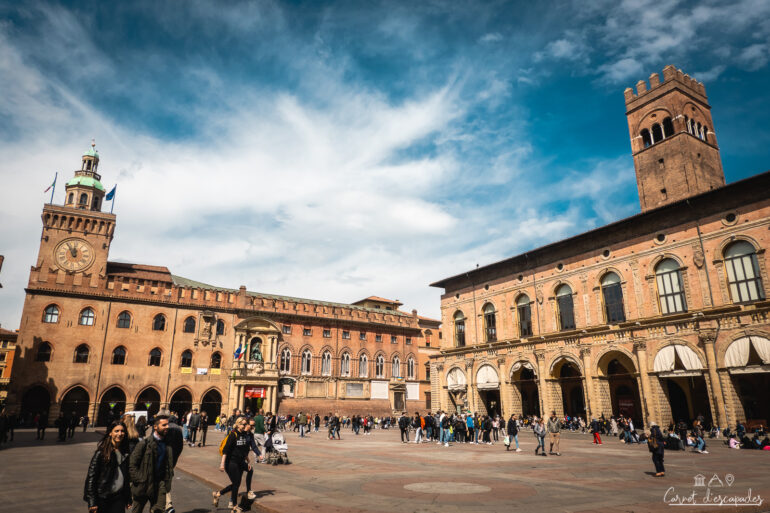
Just an hour away by high-speed train, Bologna stands out as a striking contrast. Forget Milan’s somewhat stuffy veneer: here, the atmosphere is decidedly authentic. Deeply rooted in its history and gastronomy, the city pulses to the rhythm of its large student population and its alternative contemporary scene. Home to the world’s oldest university still in operation (founded in 1088), Bologna has always cultivated a militant and idealistic spirit. It is a free city, where underground music venues and squats maintain a gentle air of rebellion. This vibrant energy coexists in perfect harmony with the majesty of its terracotta squares, medieval towers, and cuisine—undoubtedly one of the most respected in Italy.
An authentic and generous culinary scene
The craze for the capital of Emilia-Romagna continues to grow. According to Benedetta Barbieri, who runs Trattoria Montanara with her husband Filippo Venturi, the city has become a popular destination for food lovers. In the intimate dining room of their restaurant, which opened in 1929, the couple offers what they like to call “slow-cooked cuisine from another era.” On the menu, served on delicate floral plates: timeless classics like lasagna, tortellini in brodo (stuffed pasta in meat broth), and the famous cotoletta (a breaded pork cutlet topped with ham and Parmesan).
Traditional restaurants are the true beating heart of the city. Casual spots offering food prepared with love abound. Step inside Da Cesari, a dining room with dark wood paneling decorated with tablecloths featuring regional prints. Here you can enjoy meatballs made from a closely guarded recipe, paired with wine from local vineyards. Another institution is Bar Paolo, founded in 1976. With no sign out front and no printed menu, this haunt for regulars at the rounded steel counter relies solely on the owner’s voice to announce the daily specials.
Among this myriad of old-school eateries, Ristorante Grassilli stands out. This father-son duo brilliantly combines seasonal Bolognese ingredients with bold pairings, such as their risotto with pumpkin, taleggio cheese, amaretti crumbs, and pomegranate seeds. Every morning, the pasta is rolled out by hand—a skill that the younger of the chefs, Jean David Durussel, considers a true art form in its own right.
A love for quality ingredients also animates the city center’s market halls. Rebuilt in 1949, the Mercato delle Erbe serves as both a covered market and a lively canteen. Among the stalls is the Bottiglieria delle Erbe, which recently expanded with the opening of the Bottiglieria Vini Belli on Via Saragozza. Locals flock there to share Italian tapas over bottles from independent winemakers.
At the crossroads of culture and historic craftsmanship
Beyond the dining scene, the city is brimming with cultural initiatives. Live music takes center stage (touring bands actually stop here more often than in Milan), but cinema is also a true local passion. A love of the silver screen is nurtured by the exceptional archives of the Cineteca di Bologna foundation, as well as by the superb Cinema Modernissimo, a recently restored Art Nouveau gem.
For a leisurely stroll, head to the Quadrilatero district. A hub of commerce since the Middle Ages, its maze of narrow streets is brimming with produce stands and artisan shops. Stop by Roccati for its chocolate truffles made on-site, or let yourself be surprised by the Aguzzeria del Cavallo. Founded in 1783, it is one of the city’s oldest shops, offering unusual items such as hand-carved bird calls, exceptional knives, and specialized tools for making pasta.
Just a few steps away stand the legendary Due Torri. Although these two nine-century-old towers are currently undergoing repairs to address foundation subsidence, they remain no less spectacular. Continue on to Via Santo Stefano, a pedestrian street that comes alive every second weekend of the month with its antique market. It is here that you can admire some of the city’s most beautiful porticoes, now designated as UNESCO World Heritage Sites.
Experience the "dolce vita" Bolognese-style
While the local cuisine is a major draw, the city’s appeal goes far beyond that. As designer Allison Hoeltzel points out, it’s essential to set aside time for the museums. She highly recommends the Mambo (the museum of modern art) and the Museo Morandi, dedicated to the famous painter from the city. Don’t miss the Archiginnasio either, a majestic 16th-century Renaissance palace. In addition to housing Bologna’s oldest library, it features a fascinating all-wood anatomical theater from 1637, whose eerie statues once helped medical students review their anatomy lessons.
To end the day on a high note, Hoeltzel, founder of a handmade leather goods brand, recommends immersing yourself in the city’s vibrant social scene, a glass of wine in hand. Purists will head to Enoteca Storica Faccioli for its selection of natural wines in a classic, intimate setting, while Bottiglieria Vini Belli offers a slightly more contemporary atmosphere. A sense of community and a love of celebration are integral to the local DNA. Ultimately, it is all of this that defines the Bolognese way of life.