
The New Grammar of Taste: From Japanese Radicalism to Swedish Elegance
Contemporary luxury is no longer measured by the thickness of the carpets or the length of the tasting menus. Today, exclusivity lies in the precision of the gesture, the intimacy of the setting, and a certain kind of sophisticated ease. Two major openings—one in New York, the other in Stockholm—illustrate this profound transformation in haute cuisine. On one hand, an uninhibited reinvention of Japanese ritual; on the other, the architectural culmination of a harmonious chef duo. Two dining rooms, two atmospheres, but a single quest: that of hospitality that prioritizes spirit over protocol.
Manhattan: Hiroki Odo and the Rise of the Modern Izakaya
Amid the buzz of the East Village, Chef Hiroki Odo is quietly spearheading a small revolution. His new venture, Odo East Village, stems from a simple yet radical observation: New Yorkers are growing weary of the endless rituals of classic tasting menus. To address this, the chef has chosen to deconstruct kaiseki—that ancient and rigid form of Japanese gastronomy—and blend it with the much more informal spirit of the izakaya, the Japanese snack bar.
The space, designed by Shinichiro Ogata, is intended to be an oasis of serenity for just twenty-four guests. Here, sharing is the guiding principle. While the meal retains a certain multi-course progression, the plates are designed to be shared, passing from guest to guest in an atmosphere of renewed conviviality. The beating heart of the kitchen? The binchotan grill, which uses traditional oak charcoal to impart a smoky depth and unmatched cooking precision to the finest ingredients.
It is on the plate that Hiroki Odo’s boldness shines most vividly. The chef has chosen to do without the usual staples of Japanese cuisine served abroad: no soy sauce, no panko, and no miso in sight. This deliberate simplicity forces an extreme focus on the intrinsic quality of the ingredients. Diners can craft their own culinary journey from a selection of standout dishes: the delicacy of bluefin tuna, the creaminess of tofu topped with Hokkaido sea urchin, or the melt-in-your-mouth texture of braised Wagyu beef tongue. By breaking free from expected conventions, the chef offers a rawer, more direct, and ultimately more sincere interpretation of his culinary heritage.
Stockholm: Adam and Albin, a friendship carved in walnut
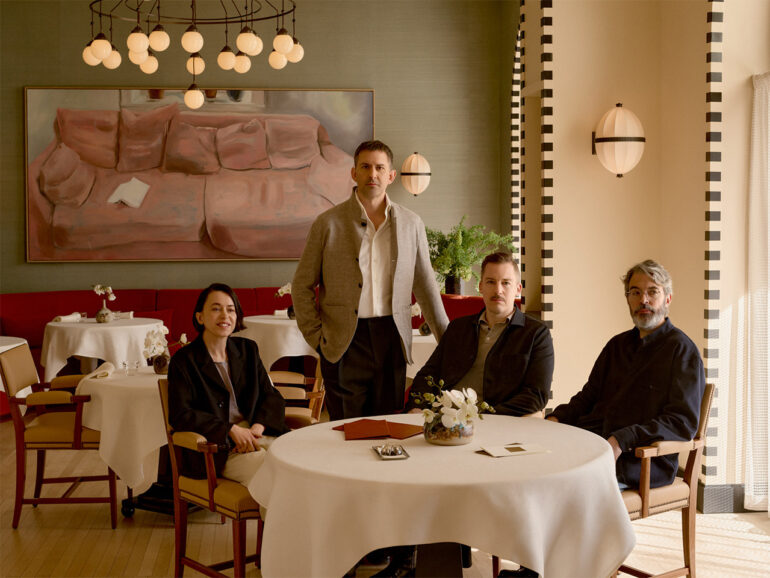
A few thousand kilometers away, in the historic Norrmalm district, another form of camaraderie is on display. Adam Dahlberg and Albin Wessman are no newcomers to the Swedish culinary scene. For two decades, these two chefs have been cooking side by side—a rare longevity that permeates every detail of their new restaurant: Adam Albin. Located in the heart of Stockholm, the restaurant offers an unobstructed view of the symbols of Swedish power and culture: the Royal Palace, the Opera House, and the Parliament.
The space itself is a statement in design. Spread across three levels, the restaurant was designed by the Halleroed studio, a leading name in contemporary Scandinavian aesthetics. Far from the cold minimalism sometimes associated with the North, the space exudes an enveloping warmth. The dark walnut woodwork interacts with a cream-and-black checkered border in the lounge, creating a sophisticated visual rhythm. The atmosphere evokes that of a private collector’s apartment: a record player plays a curated soundtrack, while a beverage cart and built-in wine displays underscore an epicurean lifestyle. On the walls, contemporary Swedish art—carefully selected by gallery owner Magnus Karlsson—further anchors the space in a lived-in modernity.
Beneath the arched windows and on the immaculate white tablecloths, Adam and Albin’s cuisine unfolds with a technical mastery that never overshadows the ingredients. The menu features langoustines in a bread crust, enhanced by parsley butter and the delicate flavor of artichokes. The seafood menu continues with mussel rice served with grilled pikeperch, all bound together by a whey-based sauce. More surprisingly, the artistry in textural contrast is revealed in a dish of squid and morel mushrooms stuffed with wild garlic—a land-and-sea pairing typical of contemporary Nordic creativity.
Two visions, one evolution of gastronomic luxury
Whether through New York’s soy-free minimalism or Stockholm’s architectural elegance, a common thread emerges: the end of ostentation. At Hiroki Odo, luxury lies in simplicity and the freedom given to the diner to shape their own experience. For Adam Dahlberg and Albin Wessman, it lies in the longevity of their partnership and the attention paid to domestic details—the grain of wood, the crackle of vinyl, the choice of a painting.
These two restaurants confirm that the dining table is no longer just a place to eat, but a comprehensive cultural space where design, art, and local history are all part of the menu. We no longer go to a restaurant to witness a display of technical prowess, but to immerse ourselves, for the duration of a meal, in a worldview. In Stockholm as in Manhattan, fine dining is becoming more human, more intimate, while remaining of the highest standard. This is a fundamental trend that is reshaping the contours of our future sensory journeys.