
Make Texture a preferred source on Google to support us
Add Texture to GoogleThe furniture industry sometimes feels stifled by the neon glow of its own conventions. Enclosed halls, carpeted aisles, and total isolation from urban reality are finding it increasingly difficult to capture the vitality of a creative scene. It is precisely this disconnect that the first edition of Morocco Design—scheduled for October 5–7, 2026—aims to bridge. The event takes the radical step of abandoning the exhibition center model to infiltrate the very fabric of Casablanca. The concept embraces a fragmented geography: design must collide with reality, exist in the streets, inhabit historic buildings, occupy galleries, breathe new life into showrooms, and take root in private studios or the city’s boutique hotels. This desire to infuse the city requires rethinking access to creativity, placing it at the intersection of everyday life and commercial activity.
Casablanca stands out as the obvious choice due to the very nature of its urban fabric. The city was built on a dynamic of uninterrupted exchange and possesses a particularly rich modern architectural heritage. This history as an urban planning laboratory, coupled with a constant cultural mix, offers a raw and complex backdrop, far removed from glossy imagery. Morocco Design draws on this rugged and vibrant terrain to anchor a very clear ambition: to establish a true African hub dedicated to furniture design, interior architecture, and collecting. The challenge goes beyond the simple presentation of objects. The goal is to facilitate physical encounters between networks that often operate in parallel. Architects, influencers, international brands, collectors, and public or private institutions are invited to explore the city to forge direct connections outside the usual institutional frameworks.
A packed schedule raises questions
This emergence on the continental scene is not taking place on uncharted territory. The year 2026 promises to be particularly packed for the Moroccan metropolis. Starting in early July, the MADESIGN fair will take center stage, followed in September by OPEN PORTFOLIO Casablanca, an event already focused on the visual arts and contemporary design. Fitting into this tight schedule in early October is a risky gamble. Morocco Design must offer a radically different concept to justify its presence. The organizers’ response is based on a refusal to simply stack commercial booths. The event aims first and foremost to be narrative. It seeks to document the evolution of Morocco’s creative economy as it takes shape, while demonstrating its ability to engage in critical discourse on the field.
Debunking the myth of decorative folklore
The crux of the program lies in the confrontation between the giants of the global industry and local designers. On one hand, the event brings together the cutting-edge expertise of the international design scene with major players such as Flexform, Molteni&C, Moroso, Roche Bobois, and Kettal. On the other, it brings together a diverse group of Moroccan designers tasked with representing new approaches to objects and spaces. The exhibition will feature works by established figures and emerging studios: Hicham Lahlou, Samir Mazer, Hamza Khadiri, Ali Lahlou, Salima Filali, Zineb Tazi, Sophia Kacimi, and Othmane Bengebara. These will be complemented by the perspectives of collective groups and specialized firms such as Studio Sana Benzaitar, Inspiration Design BY, Myroc Studio, and Verneo Studio.
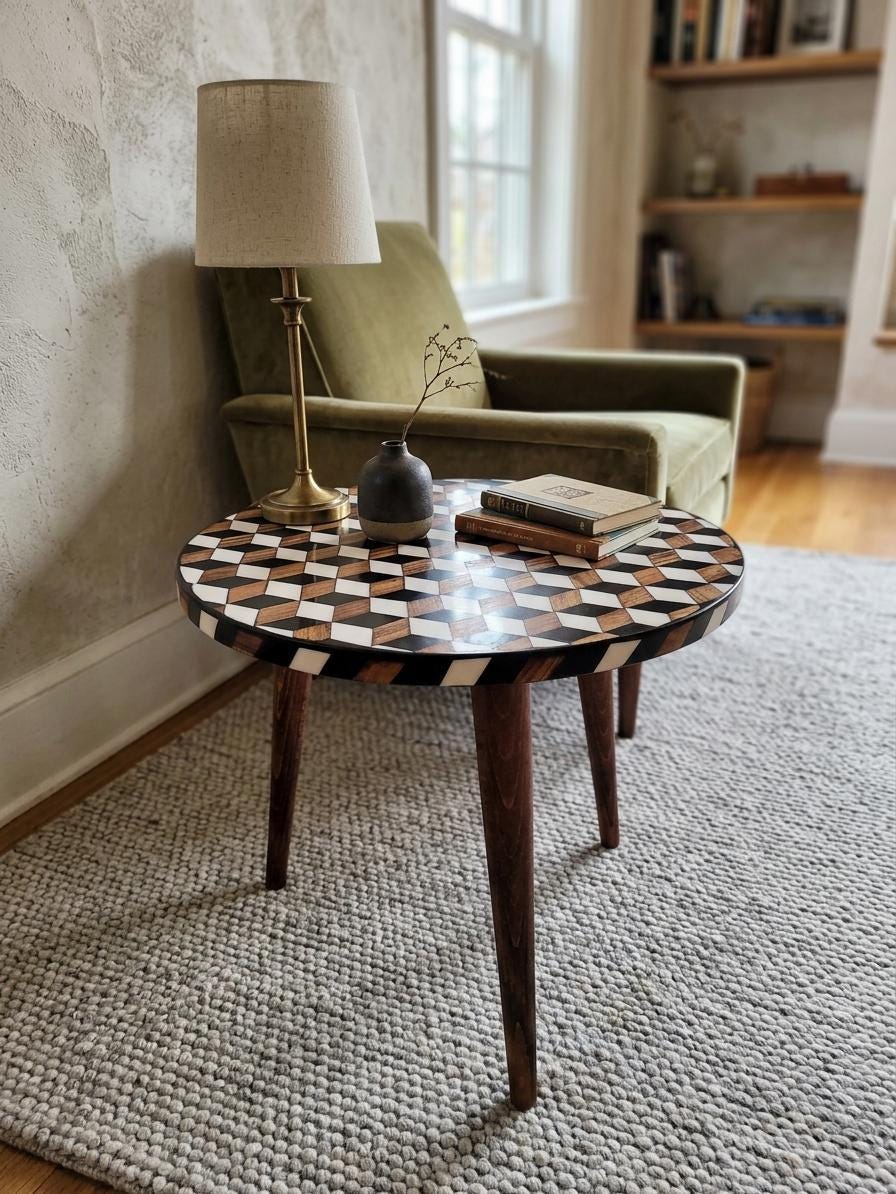
Bringing together the engineering of a Milanese sofa and the materiality of a handcrafted Moroccan piece carries immense risk. The design market has an unfortunate tendency to confine productions from the Global South to the role of a soulful addition, an ethnic touch, or a superficial exoticism. Morocco possesses a body of craftsmanship of rare depth, which is widely utilized in interior design around the world. The challenge for the 2026 edition will be to work with this historical material without freezing it in museum-like nostalgia. The Moroccan designers featured in the exhibition must demonstrate that their artistic language can embrace contemporary trends without compromising their identity, while international brands will need to find a local resonance that goes beyond mere export. If the curatorship fails, the project will sink into folklore. If it succeeds, it will set a new standard for industrial and cultural collaboration.
The Logistical Challenge of Dispersion
The trade press is already anticipating the limits of the endeavor. Publications such as *Maisons du Maroc* and *Deco Actuelle* highlight the boldness of the format, praising the promised fluidity between purely commercial spaces and living environments. This conceptual flexibility is appealing on paper. In practice, rolling out an event of this magnitude in a city known for its complex traffic is a daunting task. The lack of a single venue shifts the entire burden of the experience onto signage, scenography, and the precision of the route. Without military-style execution and a rigorous selection of stops, the intellectual stroll envisioned by the founders risks colliding with the harshness of Casablanca’s asphalt and turning into an incomprehensible obstacle course.
Hospitality as a Space for Reflection
To anchor this fragmented network, the organization relies on strategic gathering points. Villa Sahrai will serve as the official partner for hosting the press and foreign delegations. This venue was not selected solely for its lodging capacity. Designed by French architect Christophe Pillet and affiliated with the Design Hotels network, the building will serve as a space for debate. The aim will be to directly explore the transformations in hospitality architecture, the new demands of hospitality, and the way design shapes the traveler’s experience. This temporary hub will serve as a buffer zone between the various exhibition areas, allowing professionals to exchange insights away from the hustle and bustle of the street.
Beyond the three days of excitement planned for fall 2026, the relevance of Morocco Design will be measured by its longevity. The media impact of a first edition is rarely enough to shape an industry. The organizers aim to foster sustainable commercial exchanges, encourage the creation of joint production networks, and provide an economic foundation for Morocco’s emerging design scene. Casablanca undeniably possesses the architectural foundation and pool of artisans necessary to claim the status of a design capital. It now remains to be seen whether this energy can be channeled into a sophisticated initiative capable of setting its own pace on the international stage.