
A Clash Between Fabric and Stone
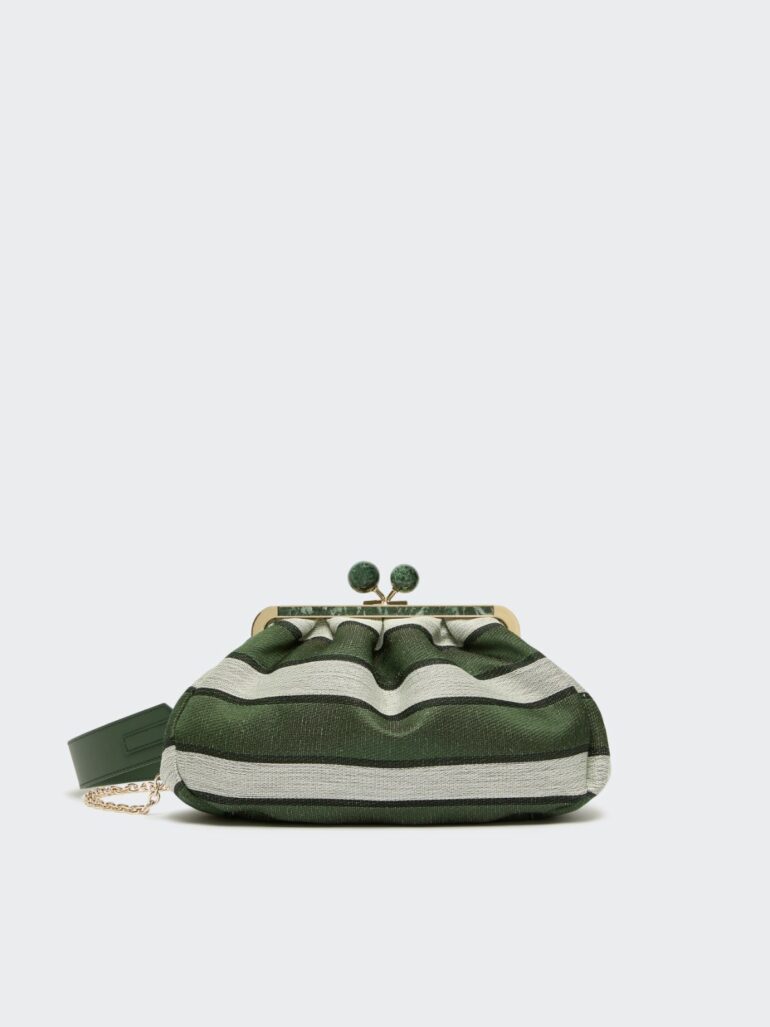
The sensation is surprising. Under your fingertips, the rounded shape of a cold, hard, unyielding sphere. It’s not the metal typically found in leather goods, nor a pliable resin, but marble. By fixing this geological material onto an object that is, by its very nature, malleable and mobile, Weekend Max Mara creates a physical and visual clash. The idea goes beyond mere stylistic whimsy. To celebrate the tenth anniversary of its Pasticcino model, the brand has decided to imbue it with the weight of stone and the depth of history. The object thus transcends its original function to become a manifesto against the frenzy of an industry often obsessed with the next season.
The Pasticcino has always cultivated a somewhat elusive air. Its rounded profile, without sharp edges, suggests an uninhibited, almost nonchalant allure. Until now, its impact stemmed precisely from its refusal to join the race for flashy logos. No intrusive monogram, no flashy signature. The bag makes its mark through its silhouette and presence. Today, this anniversary edition pushes the boundaries of timelessness a step further by evoking the long arc of time—that of artisans and their careers.
The material mastered by the Budri workshops
Marble has a reputation for being static, associated with immovable palaces, monumental statues, and floors trodden upon in silence. Bringing it within reach—onto an accessory designed for movement—requires extraordinary technical mastery. The Budri workshop was tasked with solving this challenge. Founded in 1961, this Italian company has built its legacy on the surgical precision of stone carving. The raw, mineral quality of the stone is treated with a meticulousness usually reserved for fine jewelry.
The result of this work on the spherical clasp creates an unexpected dialogue with the softness of the bag’s exterior. Absolute rigidity serves to seal a supple construction. A tactile trompe-l’œil emerges, where the mineral material—tamed by machining and polishing—seems almost to yield to the fluidity of the garment. The stone sheds its arrogance to conform to the rhythm of the body in motion.
Florentine textile heritage on the loom
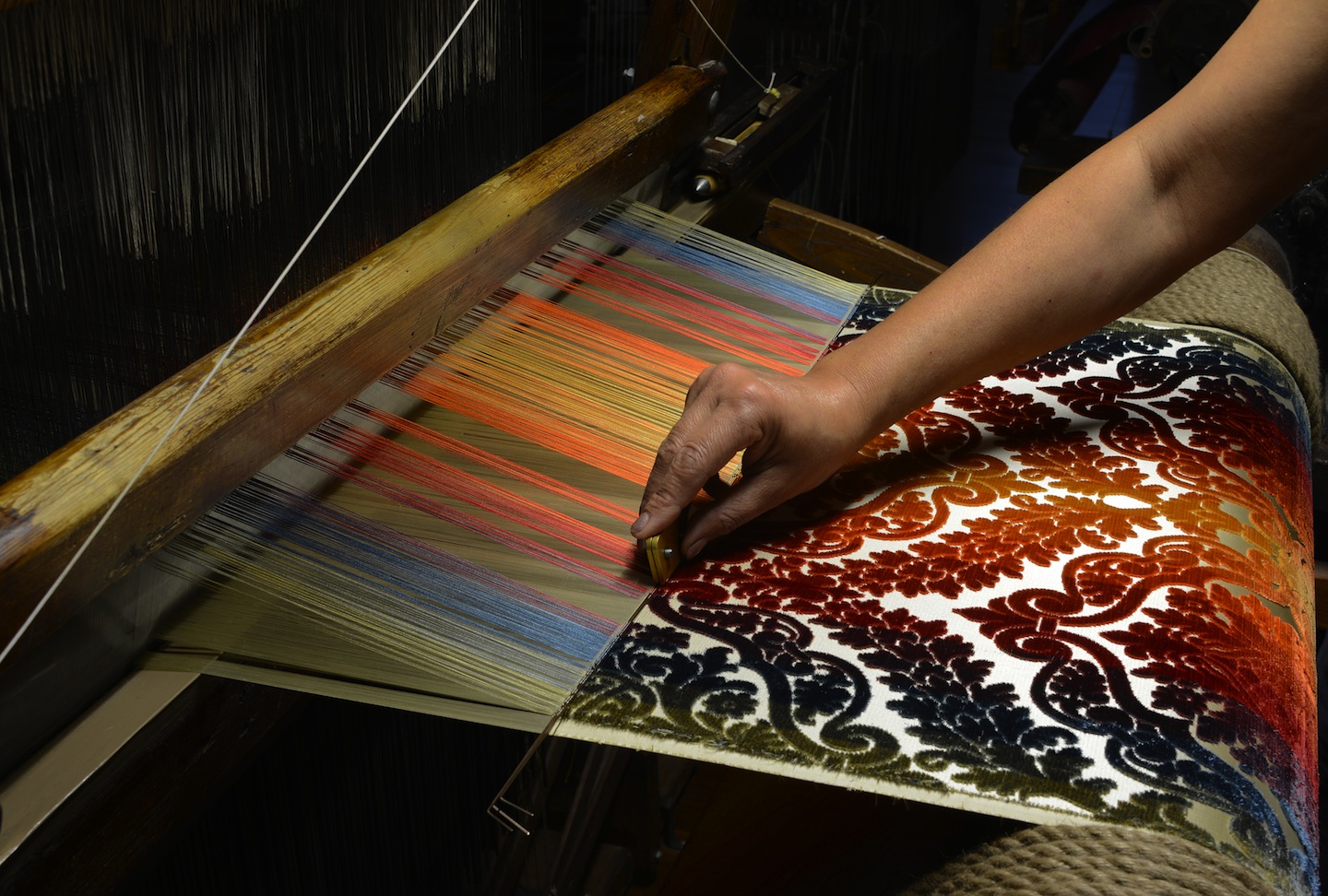
While stone freezes an object in time, fabric brings it back to its geographical origins. For this special edition, the exterior abandons its usual variations in favor of an infinitely denser material. The creative teams turned to a local institution, the Fondazione Arte della Seta Lisio. Since 1906, this Florentine workshop has been dedicated to keeping ancient weaving techniques alive. Its looms produce patterns straight out of the Tuscan Renaissance, an era when textiles shaped the region’s social hierarchy and economic power.
The Pasticcino is thus adorned with jacquards whose complexity evokes the opulence of damask, the depth of velvet, and the texture of brocade. The integration of the Lisio Foundation into the manufacturing process shifts the focus. The approach goes beyond simply choosing a prestigious supplier to embrace a form of social responsibility: providing work and visibility to workshops that preserve craft techniques threatened with extinction. Fashion takes a back seat to the preservation of a textile culture that, without these contemporary commissions, would end up confined to the display cases of decorative arts museums.
Urban architecture woven into the fabric
The city of Florence does not serve here as a mere backdrop for an advertising campaign. It is the very matrix of this collection. As the fifth installment of the brand’s traveling project titled Italian Roots, this Tuscan chapter draws its inspiration directly from the city’s architectural layers. The designers meticulously observed the unique light that falls on the facades at dawn, translating these morning hues into the dye bath for the yarns.

The fabrics’ geometric patterns echo the floor tiles of centuries-old churches, while the chosen hues immediately evoke the polychromatic marble that adorns the Cathedral of Santa Maria del Fiore. The accessory becomes a portable synthesis of Renaissance palaces, with their ornate ceilings and intricately carved facades. The bag’s overall look is deliberately imbued with a sense of heritage, gaining in gravitas what it loses in ephemeral lightness.
The Emotion of the Human Hand
This accumulation of demanding references and noble materials limits the edition to an extremely small run. The brand has limited production to six variants, all numbered, thereby affirming their rarity not through a marketing ploy, but through the physical reality of artisanal production capacity. Producing these objects takes time. A great deal of time.
In the pages of *Marie Claire*, Nicola Gerber Maramotti, a member of the founding family and ambassador for Weekend Max Mara, has long championed the emotional aspect of this design philosophy. For her, separating the creative idea from the artisan’s craftsmanship is tantamount to heresy, particularly in Italy. The approach is resolutely sentimental: reconnecting with one’s roots requires honoring those who pass down the craft from one generation to the next.
The underlying message of this anniversary edition is striking in its quiet radicalism. In the face of the visual clamour and planned obsolescence that often dominate the contemporary luxury industry, this bag offers a discreet accumulation of ancient knowledge. It embraces slowness. By entrusting its aesthetic to a century-old foundation and stone carvers, the Pasticcino proves that the most enduring elegance lies in the refusal to rush.