
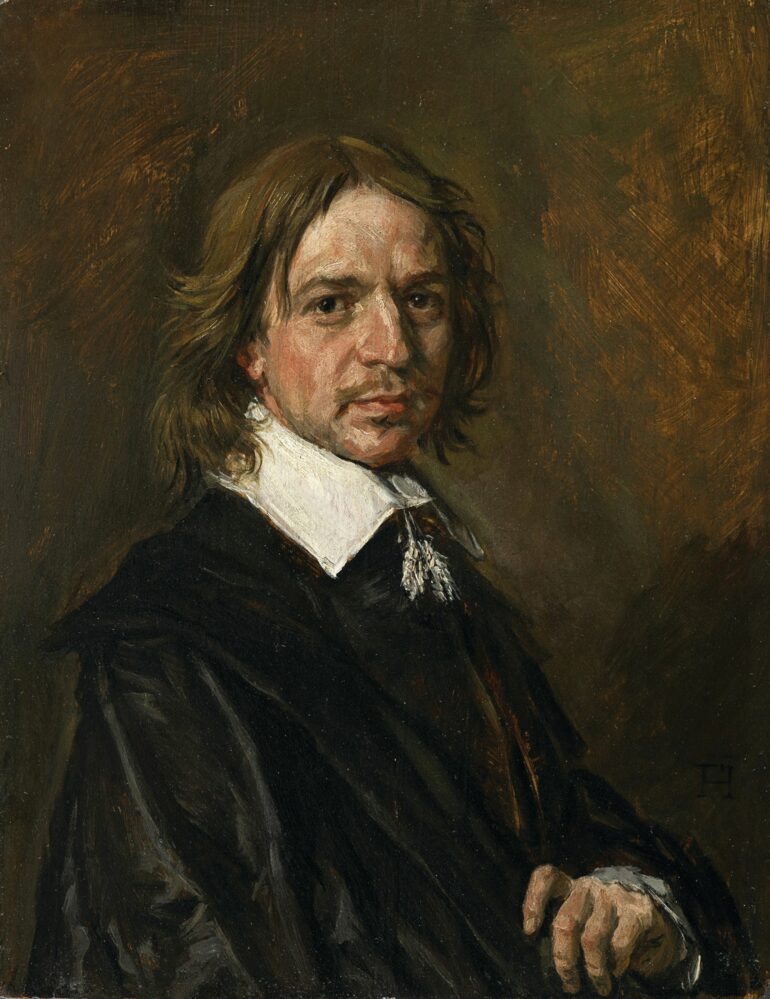
In the hushed salons of the art world, Giuliano Ruffini’s name has resonated for a decade as the starting point of a shockwave that continues to unsettle experts’ certainties. This Franco-Italian collector, at the center of an international scandal involving forged paintings by old masters that erupted in 2016, has reached a decisive legal milestone. In early September 2026, the Paris Public Prosecutor’s Office filed its closing arguments seeking referral to trial, signaling the French justice system’s intent to bring the case before the criminal court. Investigating judges Clémence Radafshar and Marianne Frochot now recommend that the man, who has long presented himself as a genius art scout, face a judge to answer for his actions.
A Refocused Criminal Charge
The Public Prosecutor’s Office’s closing argument targets Giuliano Ruffini on two main grounds: commercial fraud and money laundering. While these charges are serious, the prosecution has nevertheless recommended dropping the most severe charge—that of “fraud committed as part of an organized criminal enterprise .” This withdrawal, based on technical grounds, does not, however, lessen the pressure on the collector, whose lifestyle and financial transactions have been meticulously scrutinized by French investigators. The final decision on whether to issue an indictment now rests with an investigating judge, who is expected to rule in the fall of 2026. If the schedule is followed, a trial could not begin until 2027 at the earliest.
The Ramifications of the Ruffini Case
The case is not limited to the patriarch alone. The Paris Public Prosecutor’s Office also seeks to bring Mathieu Ruffini, the collector’s son, to trial on money laundering charges. Alongside him, two figures in the art market—Jean-Charles Méthiaz and Michaël Tordjmann—are facing charges of fraud and money laundering. These intermediaries, who once collaborated with Giuliano Ruffini, now find themselves in a paradoxical situation, as they are embroiled in a financial dispute with him.
One key figure, however, is missing from the proceedings on French soil: Pasquale “Lino” Frongia. This Italian painter, suspected of being the artist behind the disputed works, is described as a fugitive in Italy. In light of his absence, the Public Prosecutor’s Office has requested the renewal of the European arrest warrant against him, hoping thereby to complete the circle of defendants before the trial begins.

Denial as the Sole Defense
Giuliano Ruffini, whose legal history was marked by his surrender to Italian police in Castelnovo ne’ Monti in November 2022, maintains a consistent line of defense: denial. Extradited to France in late 2022, he was indicted and placed under strict judicial supervision, including house arrest in the French capital. His freedom of movement was conditional on the payment of bail amounting to 1.1 million euros.
Faced with accusations of fraud, the 81-year-old consistently shifts the blame onto professionals in the field. He claims to be merely a collector who submitted works for evaluation by curators and experts, arguing that it was they who attributed the works to the old masters. In May 2022, Ruffini secured an initial legal victory in Italy, where he was acquitted in a separate case involving tax fraud; however, this decision had no impact on the criminal proceedings initiated in France regarding the very nature of the paintings sold.
The Art Market Awaits a Verdict
The stakes of this upcoming trial extend beyond the individual defendants. For the art and luxury worlds, the question is how such works were able to circulate and deceive even the most seasoned connoisseurs. While awaiting the investigating judge’s decision this fall, Giuliano Ruffini remains in Paris under surveillance, while investigators and the civil parties prepare for a showdown that, in 2027, is expected to shed light on one of the largest networks of counterfeit antique paintings of the 21st century.