
Make Texture a preferred source on Google to support us
Add Texture to GoogleThe Allure of Geneva's Storefronts Below the Equator
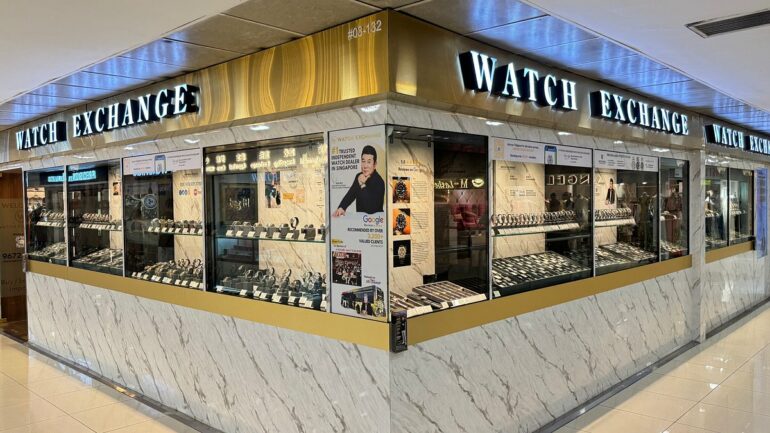
All you have to do is stroll up Orchard Road on a Saturday afternoon to grasp the strange choreography currently unfolding in the world of fine watchmaking. Behind the air-conditioned facades of ION Orchard, Wisma Atria, The Paragon, and the Mandarin Gallery, golden crowns sit majestically. These historic locations are home to the pillars of Singapore’s official watch retail scene. Long-standing players such as The Hour Glass, Cortina Watch, Watch Palace, and Emperor Watch & Jewellery are expanding their spaces there, designed to immerse visitors in the world of the Geneva-based manufacturer. Yet behind the opulence of these displays, the enthusiast is confronted with an inexorable mathematical reality: the near-total absence of timepieces available for immediate purchase.
The process of acquiring a timepiece of this caliber has changed. The act of spontaneous purchase has given way to a complex journey of discovery. Stepping through the doors of an authorized dealer certainly guarantees perfect traceability, first-owner status, and access to the official network, but these spaces have gradually transformed into showrooms. Customers come to observe, try on display models, and, above all, to build a long-term relationship with their advisor. Patience, the development of a substantial purchase history, and loyalty have become the true hallmarks that offer the hope of one day being awarded the much-coveted timepiece.
The New Financial Equation of Luxury Watchmaking
This reduction in supply has been accompanied by a strategic revision of pricing structures. In early 2026, the manufacturer adjusted its prices for the Singaporean market. Data compiled by Watch Capital clearly illustrates this trend: models crafted in steel saw price increases ranging from 4 to 5 percent, while certain versions in precious metals experienced price hikes of up to 7.8 percent. This targeted price inflation is reshaping the contours of demand.
A unique psychological dynamic has thus taken hold. A model’s omnipresence in the media and advertising now seems inversely proportional to its physical presence in the stockrooms of authorized retailers. For collectors, the manufacturer’s suggested retail price is now nothing more than a theoretical guideline, a starting point. The market dictates its own rules, rendering mere financial capacity obsolete. Having the funds is no longer enough; one must navigate an ecosystem where the secondary market dictates its own pace, prices, and demands.
The Rise of a Self-Confident Alternative: Independent Reselling
Faced with the slowness of the traditional system, an increasingly broad range of buyers refuses to wait indefinitely. It is in this climate of frustration and urgency that independent dealers have solidified their legitimacy. The approach here is radically different. The focus is no longer on the allocation process, but on immediate availability and the fluidity of the transaction. These players operate in direct response to the economic realities of the moment, adjusting their prices according to fluctuations in supply and demand.
Transparency thus becomes the main selling point. Just a stone’s throw from the hustle and bustle of Orchard Road, in the Somerset neighborhood, a retailer like Watch Capital embodies this shift. Operating within a regulated framework, the business goes beyond simply trading pre-owned watches to offer comprehensive support. Collectors find a structured service that encompasses the purchase of new or pre-owned models, rigorous authentication, meticulous analysis of the condition of components—from the case to the bracelet links—as well as complete transparency regarding the original documentation. This ability to centralize purchasing, maintenance, and potential resale under one roof meets the needs of a clientele eager to streamline their transactions through a single, reliable point of contact.
A Closer Look at Objects of Desire
In this competitive environment, a few models alone capture the fervor of enthusiasts and dictate the market’s mood. Their very names are enough to spark speculation. The Submariner maintains its status as the gold standard. With its robust steel case and durable ceramic bezel, it remains the quintessential instrument watch—the one that defined the codes of scuba diving before conquering the streets.
The GMT-Master II appeals to a different mindset. Designed for simultaneously reading multiple time zones, it remains the preserve of travelers, capturing the essence of an era when traversing the globe with precision is a way of life. At the other end of the spectrum, the Datejust embodies timeless classicism. Its versatility makes it the quintessential gateway into this world, adapting with disconcerting ease to every style. Finally, the Daytona operates in a stratosphere all its own. With its deep roots in automotive timing, this chronograph exudes an aura that defies the laws of availability, generating demand in the independent market that shows no signs of slowing down.
Life After the Purchase: Preserving Without Compromising
Acquiring one of these timepieces is only the first step in an adventure that extends into the realm of conservation. As soon as the watch leaves its case to be worn on the wrist, the battle against deterioration begins. Daily friction, micro-impacts, and the inevitable wear of time threaten the object’s aesthetic integrity. To counter this inevitable process, the application of translucent protective films is gaining popularity. Invisible to the naked eye, they help preserve the luster of polished and satin-finished surfaces without compromising the pleasure of daily wear.
The issue of mechanical maintenance and aesthetic restoration sparks passionate debates within the community. Collectible watchmaking rests on a delicate balance between functionality and the passage of time. Entrusting your watch to an unscrupulous polisher means running the risk of losing the original beveled edges and the patina that define a piece’s soul and value. Conversely, a complete lack of servicing threatens the mechanical heart of the movement. The challenge, therefore, lies in identifying artisans capable of discerning the fine line between necessary maintenance and destructive over-restoration.
Redefining Luxury Watchmaking
Singapore’s luxury watch landscape highlights a reality that extends far beyond the city-state’s borders. The act of purchasing has split into two distinct experiences, each meeting opposing expectations. On the one hand, the institutional network continues to fascinate those who are willing to abide by its rules, valuing the prestige of the journey and the assurance of impeccable provenance. On the other, the network of independent dealers attracts a clientele that prioritizes immediacy, access to discontinued models, and transactional transparency.
In this ecosystem where waiting has become institutionalized, procedural transparency is no longer a mere operational detail. It has become the true safe haven. The brand that succeeds in demonstrating the authenticity of its inventory, justifying its prices through precise market analysis, and guaranteeing its customers’ peace of mind no longer sells just watches. It offers the rarest and most sought-after commodity in the contemporary luxury industry: a climate of absolute trust.