
The Silence of the Walls in Santo Domingo
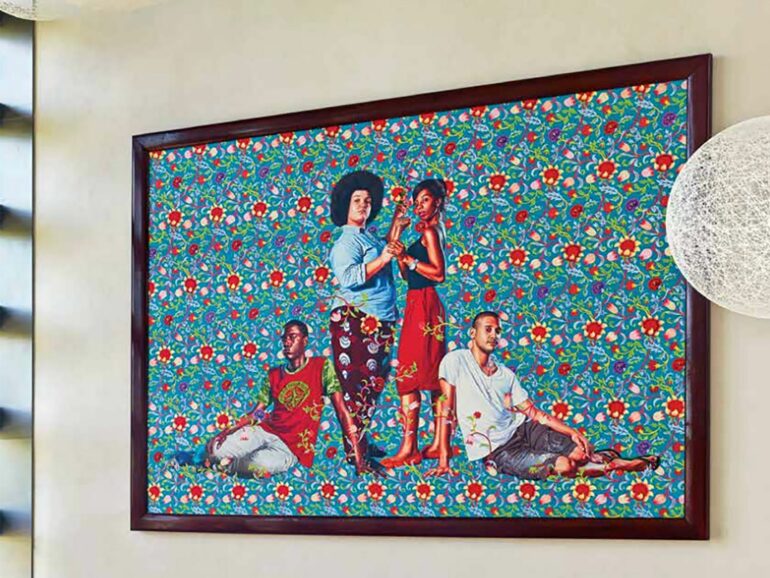
In the hushed corridors of the U.S. diplomatic mission in the Dominican Republic, a space has suddenly become gaping. This is not merely a matter of aesthetics or interior design; it is a removal that resonates like a manifesto. A monumental work of art, which until then had occupied a central place in the symbolic architecture of the space, has been removed from its mounts. This technical act of removal, far from being a simple maintenance task or a renewal of the art collection, marks a clear break in the way the United States chooses to present itself abroad. The bare wall now reveals an entirely different worldview.
The removal of this painting is no trivial event in the microcosm of cultural diplomacy. When a work of this magnitude disappears from an embassy, it takes with it a certain notion of the projection of influence. Here, the physical act of taking the canvas down becomes the first step in a redefinition of identity sought by the leadership of the local institution. It is no longer the art that engages with the visitor, but its absence that imposes a new narrative.
The Semantics of an Ambassador
Behind this radical decision is Leah Campos. The ambassador did not merely order the removal of the artwork; she immediately framed this removal in unequivocal political terms. By labeling the painting as an emanation of globalist and “woke” ideologies, she shifts the focus of artistic criticism onto the battlefield of the culture war. This choice of words is no accident. It is part of an effort to purge official spaces of what is now perceived, by a segment of the administration, as a doctrinal deviation rather than a creative expression.
The use of the term “globalist” to describe a monumental painting in an embassy—the quintessential venue for global exchange—creates a fascinating paradox. For the ambassador, art no longer seems to be intended as a universal bridge, but rather as a marker of specific values, purged of what she considers to be excessive exogenous or progressive influences. By labeling the work “woke,” she identifies it not by its artistic qualities, composition, or subject matter, but through the lens of a very contemporary societal conflict, imported directly from domestic American debates onto Dominican soil.
The Trial of a Monumental Image
What is striking about this case is the very scale of the subject of the dispute. The monumental nature of the painting accentuates the symbolic violence of its removal. A large-scale work imposes a rhythm on the space, compels the body to position itself, and defines an atmosphere. By deciding that this presence was now undesirable, the diplomatic authority signaled that the excessiveness of art can no longer serve as a smokescreen for ideas deemed contrary to the current political line. The painting has become, by its very physical existence, an ideological obstacle that had to be dismantled.
The removal of the artwork thus becomes a form of art criticism through absence. Rather than debating the work’s relevance, it is simply erased. This process transforms the embassy into a laboratory where a new approach to managing the national image is being tested. The idea that art can be “ideological” by nature when it does not align with a conservative vision of American values lies at the heart of Leah Campos’s approach. The canvas, once the flagship of representation, is relegated to the status of a relic of an era that the ambassador wishes to put behind her.
A Diplomacy of Cultural Rupture
The Dominican Republic serves here as the stage for a scene that extends far beyond its borders. The U.S. Embassy, under the leadership of its chief of mission, reflects a tension that is fracturing American society. By intervening directly in her administration’s visual heritage, the ambassador asserts that soft power should no longer be the vehicle for pluralistic thought, but rather the tool of an assertive political struggle. The term “ideology,” used to condemn the artwork, turns the tables: the decision to remove it is itself a deeply ideological act.
This move to remove the work raises questions about the longevity of artistic choices in public institutions. If every change in leadership can lead to the removal of works deemed too rooted in the spirit of the times or too closely tied to an opposing political sensibility, it is the very coherence of the state’s cultural presence that is called into question. In Santo Domingo, Leah Campos’s action signals a determination to regain control over the visual narrative, even if it means leaving walls empty where art was perhaps attempting to express the complexity of the world.
The Aesthetics of Removal and Its Consequences
The removal of this monumental painting sets a precedent. It suggests that art, within the state apparatus, is no longer protected by its status as a cultural object but is subject to constant doctrinal scrutiny. By targeting “woke ideologies,” the ambassador implicitly defines what, in her view, acceptable art should be: undoubtedly a form of creation that does not question power structures or venture into the realm of contemporary identities. It is a vision of culture that aims to be reassuring but which, through its distrust of diverse perspectives, ultimately becomes impoverished.
The act of removing the artwork is now complete. The painting is no longer there to elicit admiration, rejection, or reflection from diplomats and visitors passing through the embassy. It now exists only through the controversy it has sparked and the ambassador’s harsh words. This removal is a victory for those who see modern art as a threat to the established order, but it is also a signal sent to the art world: in the arena of foreign policy, creative freedom can, at any moment, come up against the verdict of a government official determined to make a clean sweep.
It now remains to be seen what will fill this void on the walls of the U.S. mission in the Dominican Republic. The choice of the next artwork—or the prolonged absence of any decoration—will be the true test of the cultural vision that Leah Campos hopes to leave behind. For now, only the memory of a monumental painting—deemed too “global” by today’s standards—haunts the embassy’s architecture, serving as a reminder that in the hushed luxury of power, images are sometimes the first casualties of a change in direction.