
The Irruption of Gaming into the Temple of Auctions
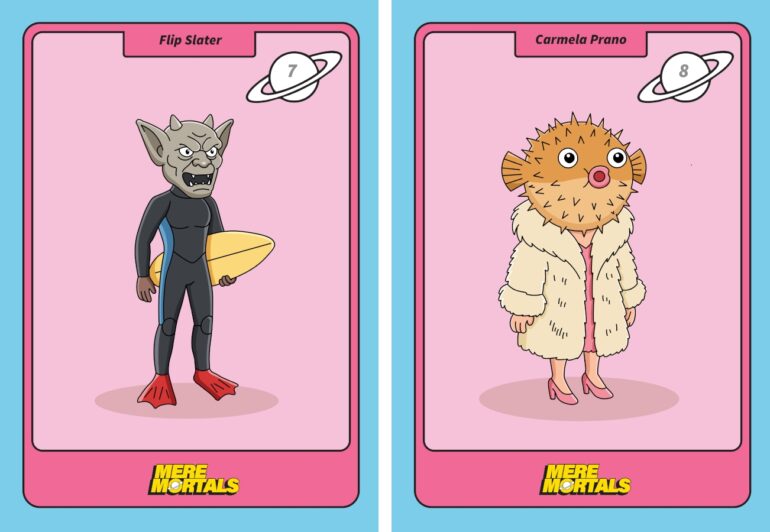
The hushed silence of the auction rooms, usually punctuated by the sharp hammer blows of multimillion-dollar bids, gives way to a new kind of excitement. At Phillips, an institution whose name instantly evokes the pinnacle of the art market, the usual conventions are being shaken up. The space is transformed under the guidance of Cj Hendry, an artist who has chosen to challenge the solemnity of the art world with a project that blends childlike nostalgia with biting social critique. The project, titled *Mere Mortals*, stands as a defiant thumb in the face of conventional expectations, replacing monumental canvases with objects typically found on playground floors or in the binders of avid collectors.
This is not merely an exhibition, but a territorial occupation. Cj Hendry does not merely occupy the walls; she redefines the very function of the space. By introducing her Oddball Trading Cards into the heart of this machine designed to celebrate the exceptional, she questions the very nature of rarity. The contrast is striking between the solemnity of the setting and the playful, almost trivial nature—at first glance—of the objects on display. Yet behind the apparent lightheartedness of the trading cards lies a profound reflection on what we choose to hold sacred.
The Oddball Universe, or the End of Pokémon’s Hegemony
For decades, the world of trading cards has been dominated by a titan, a pocket-sized empire whose name alone is enough to evoke a global obsession. But the time has come for a changing of the guard. The message is clear: it’s time to make room. Cj Hendry has built her own solar system—a unique cosmogony dubbed Oddball. It is no longer the world of Japanese pocket creatures that dictates the rules, but a brand-new mythology, born from the imagination of an artist who understood that the power of art lies in its ability to create complete, self-contained, and desirable worlds.
These cards are not mere merchandise. They are fragments of a universe that the artist has patiently constructed. Where traditional collecting systems rely on industrial mechanics, Oddball injects a raw artistic dimension. Each card becomes a piece of this overarching vision, a fragment of a puzzle that isn’t meant to be solved, but to be owned. By embracing this format, Cj Hendry takes on a pillar of popular culture to reinvent it through the lens of contemporary creation. The universe she presents is not merely an alternative; it is a poetic subversion.
Democratization through format: the triumph of the small
Why the collectible card? The choice of medium is far from trivial. Within the Phillips space, the card format acts as a disruptor of perception. We move away from the scale of the distant masterpiece toward that of a tactile, almost intimate object. The Mere Mortals project plays on this ambivalence: the accessibility of the format versus the exclusivity of the venue. The card is democratic by nature; it circulates, is exchanged, and gets worn out. It belongs to the hands of those who handle it, far from climate-controlled display cases and the white gloves of curators.
This approach reshuffles the deck—both literally and figuratively—of aesthetic engagement. The art object becomes portable and exchangeable. By creating these Oddball Trading Cards, the artist explores the tension between the uniqueness of the artwork and the multiplicity of the collectible. She delves into a gap in the contemporary art market, where the desire for possession meets the pure pleasure of play. The visitor is no longer just a passive spectator; they become a participant in a broader quest—that of completing a collection, of tracking down the missing piece of a fragmented work.
Mere Mortals: Art on a Human Scale
The exhibition’s title itself resonates like a manifesto. By invoking the figure of mere mortals, Cj Hendry seems intent on bringing art back down to earth. At Phillips, we often deal with immortality—that of geniuses whose names span the centuries. Here, the sense of time is different. It is the temporality of the moment—the immediate pleasure of opening a package, of discovering an image. It is a celebration of what is most instinctive about humanity: its love of play and its fascination with cardboard idols.

This immersion in the world of Oddball isn’t just about aesthetics. It’s a social experience. The artist uses the prestigious setting of the auction house to legitimize a form of expression often relegated to the margins of serious art. By bringing these cards into this temple, she forces a confrontation between two worlds that had previously viewed one another with a certain degree of mistrust. The result is a unique fusion where value is no longer measured solely by the reserve price, but by the intensity of the universe created and the fervor it inspires in those who discover it.
A New Grammar of Desire
Cj Hendry’s initiative goes beyond the scope of a simple promotional event or themed sale. It outlines a new way of consuming and experiencing art. In a world saturated with digital images, the return to the physical object—small, tangible, and numbered—holds a unique appeal. The card becomes the vehicle for a condensed artistic emotion, a microcosm that can be held between the thumb and index finger.
By taking over the Phillips space, Cj Hendry does more than simply display cards; she demonstrates that artistic authority can now be expressed through unconventional paths. The Oddball is not just a character or a series of illustrations; it is a language that the artist offers to a community of collectors eager for meaning and novelty. The success of this venture rests on this ability to transform a childlike medium into a powerful vehicle for reflection on our relationship with modern cult objects.
Ultimately, the Mere Mortals adventure leaves an indelible mark on the auction house’s thick carpets. It serves as a reminder that art, even when it enters the most luxurious spheres, benefits from retaining a touch of irreverence and playfulness. By displacing established icons to impose his own mythology, Cj Hendry proves that the creation of a personal universe is, without a doubt, the ultimate form of artistic freedom. The cards have been dealt; the game can continue, far from the well-trodden paths of academic tradition.