
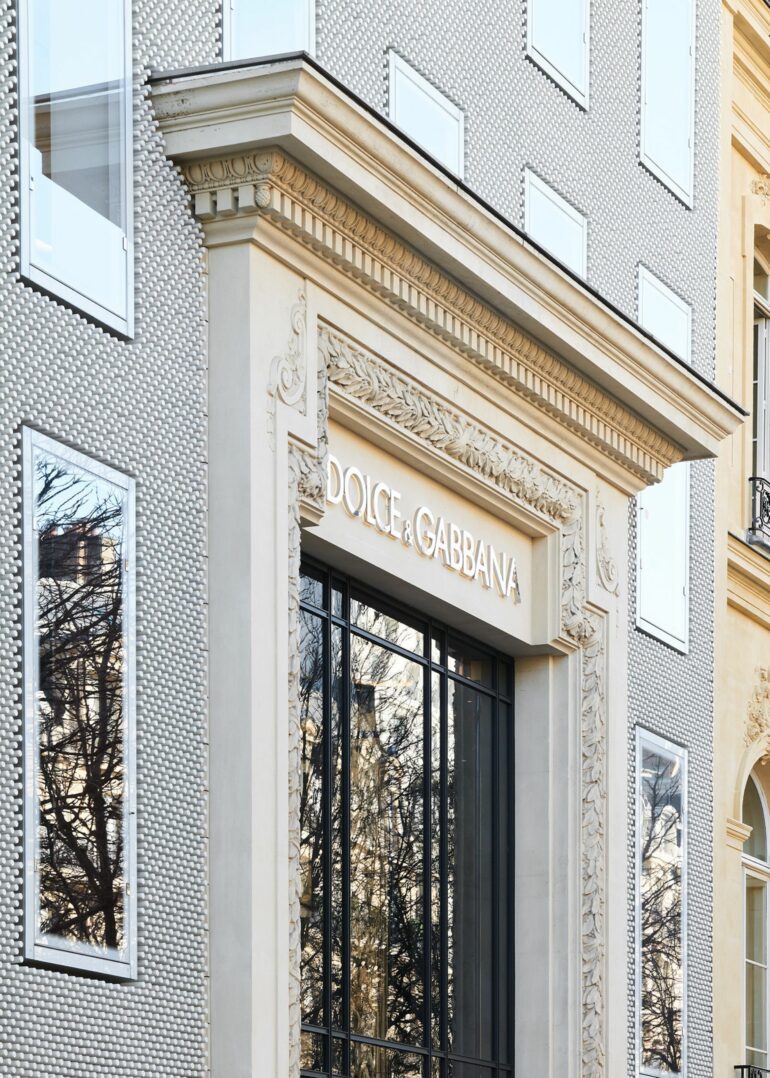
The Institutionalization of an Empire: The New Architecture of Dolce&Gabbana;
The Italian fashion landscape is navigating a period of turbulence, where traditional family structures clash with the relentless demands of global finance. At the center of this storm, Dolce&Gabbana; is charting the course for a profound transformation. It is no longer just a matter of silhouettes on a runway, but a surgical reorganization of its governance and capital structure. The recent arrival of Stefano Cantino, a defector from Gucci, as co-CEO alongside Alfonso Dolce marks a historic turning point. This unprecedented partnership symbolizes the shift from intuitive management to institutional rigor, as the brand must navigate an economic environment that has become significantly harsher.
This transition is taking place amid intense pressure from banks, where every decimal point on the balance sheet is scrutinized. The Milan-based fashion house recently had to sit down at the negotiating table with a group of financial institutions to resolve breaches of the financial covenants. The results at the close of the last fiscal year on March 31 were unequivocal: a 2% decline in revenue, totaling 1.86 billion euros, coupled with an operating loss that surpassed the symbolic threshold of 100 million euros. Faced with these figures, creditors agreed to a financial truce, suspending compliance reviews until March 31, 2028. This four-year reprieve is not a blank check, but a contract of trust accompanied by specific debt reduction requirements.
The Lifeline of Cosmetics and Licensing
While the core business—fashion—is showing signs of strain amid a sluggish global economy, one division is holding its own with a lifesaving vigor: beauty. In the annual financial report, growth in the “beauty” segment acted as a buffer, partially offsetting the underperformance of the apparel division. This is where part of the brand’s resilience lies. The diversification strategy is paying off, transforming the Dolce&Gabbana brand into a global lifestyle brand capable of generating cash flow where luxury ready-to-wear is stalling.
To strengthen its liquidity, the company has also implemented long-term strategic measures. One of the most significant moves is the extension of the eyewear licensing agreement with the giant EssilorLuxottica. This partnership, now secured through 2050, has enabled the brand to immediately collect 150 million euros. This massive cash injection comes at just the right time to stabilize net financial debt, which has climbed to 464.5 million euros, up from 379.6 million the previous year. This infusion of fresh capital is a central pillar of the turnaround plan demanded by the banks, which expect a net debt-to-EBITDA ratio of less than three by 2028.
Geopolitics and Headwinds in the Middle East
Dolce&Gabbana’s growth is hampered not only by consumer cycles but also by the harsh reality of geopolitics. The group had invested heavily in the Middle East, a region that has historically been a strong market for ostentatious luxury and the Mediterranean lifestyle. However, escalating tensions between the United States and Iran have cast a shadow over these growth prospects. This unstable international context complicates the brand’s operations in a geographic region that was initially intended to serve as a growth driver in the face of slowing Western and Asian markets.

To navigate these troubled waters, the company has enlisted the help of high-profile advisors, notably the investment bank Rothschild. The goal is clear: to identify new sources of liquidity and orchestrate extraordinary financing transactions. Beyond licensing agreements, the group is exploring more concrete avenues, such as the sale of real estate assets. At the same time, a massive refinancing of 300 million euros, running through February 2030, was secured in 2025. Added to this sum were an additional 150 million euros, specifically earmarked for the development of the beauty and real estate divisions, confirming that the brand’s future will no longer be limited to clothing racks alone.
A Split Governance Structure to Preserve Creative Freedom
The leadership change announced last April is not merely a game of musical chairs. The appointment of Stefano Cantino as co-CEO comes at a time when the founders’ roles are being redefined. Stefano Gabbana has stepped down as chairman of the company, a position now held by Alfonso Dolce. This withdrawal from the purely administrative and institutional sphere aims to create a sanctuary for creativity. The company was also keen to clarify that this change would have no impact on artistic direction: Stefano Gabbana remains the driving force behind the brand’s aesthetic.
This clear separation between executive authority, debt management, and creative direction is a direct response to market expectations. By entrusting operational control to executives with backgrounds in major luxury groups, the brand seeks to reassure its creditors while protecting the DNA that has made it successful. It’s a delicate balance: the goal is to transform a passionate fashion house into a financially disciplined powerhouse without losing its soul. The challenge is formidable, but the steps taken—ranging from strategic refinancing to diversification into beauty—outline a path out of the crisis, with the key milestone still set for spring 2028.
Until then, the group will have to prove its ability to turn these capital injections into sustainable profitability. The extraordinary financing operations promised to the banks will have to materialize in a luxury market that no longer tolerates improvisation. For Dolce&Gabbana, the stakes for the coming years extend far beyond seasonal trends; the goal is to validate a hybrid business model capable of withstanding geopolitical shocks while capitalizing on a brand image that, despite being in the red, retains undeniable heritage value.