
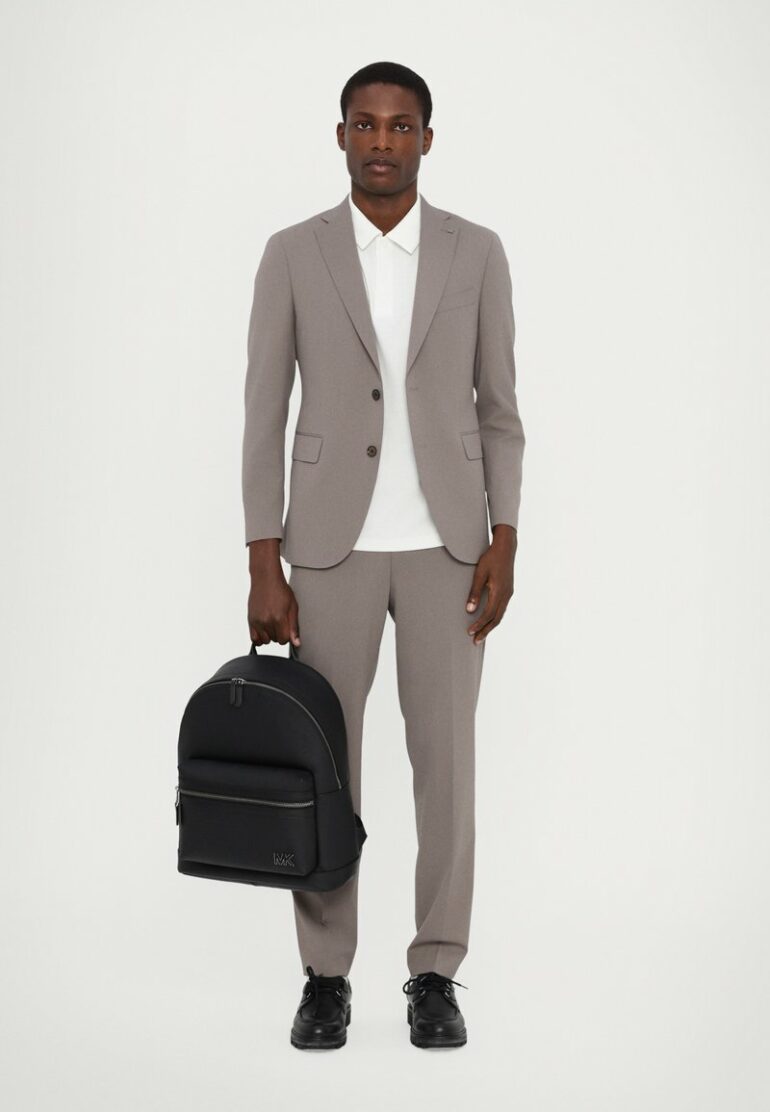
The men’s suit has endured through the ages with fascinating resilience. Far from being relegated to the status of a dusty office uniform, it has transformed into a vehicle for identity—an exercise in bodily architecture where the line of a shoulder or the drape of a lapel speaks to an aesthetic ambition. For the modern man, the quest for the ideal silhouette no longer rests solely on a label, but on a nuanced understanding of cut and fabric. From Germanic precision to transalpine flexibility, via British irreverence and the Parisian revival, today’s market offers a spectrum of sartorial philosophies capable of catering to every moment in life.
The pinnacle of craftsmanship and precision
In the pantheon of tailoring, certain houses transform fabric into a sacred art form. Such is the case with Cifonelli, an institution on Rue Marbeuf where Lorenzo and Massimo Cifonelli carry on the craftsmanship of the fourth generation. Here, the suit is not a product, but a holistic experience. Each piece is the result of meticulous handcrafted work, where every detail is scrutinized by passionate experts. To attain this absolute excellence, the price starts at 7,000 euros—a figure that reflects the exclusivity of an unparalleled artisanal cut.
Italy, for its part, showcases its masters of the craft. At Zegna, the technical sophistication of fine wools—such as the famous Trofeo fiber—is harnessed to create a deliberately curated selection of about twenty timeless styles. Priced between 3,000 and 8,000 euros, these suits are designed to stand the test of time. This pursuit of fluidity is also evident at Loro Piana, where wool and linen are crafted to offer sophistication that never sacrifices comfort. For an ensemble that combines style and ease, expect to pay between 3,500 and 6,000 euros.
Roman tradition finds its most prestigious expression at Brioni. Founded in 1945, the brand has become the gold standard on the red carpet, dressing the biggest names in world cinema. Considered by many to be the Rolls-Royce of bespoke suits, it offers pieces starting at 5,000 euros. In a more rustic yet equally luxurious vein, Brunello Cucinelli embodies transalpine charm with a variety of cuts and colors that make it a cornerstone of contemporary style, with suits starting at 3,000 euros.
The Reinvention of European Classics
In Paris, one name resonates particularly with purists: Husbands Paris. Nicolas Gabard, its founder, launched the label in 2012 with a clear mission: to correct the impersonal offerings of ready-to-wear and restore the French suit to its former glory. Standard styles retail for around 1,500 euros, but the house also offers custom orders based on the customer’s precise measurements. It’s a vision of fashion that prioritizes character and timelessness over fleeting trends.
The French fashion scene has also witnessed the transformation of Fursac. Under the creative leadership of Gauthier Borsarello since 2021, the brand has successfully rejuvenated its image while retaining a “French-style” elegance. Priced between 700 and 1,250 euros, the brand skillfully balances the classicism of a tailored gray or navy suit with bolder statements in velvet or pastel colors. In the same spirit of modern simplicity, Balibaris has made a name for itself with a streamlined collection. Its jackets (starting at 465 euros) and pants (starting at 225 euros) create graphic silhouettes ideal for everyday wear or understated formal occasions.
Across the Channel, two visions clash and complement each other. On one hand, the unwavering composure of Hackett London, which reinterprets the English gentleman’s wardrobe through houndstooth patterns or ultra-understated three-piece suits, priced between 750 and 1,000 euros. On the other, the creative energy of Paul Smith. For fifty years, his famous colorful stripes and satin-finished wool have been shaking up the rules. Starting at around 1,200 euros for entry-level pieces, his suits appeal to City executives as well as trendy creatives in London’s East End.

Contemporary efficiency and accessible luxury
The German group Boss continues to dominate the versatile high-end segment. Now a fixture at Milan Fashion Week, Boss offers a variety of styles, from evening tuxedos to ecru linen suits for summer. For a sharp jacket-and-pants ensemble, prices range from 500 to 800 euros. In a similar vein, the revitalized Hechter Paris, under the direction of Ingo Wilts, offers solid essentials priced between 380 and 580 euros.
For those who prioritize value for money without sacrificing style, Suitsupply has become an essential go-to brand. Founded by Dutchman Fokke de Jong in the early 2000s, the brand stands out for its educational approach. Its styles, ranging from 380 to 600 euros, allow young professionals to treat themselves to a well-tailored suit on a budget. In Italy, Boggi Milano fills this role as a reliable choice, offering a very wide range starting at 500 euros—perfect for building a complete everyday wardrobe.
Finally, the most affordable segment is no slouch when it comes to stylish options. Octobre Éditions, Sézane’s men’s line, reimagines basics with a seasonal rotation (around 290 euros for a jacket). Hast Paris focuses on high-quality materials, offering very sophisticated linen or pine-green styles for 450 euros per outfit. For one-time needs or first-time purchases, Mango offers solutions categorized by “occasion” for under 300 euros per outfit, proving that tailoring can also be a matter of pragmatism.
The Hallmark of Intellectual Luxury
Amid these approaches, often rooted in tradition or affordability, Prada occupies a unique position. Under the joint leadership of Miuccia Prada and Raf Simons, the suit becomes an object of pure design. By focusing on the three fundamental colors—black, gray, and navy—and perfectly balanced straight-leg pants, the Milanese label defines the aesthetic of the intellectual businessman. Starting at 2,800 euros per suit, it’s a choice for those seeking radical precision and sophisticated minimalism.
No matter which entry point you choose, the suit remains a structured garment. Whether it’s handcrafted in a Parisian atelier or designed for the efficiency of a traveling executive, it remains the ultimate tool for commanding a space with poise. Perhaps what matters most is no longer simply owning a suit, but knowing which of these eighteen styles best embodies your own definition of elegance.