
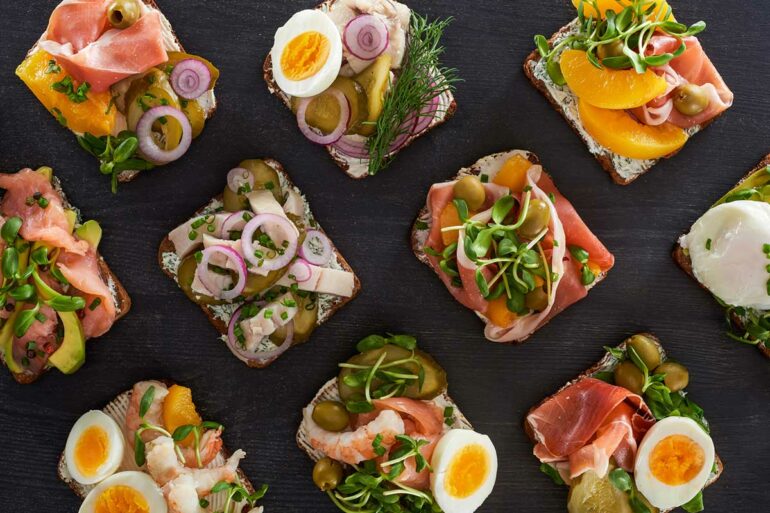
Many prestigious restaurants around the world have elevated the act of eating to the level of an aesthetic and sensory experience. Consider the translucent pastas invented by El Bulli, the nutmeg-scented air cushions served at Alinea, or the work of René Redzepi at Noma, who has captured the wild essence of the Nordic forests directly in his creations. Faced with this profusion of innovations, textures, and aromas, a legitimate question arises: does modernist cuisine have a place in the pantheon of the fine arts?
This is precisely the question currently being considered by the Danish Ministry of Culture. Through an innovative project launched earlier this year, the government is considering granting official recognition to gastronomy as a full-fledged artistic discipline. Such a historic decision would elevate the creations of exceptional restaurants to the same level as classical sculpture or choreographed dance. It would be a world first for this sector, paving the way for valuable funding—both public and private—dedicated to culinary research and development.
A status that divides professionals and the cultural community
The idea of classifying complex culinary techniques as art, however, is far from unanimous. Historically, culinary luminaries, such as the late Anthony Bourdain, have always fiercely defended the idea that cooking remains, above all, a craft. Jeremy Chan, at the helm of the London restaurant Ikoyi—famous for its ultra-contemporary approach to spices—highlights the risk of bias. In his view, defining what is “artistic” on a plate is highly subjective: is the mere presence of meticulously serrated tiles or millimeter-precise plating enough to transform a dish into a work of art? For him, the answer is no.
Among cultural institutions, enthusiasm is also tempered. Helene Nyborg Bay, director of the Kunsthal Charlottenborg gallery in Copenhagen, currently views gastronomy as a high-end craft with genuine aesthetic qualities, but not as an autonomous artistic discipline.
Others point to the very difficulty of defining the concept of art. Poul Erik Tøjner, director of the prestigious Louisiana Museum of Modern Art in Denmark, even sees a hint of outdated elitism in the idea. He questions the obsession with reclassifying a field that is already exceptional in and of itself, noting in passing that it is, in any case, extremely difficult to objectively define what true art is.
Emotion and Message: Bridges to Traditional Art
Despite these reservations, it is difficult to ignore the many connections between ambitious gastronomy and traditional artistic expressions. Tasting menus, designed from start to finish by chefs, no longer serve merely as fuel for the body. They convey a profound narrative, evoke intense emotions, or embody the quintessence of a particular region—just as a Renoir painting can instantly transport you to the bustling Paris of the 19th century. As Elena Arzak, a three-Michelin-starred chef in San Sebastián, puts it: while cuisine does indeed have its roots in craftsmanship, its power to evoke feelings and etch memories undeniably links it to the artistic process.
Examples of this philosophy abound across the globe. In Mexico, chef Enrique Olvera (Pujol) tells his country’s ancestral story through his “mole madre,” a conceptual creation blending a fresh sauce with one aged for thousands of days. In Tokyo, the restaurant Narisawa pays a poetic tribute to Japan’s rural landscapes with delicate compositions featuring cherry blossoms. And for those who see art as a form of provocation, Basque establishments like Mugaritz don’t hesitate to challenge diners by deliberately exploring disconcerting, even unsettling textures.

Radical innovation and the myth of the solitary artist
Like contemporary art, avant-garde cuisine has always been a formidable playground for pushing the boundaries of ingredients. El Bulli upended conventions by creating dishes composed entirely of foams or sequences of frozen savory elements. The Fat Duck built its legend on edible marine dioramas and appetizers poached in liquid nitrogen. More recently, The Alchemist in Copenhagen offers seven-hour experiences under an immersive dome, going so far as to perfect the cooking of an omelet using ultrasound. "I don’t believe that all gastronomy is art," concedes Rasmus Munk, the chef at The Alchemist. "But in certain places, there is a genuine intention, bold creative compromises, and deep research done beforehand."
This elevation of haute cuisine has been accompanied by the emergence of the “visionary chef,” evoking the myth of the solitary genius so dear to classical music and the visual arts. Although this aura appeals to the public, it also sparks debate. This narrative tends to obscure the colossal, almost industrial-scale work carried out by entire teams of behind-the-scenes cooks, who are indispensable to the realization of this vision.
However, if we accept that a porcelain urinal signed by Marcel Duchamp or a banana affixed to a wall by Maurizio Cattelan (sold for over 5 million euros) can take pride of place in renowned galleries, why would we deny that same recognition to a culinary creation conceived with intention and executed with virtuosity?
A debate that is, in itself, a performance
If the Danish initiative comes to fruition, a specific segment of the restaurant industry will be officially recognized as an art form, although the exact selection criteria have yet to be defined. What is certain is that this designation would allow establishments that push the boundaries of the discipline to access public funding. These funds would offer chefs the unprecedented luxury of partially stepping away from the frenetic pace of daily service to devote themselves to a genuine research endeavor.
Ultimately, the very fact that the role of haute cuisine sparks such passionate debate proves its cultural impact. Sparking debate, questioning established boundaries, and challenging conventions: isn’t that the very definition of an artistic endeavor?