
Make Texture a preferred source on Google to support us
Add Texture to GoogleFor a jewelry designer, the most important work sometimes begins after the storefront closes. On October 24, 2026, in Milan, the galleries participating in the Gallery Awards will each select three artists with whom to collaborate over the course of the year. This tangible opportunity highlights the ambition of the sixth Milano Jewelry Week, scheduled for October 20–26: to showcase the pieces, but also to foster follow-up opportunities from these encounters. Straddling the line between artistic exploration and commerce, the event aims to cultivate this space where jewelry finds its place with a collector, a buyer, or a gallery.
Designer Jewelry Put to the Test Through Encounters
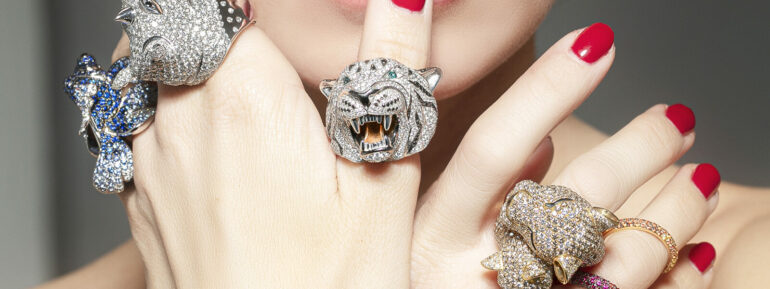
At Palazzo Bovara, located at 51 Corso Venezia, Artistar Jewels will give this ambition its most directly artistic expression. From October 24 to 26, this format—launched in 2012—will bring together more than 200 artists from 56 countries, with over 500 pieces of jewelry on display. Part of the space will be reserved for galleries specializing in designer jewelry. Their presence offers a perspective that goes beyond mere aesthetic appreciation: the works will also be considered from the standpoint of potential collaboration.
The Gallery Awards are based on this approach. The galleries serve as judges and then as points of contact for the artists they select. The program thus brings into focus the future of the pieces after the exhibition—a crucial consideration for an event dedicated to creative work. Ten international galleries are participating in this edition, compared to eleven last year. The network thus remains of comparable size, while the Milan event as a whole is expanding.
However, this growth should be viewed without conflating all the indicators. Artistar Jewels had announced more than 800 selected works for 2025; this year, the organization reports more than 500 pieces of jewelry on display. The two figures do not describe exactly the same stage of selection, but they preclude any claim of a uniform increase. The event’s overall growth does not mean that each of its components is expanding in scale.
Two palaces, two ways of viewing a piece
A few doors down on Corso Venezia, at number 16, Palazzo Serbelloni hosts The Jewelry Hub. The focus here is explicitly commercial: the pieces on display are offered for sale. Forty-eight brands from 23 countries cover a spectrum ranging from high jewelry to designer jewelry, including fine jewelry and diamonds. Visitors can thus move from discovery to purchase.
At Palazzo Bovara, the Talent Show shifts the focus to those who are still learning to develop their artistic voice. Eleven schools are participating in this section dedicated to students and young designers. Among them are For.Al Valenza and the Accademia Alta Oreficeria Galdus, as well as the EBJ (Escola Brasileira de Joalheria) and Southern Illinois University in Carbondale. Education thus occupies a prominent place, alongside creative research.
This division offers an interesting perspective on the program. From one pavilion to the next, the status of the jewelry changes: a piece available for purchase, an artist’s creation, or a student’s work. None of these categories alone sums up the discipline. Allowing them to coexist makes it possible to examine both the finished object and the processes that lead to its design and dissemination.
Brazil: A Ongoing Presence Rather Than a Brief Stopover
Also at Palazzo Bovara, nine Brazilian designers and brands will be brought together through a project led in collaboration with Blossom Brasil. The collaboration with the agency founded by curator Bianca Zaramella returns for the third consecutive year. This continuity matters: it anchors Brazil’s presence in an ongoing relationship with the Milan event, rather than as a one-off invitation.
Enzo Carbone, CEO of Prodes Italia and creator of the event, highlights the cultural diversity of a country of continental proportions. For Bianca Zaramella, Milan serves as a hub for reaching Europe and beyond. Without presuming to define the materials or styles that will be showcased, the project thus invites viewers not to confine these nine designers to a supposed single national aesthetic. The agency aims to present a plurality of approaches.
A Longer Week, Enhanced Commercial Program
Conceived and organized by Prodes Italia under the patronage of the City of Milan, Milano Jewelry Week will bring together more than 400 exhibitors from approximately 60 countries. The 2025 edition, held October 16–20, concluded with more than 350 exhibitors and over 80 citywide events, according to its organizers. In 2026, the event will run for two additional days. The extension from five to seven days thus accompanies the increase in the number of participants.
The organizers estimate an average attendance of 20,000 visitors. For this edition, 46% of attendees are expected to come from Europe, 24% from the Americas, and 23% from Asia. These proportions highlight the effort focused on professional buyers: the buyer program has been expanded to increase opportunities for meetings and business exchanges with qualified operators. The goal is not merely to fill the halls, but to ensure that this international audience is valuable to exhibitors.

Another new feature is the Milano Jewelry Week Observatory, which will take the form of a survey of industry professionals. It will gather their data, perceptions, and the trends they identify. Its announced scope remains limited to the sector represented at the event: it should therefore be viewed as insights from this specific community, rather than an exhaustive assessment of the entire jewelry industry.
Stepping Out of the Showcases, Into the Workshops
The Experiential Journey urban program offers a counterpoint to the exhibitions in the two exhibition halls. Twenty participants will lead the way to boutiques, workshops, and training centers in central Milan. Recarlo, Marlù, Vescovi Milano, Stagnani, Rubinia, and the Scuola Orafa Ambrosiana are among the announced venues.
Throughout the week, activities will range from collection presentations to workshop tours, including access to archives and previews of upcoming auctions. The appeal lies in gaining access to spaces or moments that are usually off-limits to the public. There, jewelry can be experienced in a way different from how it’s typically viewed under the lights of a booth—through its craftsmanship or the documents that tell its story.
Already a partner in this initiative in 2025, Sotheby’s will host this year’s MJW Talks from October 24 to 26. Lectures, conversations, and roundtable discussions open to the public will be held at its premises at 16 Corso Venezia, the location of the Jewelry Hub. Industry professionals will use these discussions to expand upon what the exhibitions have to offer.
What sets jewelry apart, and from what perspective?
On October 25, the awards ceremony will move from the Teatro San Babila—where it was held in 2025—to the Auditorium di Milano. Thirteen MJW Awards will be presented, including the High Jewelry Award and the Sustainability Award. The categories are evolving, as is the composition of the juries.
The technical jury will include Chiara Pisa, CEO of Pisa 1940; Guido Solari, director of the Scuola Orafa Ambrosiana; and Daniele Oldani, vice president of the Associazione Orafa Lombarda. For the first time, a press jury will also participate; the Editorial Choice Award is among the new honors. The editorial perspective thus has a formal place alongside professional expertise. It will also have a physical presence in both venues: the new MJW Edicola will distribute specialized magazines there, and The Jewelry Drops, the publication dedicated to exhibitors, will be available as well.