

Make Texture a preferred source on Google to support us
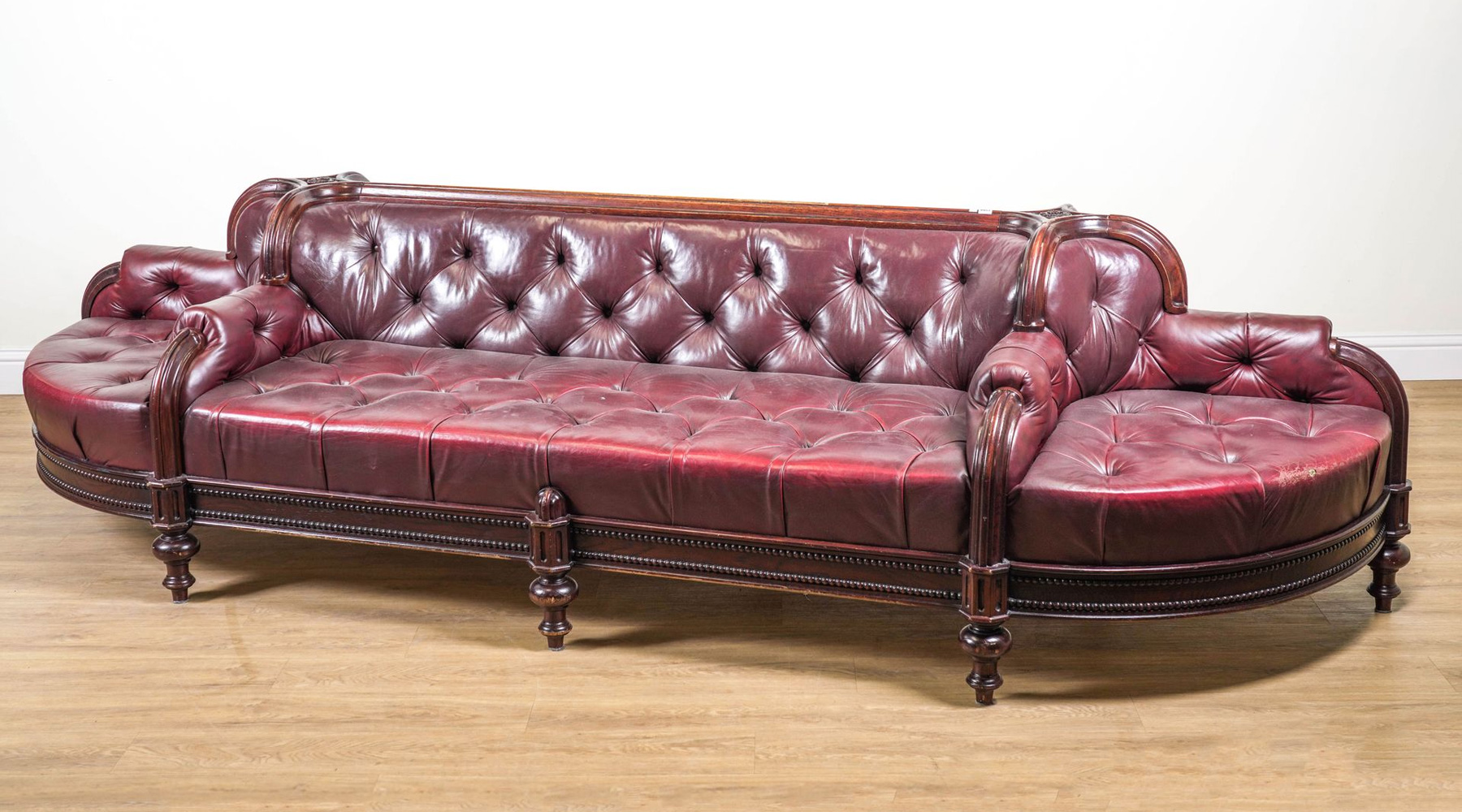
Add Texture to GoogleAlong the polished floors of the National Gallery in London, a chapter in the history of museum comfort is coming to a close. Visitors accustomed to Galleries 30, 31, and 32—where they could spend a long time admiring Velázquez’s *Venus at Her Mirror* or Caravaggio’s *Supper at Emmaus*—have seen a familiar part of their aesthetic experience disappear. The famous double benches upholstered in carmine-red leather, whose rounded ends have complemented the perspectives of the London galleries for nearly forty years, have begun their journey across the Atlantic. This furniture, which seemed to be an integral part of British decorum, is finding a second life in Connecticut, at the prestigious Wadsworth Atheneum.
The Origins of a Neo-Victorian Style
Although they possessed the imposing look of 19th-century antiques, these benches were not relics of the Victorian era. Their design actually dates back to 1986, during an extensive renovation of the Barry Room at the National Gallery. The architectural firm Gordon Bowyer & Partners—sometimes referred to as Gordon Bower & Partners—designed these benches to meet the institution’s requirements for solemnity and comfort. The manufacturing was entrusted to Arthur Brett & Sons, a renowned cabinetmaker based in Norwich, who delivered the pieces between the late 1980s and the mid-1990s.
Their solid mahogany frames, combined with deep red tufted leather upholstery, were intended to recreate the hushed atmosphere of the historic galleries. For decades, these pieces of furniture withstood the passage of millions of visitors, becoming visual landmarks for art lovers around the world. Yet, despite their apparent sturdiness and heritage value, the demands of modern museum management ultimately sealed their departure from Trafalgar Square.
The Challenges of Conservation and Security
The removal of these benches is part of the National Gallery’s ambitious bicentennial project (1824–2024/2025), led by Sir Gabriele Finaldi. This comprehensive reorganization of the collections, timed to coincide with the planned reopening of the Sainsbury Wing in the spring of 2025, has necessitated a rigorous review of safety and conservation standards. Two main reasons justified the removal of these iconic benches.
The first relates to fire safety. The padding and leather used in their manufacture in the late 1980s no longer meet contemporary fire-resistance standards. The second reason, which is more technical, concerns the preventive conservation of works of art. The tufted leather, with its numerous folds and buttons, is particularly difficult to disinfect and clean thoroughly. This design creates a risk of insect and pest infestations, posing a direct threat to the integrity of the masterpieces. To mitigate these risks, the London museum has decided to replace these historic pieces with plain solid-oak benches, which are easier to maintain and comply with current health protocols. This change has sparked a wave of nostalgia among the institution’s regular visitors, as the public was particularly fond of the comfort and aesthetic appeal of these now-gone seats.
From Trafalgar Square to Sussex: Time for Auctions
To ensure these benches had a new purpose, the National Gallery decided to offer them at auction rather than store them away. In October 2025, Bellmans Auctioneers, operating out of West Sussex and London, organized a sale titled “Antiques & Interiors.” The consignment included at least five large red leather double benches, listed as lot numbers 1200, 1240, 1260, 1280, and 1360.

Estimates for these pieces—silent witnesses to London’s art history—were around £1,200 each (or approximately €1,400 to €1,440, depending on exchange rates at the time). Although the London institution parted with the physical objects, it took care to preserve the detailed plans and archival photographs from Gordon Bowyer & Partners. This precaution would make it possible, should the need arise in the future, to commission new replicas that comply with contemporary safety standards.
A New Home at the Wadsworth Atheneum
It was ultimately in Hartford, Connecticut, that some of these benches found their final home. The Wadsworth Atheneum Museum of Art, founded in 1842 and opened in 1844, prides itself on being the oldest continuously operating public art museum in the United States. The acquisition of this British furniture was not funded by the American institution’s own resources but resulted from a generous donation from a London-based patron.
The transfer and reinstallation were officially confirmed in the fall of 2026 by Matthew Hargraves, the museum’s director. In an institutional announcement, Hargraves specified that two Victorian-style benches were installed in the Morgan Great Hall, one of the most majestic spaces in the Hartford architectural complex. Although some observers had suggested the arrival of a larger set of seats, the Wadsworth Atheneum’s official records specifically document the installation of two benches.
By crossing the ocean, these benches have not only changed countries; they have also changed contexts. In the Morgan Great Hall, they resume a function identical to the one they served in London: offering visitors a moment of rest while blending into a museum architecture that, in turn, celebrates the permanence of art. This transfer highlights the continuous circulation of objects within the international museum community, where furniture—even when it no longer meets an institution’s technical standards—can still serve the purpose of contemplation elsewhere.