
Make Texture a preferred source on Google to support us
Add Texture to GoogleUrban Space as the Primary Testing Ground
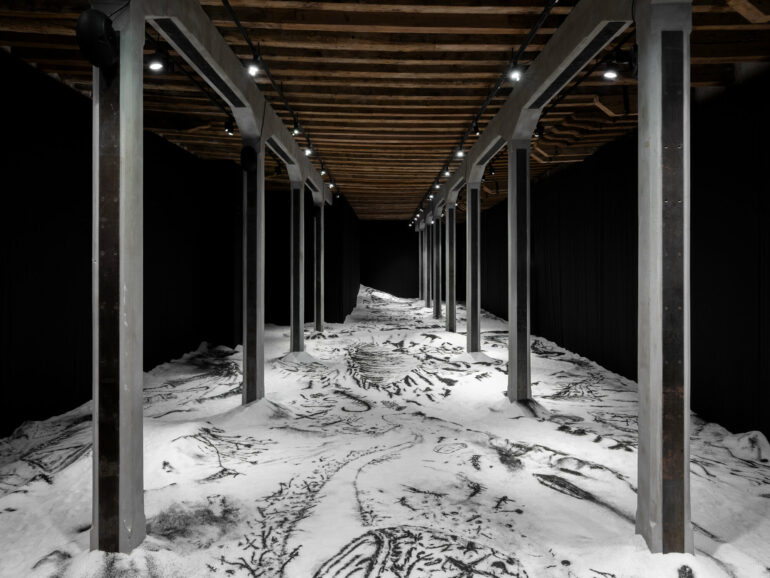
Architecture does not confine itself. To fully grasp the contemporary tensions surrounding housing and the shaping of our landscapes, we must engage with the very walls that have shaped a city’s history. This is the radical stance adopted by the 20th International Architecture Biennial of Buenos Aires. By spreading its proposals far beyond its central exhibition—titled HABITAR and featuring more than a hundred international projects at the National Museum of Fine Arts—the event has physically taken over the Argentine capital.
The appropriation of buildings as symbolically charged as the National Library, the Casa Victoria Ocampo, the Recoleta Cultural Center, the MARQ, and the National Museum of Decorative Art is part of a specific strategy. Architecture is presented to the public not as an engineering feat or the isolated vision of a single architect, but as an eminently social phenomenon. The conferences held in early October further reinforced this perspective. The issue of housing has shed its theoretical veneer to grapple with current environmental emergencies. The success of this approach sets the stage for 2026, when the event will celebrate its 40th anniversary with a resonance that extends far beyond South American borders.
Visual Memory: Between the Personal and the Territorial
While architecture rethinks structure, photography brings order to the chaos of the world. Pinta BAphoto, held from October 22 to 25, was structured around this axiom. Under the artistic direction of Irene Gelfman, the event reaffirmed its status as the only Latin American fair exclusively dedicated to this medium. The goal was not to compile prints, but to create a clash between two centuries of visual traditions and radically contemporary styles.
The still image is embraced here as a tool for dissecting our era. The works of Alberto Goldenstein and Joaquín Sánchez illustrate the camera’s ability to fragment everyday life in order to better construct a geography of memory. Photography ceases to be a mere passive witness; it appropriates space and challenges our territorial certainties.
This exploration of the gaze finds an unexpected, much more subdued extension at Tramo Galería. The exhibition *Relaciones sospechosas* moves away from large-scale institutional group shows to delve into Pompi Gutnisky’s personal archive. A leading figure in design, photography, and production, she unveils four decades of domestic snapshots in this exhibition curated by Guad Creche. The tension of this journey lies in a constant uncertainty: the viewer struggles to distinguish the candid moment from the meticulously staged shot. The bourgeois interior or the fashion detail are transformed here into objects of psychological study, brushing aside any purely decorative temptation.
Design: From Cultural Heritage to Social Imperative
The aesthetics of the consumer object are a thing of the past; the focus is now on cultural roots. Arenales Street echoed this shift during its Noche del Diseño. In the ballrooms of the Hotel Briso, the evening orchestrated by Diderot set a bold theme: “Folklore and Fantasy.” Designers such as Mora Ludueña, Damián Crubellati, Adrián Perrone, and Amador Rojas explored archives and traditional narratives. Folklore is stripped of its postcard-like appearance to become raw material, conducive to new formal expressions.

Art objects conceived in Argentina also seek to influence reality. In Florida, the 13th edition of the Artelamroth fair illustrated this interplay between creation and concrete action. The sheer scale of the event is dizzying: nearly 450 works by 300 artists, spanning jewelry, ceramics, painting, and textile art. The initiative derives its relevance from its economic model, as all funds raised go toward financing rehabilitation centers and social programs. Here, art regains a function of immediate utility.
Market Forces and the Quest for Sustainability
Every cultural scene needs a financial barometer. For Latin America, this role falls to Artba. Spanning 11,000 square meters at La Rural, its 35th edition brought together more than 400 artists through 69 galleries. The balance of power there is complex. Gallery owners are navigating by feel in an economic climate that demands immense caution, all while having to meet the expectations of collectors eager for boldness. This tension between commercial compromise and curatorial risk creates a unique fair space—one that is sometimes wavering in its offerings but fiercely alive. The general public, in fact, flocks there less to buy than to capture the visual spirit of a continent.
Fall drags on and reaches its intellectual climax on November 3 at the Palacio Libertad. With the 10th edition of Dara ID, the Encuentro Internacional de Interiorismo y Diseño, the debate shifts to the realm of responsibility. The invited speakers form a demanding critical panel: Jorge Lizarazo, Lenneke Langenhuijsen, Francisco Gómez Paz, Brunno Jahara, as well as the collectives Masquespacio and YYPlusPlus. Here, the cult of the signature gives way to an analysis of the material impact of our lifestyles.
Buenos Aires thus reveals its inner workings. Far from compartmentalizing its fairs, biennials, and galleries, the city fosters a constant dialogue between the canvas, the furniture, the wall, and the lens. Creators and institutions seem to have agreed on one absolute necessity: to produce meaning before producing an event.