
Make Texture a preferred source on Google to support us
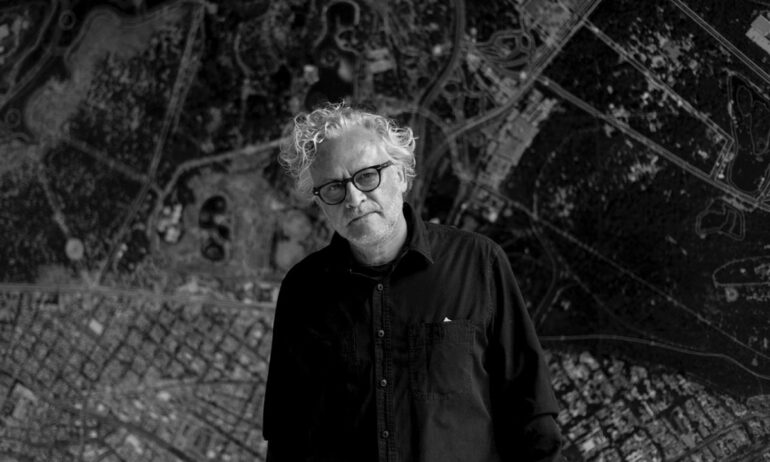
Add Texture to GoogleGabriel Orozco never really stops. Shuttling between Tokyo, Mexico City, and New York, the Mexican artist—born in 1962 in Jalapa—cultivates a sense of ubiquity that has infused his work for four decades. In a 73-minute in-depth conversation recorded in the fall of 2026, the visual artist provides a detailed map of his thought process, reflecting on the influential figures and mental mechanisms that underpin his multifaceted practice, ranging from drawing to installation. This interview, available in audio and video formats since mid-October 2026, offers an in-depth look at the rituals of a creator for whom art is, above all, a matter of structure and movement.
The Genealogy of Forms: From Picasso to On Kawara
Gabriel Orozco’s intellectual journey did not unfold in a vacuum. During this discussion, he identifies clear historical roots that have shaped his perspective. While Pablo Picasso sparked a fascination in him during his youth, it was more radical figures in the realms of structure and the object that have left a lasting mark on his work. Kurt Schwitters and Constantin Brancusi emerge as essential references, highlighting Orozco’s interest in assemblage and the purity of sculptural form.
Even more striking is his admiration for the conceptual artist On Kawara. This choice is not insignificant: it echoes Orozco’s own rigor—his way of recording the passage of time and inhabiting space through minimal yet systematic gestures. This lineage of artists paints a portrait of a creator attentive to the organization of reality, where fantasy is always tempered by an underlying logic.
Play as a Creative Structure
One of the central themes explored by Gabriel Orozco is the recurring use of game rules and sports structures. For him, sports are not merely a subject; they are a framework for interpretation. He uses the rigorous structural logic inherent in competitions or board games to transform everyday objects and found images. This approach allows him to move beyond arbitrariness: the artwork does not arise from a sudden flash of inspiration, but from the application of a system of rules to the material.
This line of thought is accompanied by a unique concept: “transport.” Orozco views his materials not as ends in themselves, but as vehicles for thought and action. The art object becomes a vehicle that shifts the viewer’s perception. In this dynamic, the role of the audience is crucial. The artist asserts that it is the viewer who completes the work; without this interaction, the object remains in limbo, deprived of its function of communication and meaning.
The London Experience: Chronotopic
This interview was conducted as part of the solo exhibition titled Chronotopic, held at the White Cube Bermondsey gallery in London. On view from September 16 to November 8, 2026, this event marks an important milestone in the artist’s current career. Curated by art historian Briony Fer, the exhibition brings together a substantial body of work, demonstrating the vitality of his current practice.
The figures surrounding the event vary depending on the source, but the gallery officially reports approximately 200 works, combining historical pieces with new creations. Some reports mention more than 100 works, confirming in any case the scope of this exhibition, which encompasses the full diversity of Orozco’s practices: painting, photography, sculpture, and site-specific installations. Admission to this exhibition remained free to the public throughout the fall.
Zen Philosophy and Studio Rituals
Beyond technique, the exhibition explores the artist’s intellectual roots. Gabriel Orozco frequently cites the Argentine writer Jorge Luis Borges, a master of labyrinths and mathematical literary structures, as well as Daisetsu Teitaro (D.T.) Suzuki, a scholar of Zen Buddhism. These influences suggest a quest for clarity and a focus on the present moment—principles that are reflected in his working rituals.
Daily life in the studio, though spread across several continents, follows specific patterns of concentration that the artist details at the end of the program. In response to the final, ritualistic question about the purpose of art, Gabriel Orozco offers an answer that encapsulates his worldview. For him, art is not decoration, but a tool for knowledge—a means of structuring the chaos of daily life to extract a form of intelligible truth. His practice remains a constant attempt to link the spiritual and the material through rigorous observation of our surroundings.