
The Brick Capitol and Heritage Diplomacy
In the meticulously ordered cityscape of Washington, where every block of limestone seems to carry the weight of a state decision, a high-stakes institutional maneuver is taking shape in the shadows of the colonnades. The playing field is none other than the National Mall, that legendary esplanade where power takes center stage, and the stakes go far beyond a simple land dispute. It is a low-key game of chess in which the Board of Regents holds the pieces, with the goal of safeguarding the future of a new museum project far from the partisan turmoil currently rocking the U.S. capital.
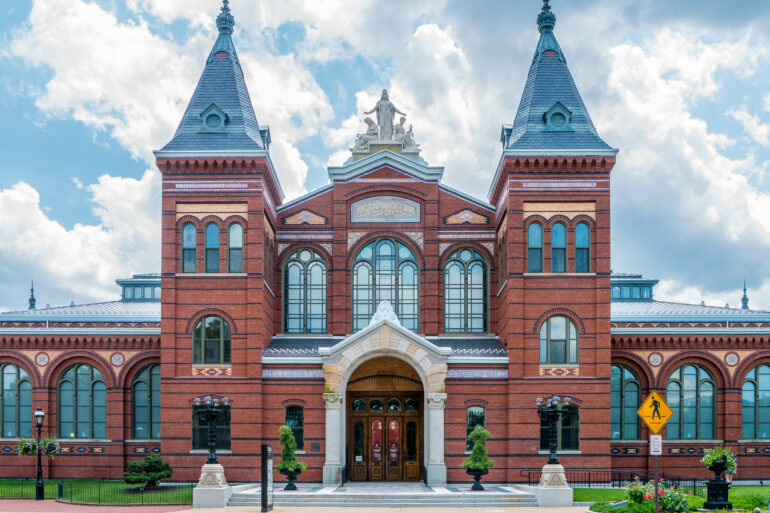
At the heart of this strategy lies a colossus of red brick and steel, often overshadowed by its more imposing neighbors: the Arts and Industries Building. This building, the first true showcase of national knowledge to emerge on the Mall, could well become the key to a secret administrative passageway. By choosing to anchor the institution’s development within these history-laden walls, Smithsonian decision-makers are not merely seeking a roof; they are activating a legal lever capable of neutralizing the usual barriers posed by the legislative and executive branches.
Architecture as a Temporal and Legal Fault Line
The idea is as bold as it is elegant in its simplicity. By moving into an existing structure protected by its historic status, the institution frees itself from the need to obtain new building permits—a process often synonymous with endless debates on Capitol Hill. The Arts and Industries Building is not a default choice, but a shield. This monument, inaugurated in 1881 to celebrate the nation’s centennial, possesses a legitimacy that predates contemporary political disputes. Its reuse allows the new project to be situated within a historical continuity rather than an administrative rupture.
This approach allows the project to sidestep the complex process of congressional approval. Under normal circumstances, erecting a new monument on this sacred ground would require a near-miraculous alignment of political forces. By circumventing the requirement to seek congressional approval for a new structure, the Board of Regents protects the cultural mission’s autonomy. The building becomes a sort of sovereign enclave, a zone where scientific and artistic expertise regains its rightful place over electoral calculations. It is a return to its roots for this edifice, which was, in its day, the laboratory for all American innovations.
The Board of Regents Faces Political Turmoil
The decision to bring this matter before the Board of Regents marks a turning point in cultural governance across the Atlantic. This body, the guardian of the Smithsonian’s independence, finds itself thrust into the political spotlight. Its mission: to approve a course of action that deliberately avoids any obstacles that President Trump and his allies might erect. In a climate of extreme polarization, where every new museum is scrutinized as a potential ideological battleground, discretion and speed have become cardinal virtues.
The fact that this discussion is on the agenda underscores a fierce determination to shield the institution’s schedule from the vagaries of the presidential agenda. The National Mall is the people’s garden, but it is also a favorite venue for displays of political power. By securing the use of the Arts and Industries Building, the Regents are asserting that culture need not be held hostage to electoral cycles. This move serves as a reminder that, in the nation’s capital, sustainability sometimes belongs to those who know how to use the structures of the past to build the foundations of the future, without waiting for the green light from an unpredictable Oval Office.
A New Lease on Life for Washington’s Historic Heart
The institution’s establishment within this architectural gem also redefines the cultural geography of the National Mall. Until now, the building seemed to be biding its time, oscillating between periods of closure and temporary exhibitions. Its full reactivation as the headquarters of a major institution restores coherence to the axis connecting the Capitol to the Lincoln Memorial. It is a revitalization that honors the spirit of the place while meeting the demands of modernity. The interior space—a vast cathedral of steel and glass—offers a scale that few contemporary structures could match, both in terms of its dimensions and its symbolic significance.
The choice of this location also sends a message to observers in the world of art and design. We no longer build to leave our mark on the times; we inhabit history to carry it forward. This approach is part of a broader trend in which major global institutions prefer the rehabilitation of heritage sites to the creation ex nihilo of structures with uncertain costs and timelines. In Washington, this trend carries special significance: it is an expression of silent cultural resistance. The prestige of the Board of Regents ensures that this transformation will be carried out in accordance with the highest standards, far removed from the budgetary cutbacks that often threaten such projects during congressional deliberations.
Enduring Value Versus the Transience of Power
Beyond administrative strategy, a vision of society is taking shape through this project. By bypassing direct approval from President Trump, the project’s leaders are reminding us that certain national ambitions must remain beyond the reach of the whims of a single man or a fleeting legislature. The National Mall is not a catalog of interchangeable architectural styles, but a narrative in the making. The use of the Arts and Industries Building allows for the addition of a new chapter to this narrative without falling prey to the censorship of those who fear the diversity of voices the new museum intends to amplify.
This asserted autonomy is undoubtedly the most fascinating aspect of this story. It illustrates the ability of major cultural institutions to navigate the murky waters of Washington politics by using the very tools of the system to circumvent its roadblocks. By finding refuge within the walls of the 1881 building, the institution is not turning its back on the future; on the contrary, it is anchoring itself more deeply in the capital’s soil to ensure that its roots cannot be uprooted by the next political storm. The debate now unfolding within the Board of Regents is therefore not merely technical or real estate-related. It marks the starting point for an assertion of sovereignty over knowledge and collective memory, on the most closely watched esplanade in the world.
The fate of this project now depends on the Regents’ ability to stay the course, transforming a historic building into a sanctuary for the innovation of tomorrow. Red brick, once a symbol of the American Industrial Revolution, becomes here the building material for a more subtle revolution: that of a culture that chooses its own walls to ensure its existence, against all odds.