
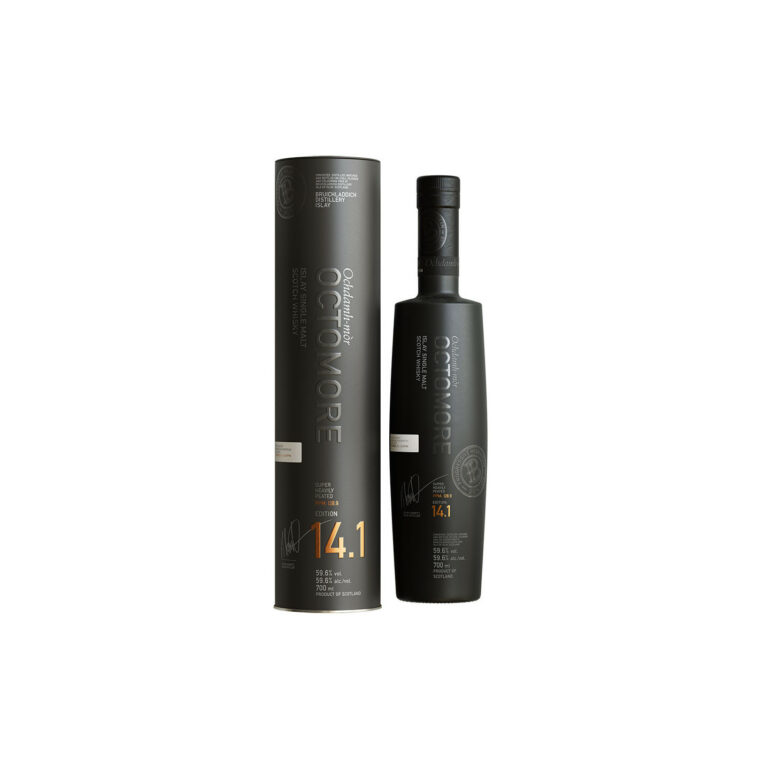
On the shores of the Isle of Islay, the quest for intensity does not follow a straight path. Since its debut in 2002 under the leadership of Jim McEwan, the Octomore range has established itself as the Bruichladdich Distillery’s most radical experimental project. Now led by master blender Adam Hannett, this annual series continues to challenge the conventions of single malt by exploring the limits of peat, without ever sacrificing aromatic precision for the sake of raw power alone.
The Science of Phenols and Cask Balance
To understand the identity of this range, one must examine a specific unit of measurement: PPM, or parts per million of phenols. This figure indicates the concentration of smoke absorbed by the malted barley before distillation. While historic Islay names like Ardbeg or Laphroaig generally fall between 35 and 55 PPM, Octomore consistently surpasses the 100 PPM mark. This technical excess is governed by strict guidelines: a five-year aging period, bottling at cask strength (or close to it), and the complete absence of chill filtration or coloring agents.
Under the umbrella of the Rémy Cointreau Group since 2012, the distillery uses these specifications to demonstrate that peat, even when pushed to extreme levels, can coexist with structural complexity. The Series 15, launched in September 2024, illustrates this tension between the fiery character of the malt and the influence of the wood.
Octomore 15: Between Local Terroir and Cognac Influences
The flagship release of this new series, the Octomore 15.1, registers 108.2 PPM. Distilled from 100% Scottish Concerto barley, it strikes a balance between first-fill bourbon casks and refilled casks. At 59.1% ABV, this bottle—priced at around $205—lays the foundation for the Octomore profile: a bold opening, driven by high alcohol content, where the smoke remains distinct.
The 15.2 marks a shift. While the peat level remains the same at 108.2 PPM, the aging profile changes radically. Here, Adam Hannett has opted for a blend of second-fill wine casks and bourbon casks, complemented by a finish in first-fill Cognac casks. This maturation in casks from the other major house of the Rémy Cointreau group brings a distinct nuance to the distillate, at a launch price of $245.
However, the pinnacle of this series is reached with the Octomore 15.3. This bottle comes close to the distillery’s all-time records with a PPM level of 307.2, placing it just behind the 309 PPM of the 8.3 edition. Beyond the number itself, it is the origin of the raw material that sets this edition apart: 100% Islay barley, harvested at the Octomore farm located less than two kilometers from the distillery. Aged in first-fill bourbon casks and Oloroso sherry hogsheads, this 61.3% ABV malt is priced at $280. It represents the most local and intense expression in the current series.

Looking Ahead to 2026: The Octomore 17 Series
The distillery is already looking ahead to the next installment with the Octomore 17 series, scheduled for release in September 2026. These future releases reaffirm the distillery’s commitment to avoiding a one-size-fits-all approach, varying peat levels and wood types with each iteration.
Octomore 17.1 will return to a more “moderate” peat level for the range, at 81.0 PPM. This 5-year-old whisky, made from Concerto barley from the Scottish mainland, will be aged entirely in first-fill bourbon casks. Its suggested retail price is set at 143 GBP (approximately 194 USD). Its variant, the 17.2, will share the same 81.0 PPM but will explore a hybrid aging process: four years in second-fill French oak barrels that previously held bourbon, followed by a finish in first-fill Port wine casks.
Finally, the Octomore 17.3 will mark a return to locally grown Islay barley with a 132.1 PPM alcohol content. While its alcohol content has not yet been announced, we already know that its aromatic profile will be shaped by a particularly diverse selection of casks, including Sauternes, Eiswein (ice wine), and Oloroso casks. This use of sweet and fortified wine casks suggests a deliberate effort to create a stark contrast with the dryness of Islay’s peaty smoke.
Each edition of Octomore serves as a technical snapshot—an experiment in which time (5 years) and place (the Octomore farm) are the only constants amid constantly shifting variables of PPM and cask selection. This approach allows the distillery to maintain a commitment to total transparency regarding the origin of the grain, whether it comes from the main Scottish growing regions or the fields adjacent to the distillery.