
Make Texture a preferred source on Google to support us
Add Texture to GoogleThis interview was conducted ahead of the Oscars ceremony.
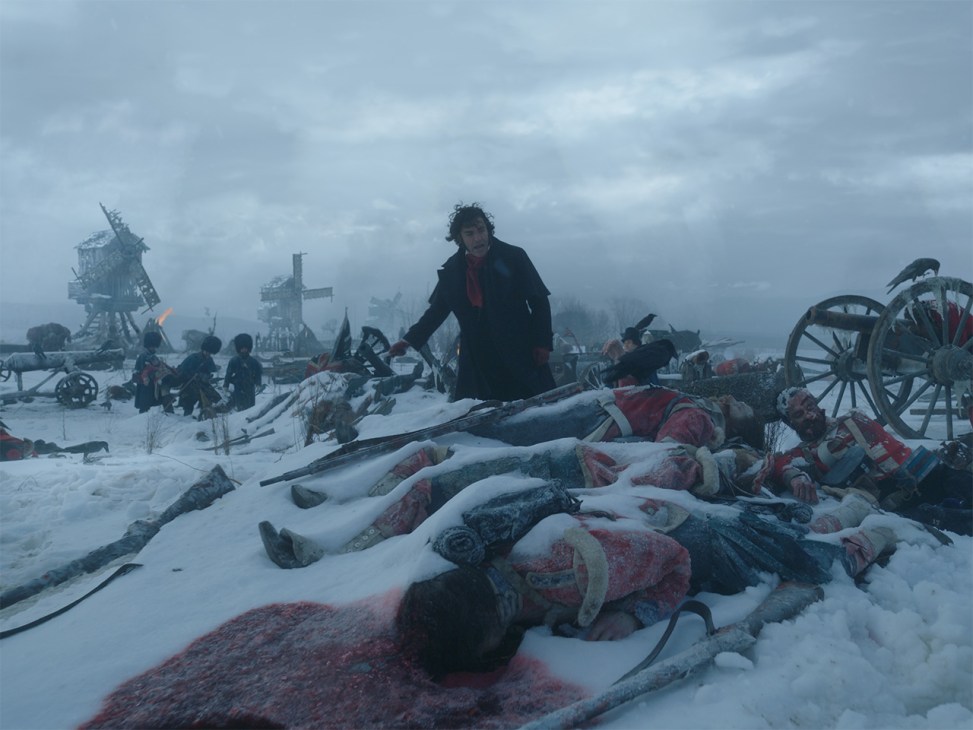
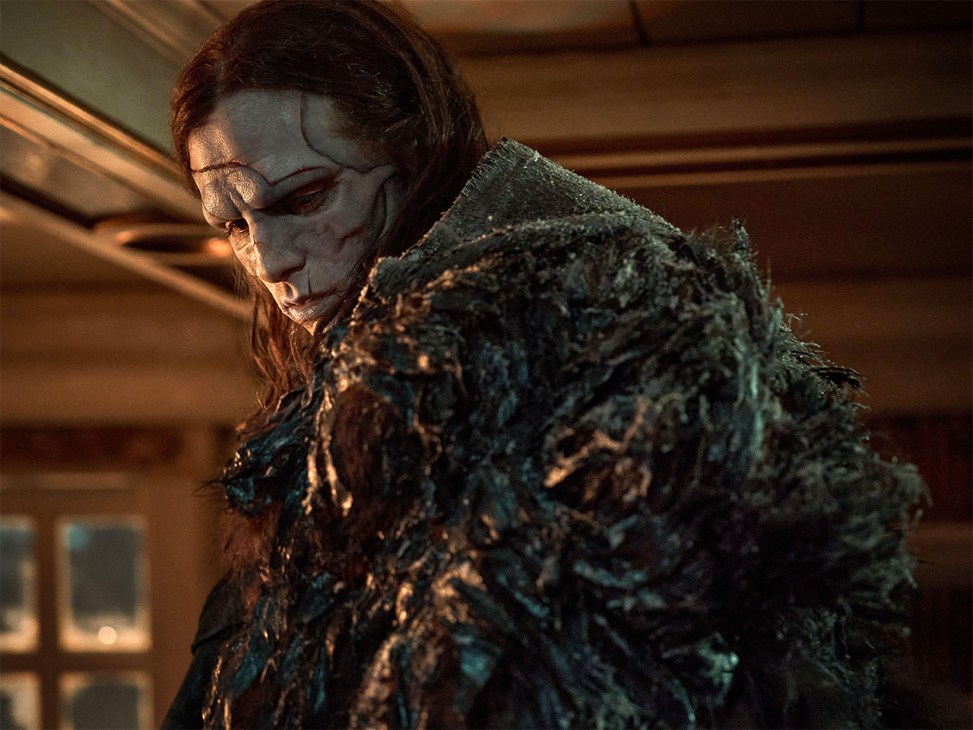
Behind every great director stands a team of artists, technicians, and experts tasked with bringing his vision to life on screen. Guillermo del Toro perfectly exemplifies this dynamic: over the course of his thirty-year career, the filmmaker has established himself as the master of an ultra-stylized neo-Gothic aesthetic, where the past and the future skillfully intersect. To bring his adaptation of *Frankenstein* to life, he relied on the talent of costume designer Kate Hawley, creator of the film’s spectacular blood-red corsets and heavy fur capes.
Her exceptional work on this project earned her a slew of prestigious awards, including a BAFTA, a Critics’ Choice Award, and an Oscar. In a recent radio interview, the designer reflected on the creative process that brought the famous monster to life.
The following remarks have been edited for clarity and brevity.

Entering the World of a Master Filmmaker
How did you get involved in this project?
I was already very familiar with the original novel. I dove back into it as soon as Guillermo told me he was going to direct his own adaptation. It always starts with the screenplay and the director’s vision, which in this case explored themes deeply connected to nature and theology. Designing these costumes required close collaboration with the other departments to develop a shared visual language and determine how best to interpret it. Religious and natural motifs were present in the sets, and Guillermo wanted my designs to echo them. He often says that costumes are part of the architecture, and that architecture interacts with light. On this shoot, the atmosphere was decidedly operatic. Guillermo compared this project to a huge banquet table where all the departments were invited to exchange ideas and build something together.

From Set Painting to Costume Design
Del Toro’s films always stand out for their visual coherence, but this is especially true for this one. Did your experience as a set designer play a role in achieving this harmony?
Absolutely. Ultimately, our work always involves placing a character within a landscape, whether real or artificial; we build a world through nuances and tones. In the past, I did set painting for the English National Opera, which taught me a great deal about mastering color. All of that experience shaped the way I worked with Guillermo and the rest of the team. We spent our time responding to each other’s work, as if we were all painting together on the same large canvas.
Red as a Recurring Theme
The use of color is striking. Although this is a period film, the aesthetic feels very modern. Was that a deliberate choice on your part?
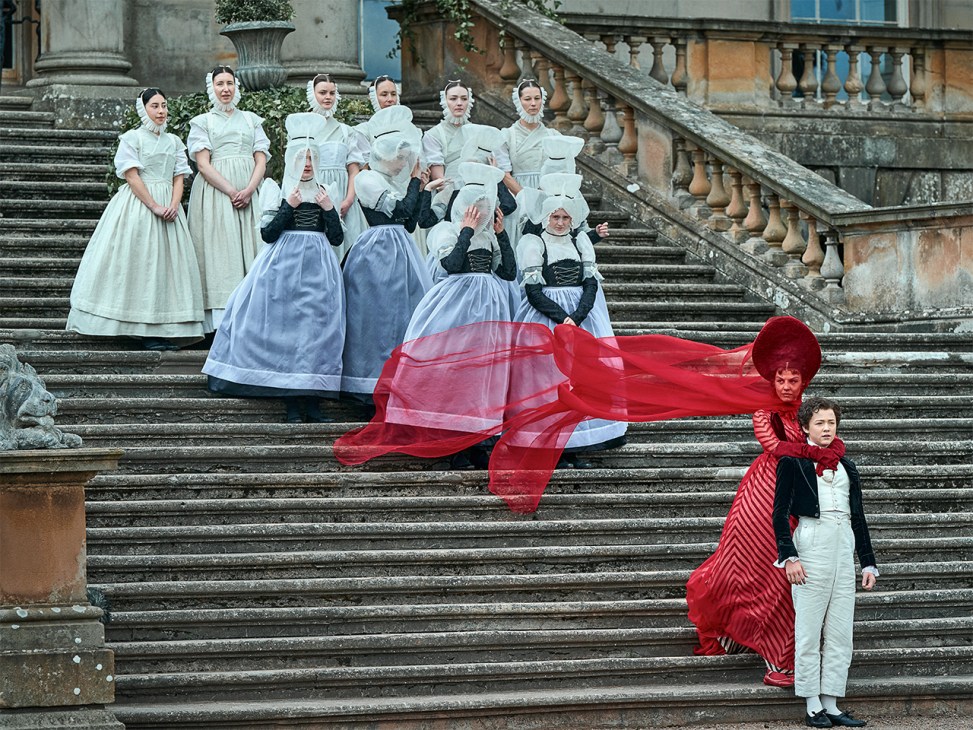
From our very first discussions, Guillermo was adamant: he refused to let us get stuck in an outdated aesthetic. He demanded a contemporary approach. The main guideline for the wardrobe was to avoid classic Dickensian imagery at all costs. The introduction of the red veil is a technique Guillermo often uses to open the narrative and immediately establish a theatrical dimension. This color then becomes the central theme of the story: it transforms into a bloodstain on young Victor’s hand, then appears on his gloves. The visual narrative conceived by Guillermo thus forms a perfect loop around this hue.
A First-of-Its-Kind Collaboration with Tiffany & Co.
You also collaborated with Tiffany & Co. on this shoot. How did that come about?
The film crew was over the moon when we announced it! This partnership was based above all on a deep mutual respect for craftsmanship and expertise. At no point did we feel that anything was being imposed on us; we simply drew from the visual vocabulary of their archives. For me, the most memorable moment was discovering historic pieces I’d never seen before, particularly their work in art glass and antique jewelry. These creations fit perfectly into Guillermo’s world while enriching the story and personality of Elizabeth’s character. It’s the kind of unexpected opportunity that opens the door to an infinite number of fabulous creative possibilities.