
Lombardy's Revival: When Bread Redraws the Map of Milan
In Milan, dawn breaks not only over the spires of the Duomo, but also over the scent of warm butter and powdered sugar that fills the air in neighborhoods undergoing rapid change. For a long time, the Milanese morning routine consisted of nothing more than an espresso gulped down at the counter, accompanied by a croissant generously filled with pistachio cream. But in recent years, a profound transformation has been taking place. The urban landscape, once dominated by timeless, historic brands, is now seeing the emergence of a new generation of bakers. These new-wave artisans don’t just knead dough; they’re incorporating Scandinavian techniques, Japanese aesthetics, and a commitment to architectural design that transforms buying a loaf of bread into a complete cultural experience.
From Porta Romana to Isola, ancient grains and natural sourdough are replacing refined flours, while the interiors of these shops rival the sophistication of downtown design galleries. This revolution in Milanese baking, driven by figures with unconventional backgrounds, is redefining the bond between residents and their neighborhoods, making the bakery the new center of social life.
The Aesthetics of the Kneading Trough: When Design Meets Yeast
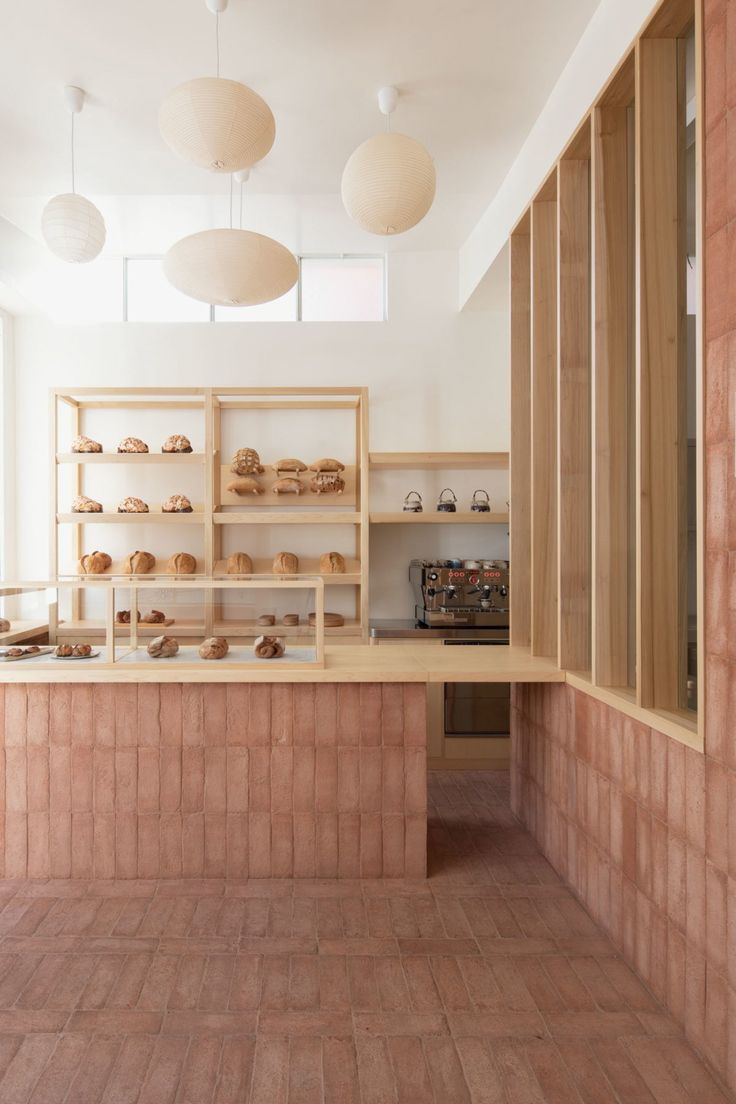
One of the most striking examples of this fusion between haute cuisine and interior design can be found in the Porta Romana neighborhood. Signor Lievito, a spot whose name resonates with quintessential Italian elegance (a far cry from its literal translation, “Mr. Yeast”), embodies this fusion. At the helm is Natalia Nikitina, a former resident of Latvia who has lived in Milan for fifteen years; she has created a Nordic-inspired space where the mineral quality of the materials highlights the warmth of the products.
Nothing about the setting was left to chance. Designed by architect Hannes Peer—whose recent work on the Hotel Aurora in Merano made a lasting impression— the space is a showcase of terracotta tiles, punctuated by abstract designs and illuminated by a Foglio wall sconce, an iconic piece by Tobia Scarpa. In this minimalist setting, customers come for pastries that break with traditional Italian norms: cinnamon rolls, lemon cruffins (that bold hybrid between a croissant and a muffin), or even a Parisian flan whose vanilla cream rivals that of the finest spots in the French capital. For those in a hurry, an online pre-order system allows customers to skip the morning lines, transforming the bakery’s operations into a modern concierge service.
Just a stone’s throw away, the Pan project explores a different aesthetic landscape. Founded by Alice Yamada and chef Yoji Tokuyoshi, this café-bakery serves as a bridge between Milan and Tokyo. The space—whose neutral tones and ubiquitous wood evoke the serenity of global metropolises like London or New York—was designed by Studio Wok. The standout detail? Sage-green drapes suspended from the ceiling, a contemporary reinterpretation of Japanese noren curtains.
The culinary offering is just as thoughtfully curated. The star of the show here is shokupan, a Japanese white bread with a cloud-like texture, served notably in a ham-and-cheese sandwich. The success of this approach has already prompted the founders to expand their offerings, with the opening of Piccolo Pan, a takeout counter, and Pan Deli, a location more focused on lunch options in the ultra-modern Porta Nuova district.
The Radical Nature of Grain: Bread as an Intellectual Manifesto
While some focus on design, others turn the raw ingredient into a political statement. This is the case with Davide Longoni, often considered the catalyst of this new Milanese wave. Davide Longoni has transformed the bakery into an intellectual and gastronomic empire. His nine locations, some of which are strategically situated in the heart of the city’s markets, are not mere retail outlets but vibrant spaces where you can enjoy a coffee or a fresh juice while browsing between displays of dried pasta and carefully selected wines.

Longoni’s approach is that of a researcher. By using grains grown south of Milan, he is revitalizing an agricultural region that is often overlooked. His influence extends beyond the bakery: an insatiable entrepreneur, he opened Govinda, a vegetarian Indian restaurant in the city center, and in 2020 founded the magazine *L’Integrale*, published by Iperborea. This publication treats bread and food as a major sociological subject, demonstrating that modern baking is also a matter of written culture.
In the Isola neighborhood, it’s Silvia Cancellieri who carries this radical banner with Tondo. Opened in 2020, this establishment defines itself as a “radical bakery” dedicated to artisanal bread. Here, sourdough is a way of life, and the traceability of organic flours is a non-negotiable requirement. Loaves made from buckwheat or heirloom grains take center stage, though indulgence isn’t forgotten: cream-filled brioches topped with blueberries and special focaccia slices delight regulars. For those who want to step behind the counter, the bakery also offers workshops to learn the complex art of fermentation and focaccia-making.
The intimacy of the bakery: a return to family traditions
Far from the hustle and bustle of the trendiest neighborhoods, there’s a spot you can only discover if you know the access code. Slow Bread Lab is perhaps the best-kept secret in Milan’s current baking scene. To get there, you have to ring the bell at a carriage entrance on Via Achille Maiocchi and walk through a peaceful inner courtyard. It’s there, right in the kitchen, that you come to buy your loaf of bread to take home.
Behind this venture is a duo, Michele Dogati and Kaisli Kiuru. This couple gave up everything to devote themselves to baking, with a philosophy rooted in care and affection. Kiuru explains that she bakes her pastries and seeded breads with the same care she would put into preparing a meal for her own children. This homey and sincere touch gives their products a special charm, a far cry from industrial standards. Once you’ve picked up your bread, simply cross the street to continue your culinary journey at Balay, a restaurant specializing in Filipino cuisine—a perfect illustration of the cosmopolitan diversity that now permeates the streets of Milan.
This buzz shows that Milan has succeeded in its challenge: embracing innovation without denying its heritage. By making room for creators from diverse backgrounds—from Latvia to Japan, from fashion to publishing—the Lombard capital has transformed its breakfast scene into a trendsetting hub. Bread is no longer just a side dish here, but a symbol of a city that knows how to reinvent itself, one sourdough loaf at a time.