
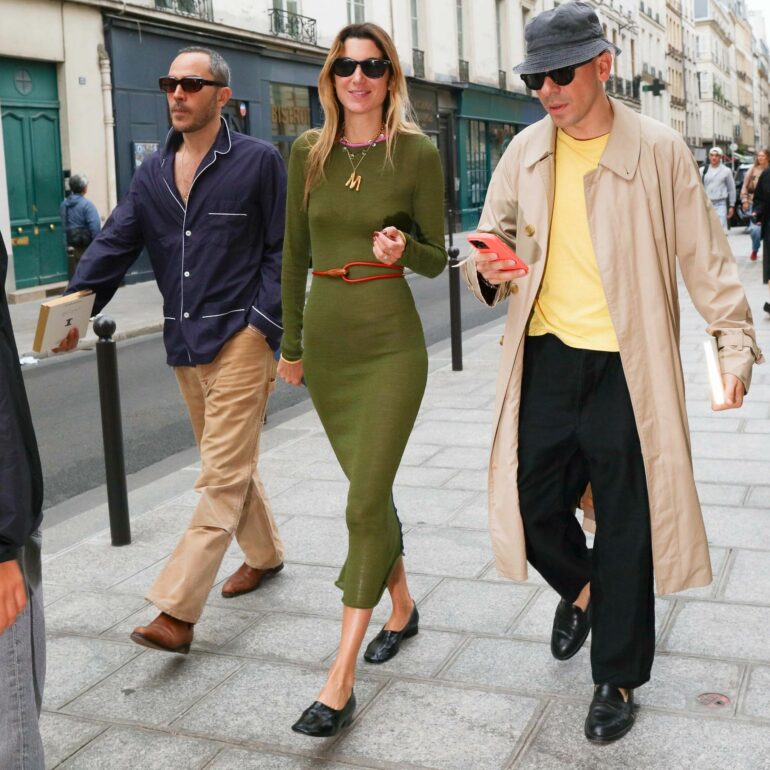
Forget the dominance of color or the eccentricity of transitional prints. The cold season abruptly shifts the focus of visual aesthetics toward a strictly physical, almost visceral experience. The fall and winter wardrobe is now experienced through the fingertips, imposing a stylistic grammar where the roughness of knitwear clashes with the smooth chill of weathered skin. Fashion is abandoning flatness for depth, elevating texture to its sole guiding principle. This transition toward a highly tactile wardrobe redefines the way pieces are conceived, paired, and, ultimately, worn. The challenge is no longer merely to cover up, but to master a calculated collision between materials that, on paper, should never have come together.
Stefanie Trevisan, an expert in garment architecture, lays the groundwork for this new dogma: the appeal of a silhouette lies in the palpable tension created by the clash of divergent surfaces. This vision becomes fully apparent when observing the collections of major fashion houses. Prada, for example, has already embedded this juxtaposition of matte finishes and glossy sheen at the heart of its Fall/Winter 2026–2027 collection, confirming that this interplay of contrasts is part of a long-term stylistic trajectory. The idea is to challenge the eye by pairing the raw texture of leather with the extreme softness of long-haired animal fibers, such as cashmere or alpaca, or by embracing the dramatic volume of synthetic faux fur.
The Art of Stylistic Contrast
The success of these new silhouettes rests on a categorical rejection of uniformity. From Dortmund, style consultant Juliane Gareis breaks down this mechanics of opposites that governs current collections. The fundamental rule calls for pairing the thick with the airy, and contrasting the opaque with the shiny. The boundaries between utilitarian outerwear and evening wear are blurring in favor of bold hybrids. Thus, biker jackets with sharp lines soften under the weight of fur or plush trim, while heavy, chunky-knit sweaters take on a playful edge when paired with sequin-drenched skirts.
The everyday wardrobe is imbued with this spirit of disruption. A simple pleated skirt, traditionally cut from austere wool, undergoes a radical transformation when accented with a lace insert or an openwork fabric that hints at the skin beneath. This clash of styles is all the more powerful because it brings together diametrically opposed worlds. Stefanie Trevisan suggests going so far as to juxtapose a purely athletic style with a classic suit—sweatpants slipped under a tailored blazer—or pairing a sophisticated top, the result of meticulous craftsmanship, with pants featuring sharp, futuristic lines. This freedom to mix and match becomes the primary tool for breaking free from prefabricated silhouettes and establishing a deeply personal style.
The practical application of these principles is clearly evident in the brands’ offerings this season. Opus offers an accessible demonstration of this tactile contrast by layering a faux-fur vest (priced around 100 euros) over a leather shirt (about 90 euros), the whole look grounded by a basic T-shirt and structured pants. At H&M Studio, the ruggedness of wool clashes with elements reminiscent of sheepskin on voluminous jackets, priced at nearly 599 euros. These pieces prove that streetwear is embracing the complexity of textures with a newfound ease.
The ubiquity of heritage fabrics
While contrast is the rule, raw materials are its fuel. And this season marks the triumphant return of heavy textiles, steeped in history and theatricality. From Frankfurt am Main, Sonja Garrison observes a tidal wave of luxurious fabrics that are literally taking over every ready-to-wear line. Jacquard, brocade, as well as lace and velvet are breaking free from formal wear to take over the streets. Wool flannel, usually confined to the formality of the office, is now a natural choice for unstructured silhouettes.
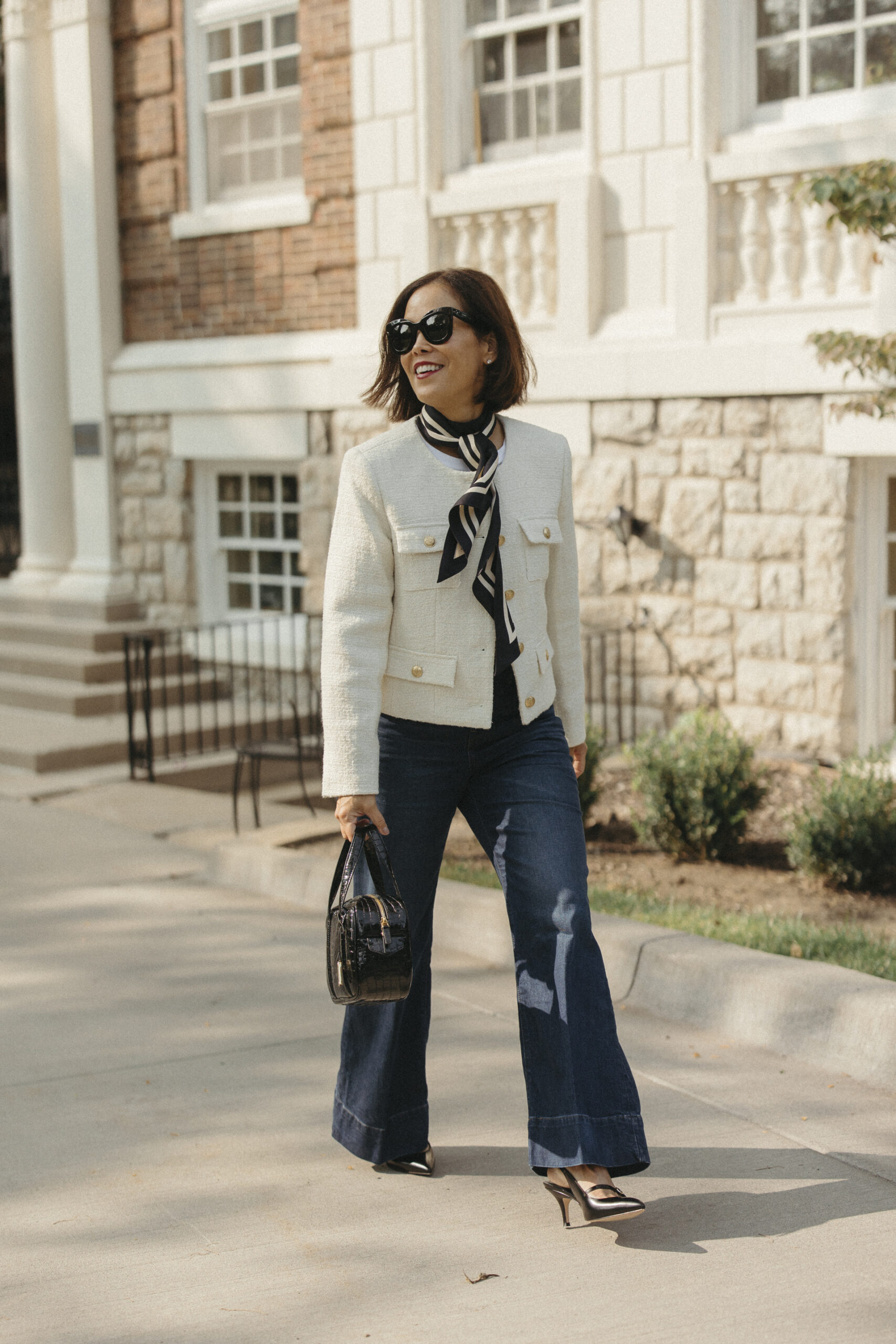
These materials require space to shine. Whether in draped dresses, shoulder-padded blazers, bell-shaped skirts, or full suits, their timelessness lends a certain elegance to the wearer. Leather, for its part, continues to hold a fascination. It breaks free from the traditional jacket to take the form of enveloping capes, officer’s coats, straight dresses, and architectural skirts. For those who master extravagance with precision, Sonja Garrison champions the boldness of wearing leather from head to toe: pairing a leather shirt with pants or a skirt cut from the same material creates an urban armor of formidable effectiveness.
The Geometry of Volumes and the Pitfalls of Knitwear
Working with such expressive fabrics, however, requires mathematical precision in the choice of cuts, lest the silhouette descend into shapelessness. The weight and density of each fiber radically alter the way a garment drapes. A piece knitted with extremely thick yarn does not drape or hang the same way as a fine-gauge knit. For Juliane Gareis, the clarity of the silhouette is non-negotiable. Her styling advice is straightforward and foolproof: a top built on loose, voluminous shapes must be balanced by a tapered, narrow bottom—and vice versa.

Within this architectural approach to clothing, working with knitwear proves particularly tricky. Sonja Garrison warns against the temptation to layer different types of knits. A textured sweater thrown over a cardigan with a mismatched knit pattern immediately creates visual clutter—a haphazard look that defeats the entire purpose. The solution to this dilemma lies in the revival of a quintessentially bourgeois style: the twinset. This duo—consisting of a cardigan and a top (or T-shirt) knitted from exactly the same yarn and gauge—is making a strong comeback. It allows you to layer wool with absolute precision, eliminating any risk of a fashion faux pas.
The Ritual of Preservation
The sculptural beauty of velvet, the opulence of a fluffy knit, or the matte sheen of leather are, however, merely fleeting states if one ignores the physical reality of these materials. The winter wardrobe is vulnerable to the stresses of daily life, and a lack of meticulous care instantly undermines any effort at style. The fabric lives, creases, develops a sheen, and wears out.
Fluffy knits, though fundamentally timeless, are the first to fall victim to friction. Under the arms, against a bag’s handle, or in contact with a belt, the fibers clump together into unsightly little bobbles that mar the appearance of even the most luxurious sweater. Sonja Garrison emphasizes the need to remove these pills in an almost clinical manner using a suitable electric razor—the only tool capable of restoring the knit’s original volume.
Pile fabrics, such as velvet or corduroy, present a different structural challenge. Their texture flattens mechanically under the effect of body weight and pressure. Areas under tension—the elbows, knees, and buttocks—quickly develop shiny, flattened patches. Here again, the technique must be precise: these fabrics cannot tolerate direct contact with a hot iron. They require being refreshed from a safe distance with a gentle burst of steam, followed by the use of a soft clothes brush, handled with extreme delicacy to lift the nap and remove the shiny patches.
The art of ironing also has its own rules when it comes to genuine leather or its synthetic alternatives. This process tolerates no shortcuts: the iron must be set to its lowest temperature, and the steam function must be turned off. Ironing is always done on the reverse side of the leather, with a protective cotton cloth placed between the iron and the leather. It is only by following these steps—and only by following these steps—that the complexity of winter textures retains its impact and its bold modernity.